

The source of the book
This book is published for the public benefit under a Creative Commons license, or with the permission of the author or publisher. If you have any objections to its publication, please contact us.
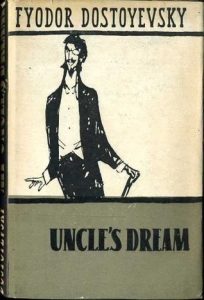
Uncle’s Dream PDF - Fyodor Dostoevsky
Fyodor Dostoevsky • literature • 172 Pages
(0)
Quate
Review
Save
Share
Book Description
Uncle’s Dream by Fyodor Dostoevsky
Uncle’s Dream by Fyodor Dostoevsky is a witty, sharply observant Russian classic novella that reveals a lighter, more comic side of one of world literature’s most psychologically powerful authors. First published in 1859, the novella belongs to an important period in Dostoevsky’s career, appearing after the author’s years of exile and before the great novels that would later define his international reputation.
Set in the fictional provincial town of Mordasovo, Uncle’s Dream follows the schemes, ambitions, vanities, and social anxieties of a small community where reputation matters almost as much as truth. At the center of the story is Maria Alexandrovna Moskaleva, a socially ambitious woman determined to secure a brilliant future for her daughter, Zinaida. When an elderly prince arrives in town, Maria sees an opportunity to transform her family’s position through marriage, setting in motion a comedy of manipulation, misunderstanding, and social performance.
A Satirical Classic of Russian Provincial Life
Unlike the darker philosophical intensity often associated with Fyodor Dostoevsky, Uncle’s Dream is driven by satire, farce, and comic social observation. The novella exposes the absurdity of provincial high society, where gossip travels quickly, appearances are carefully staged, and moral principles often bend under the pressure of ambition. Its humor is lively, but it is never empty; beneath the comic surface, Dostoevsky examines pride, self-deception, class aspiration, romantic disappointment, and the fragile boundary between sincere feeling and calculated behavior.
The book is especially appealing for readers who want to explore Dostoevsky’s shorter fiction or discover a less familiar work by the author of Crime and Punishment, The Idiot, Demons, and The Brothers Karamazov. While Uncle’s Dream does not have the immense tragic architecture of those later masterpieces, it contains many of the qualities that make Dostoevsky enduring: vivid characterization, emotional contradiction, moral tension, theatrical dialogue, and a deep interest in the strange ways people justify their own desires.
A Story of Ambition, Marriage, and Social Performance
The plot of Uncle’s Dream turns on a proposed marriage that is less a matter of love than a strategy for status. Maria Alexandrovna imagines that a match between her daughter and the aging Prince K. could rescue their social standing and open a path to wealth, respectability, and influence. Zinaida, however, is not simply a passive figure in her mother’s plan. Her own emotional history, dignity, and resistance give the story a human seriousness that balances the comic energy surrounding her.
Dostoevsky builds the novella around conversations, rumors, persuasion, and performance. Characters speak in order to impress, conceal, flatter, dominate, or escape embarrassment, and the result is a story where language itself becomes a social weapon. The “dream” of the title reflects more than one character’s confusion; it also suggests the illusions that drive an entire society—dreams of rank, romance, wealth, beauty, admiration, and moral superiority.
Dostoevsky’s Humor and Psychological Insight
Readers searching for Uncle’s Dream summary, Dostoevsky satire, or classic Russian literature will find that this novella offers an accessible entry point into the author’s world. The tone is playful and ironic, yet the emotional stakes remain meaningful. Dostoevsky presents characters who are often ridiculous but rarely flat. Even when they are vain, manipulative, foolish, or self-important, they remain recognizably human.
This combination of comedy and psychological insight is one of the novella’s strongest qualities. Maria Alexandrovna’s ambition may seem outrageous, but it is rooted in recognizable fears about security, reputation, and the future. Zinaida’s situation reflects the limited choices available to women in a society where marriage can determine social identity. Prince K., with his vanity and vulnerability, becomes both a comic figure and an object of unease. Through them, Dostoevsky creates a social comedy that gradually reveals deeper moral discomfort.
Why Read Uncle’s Dream?
Uncle’s Dream is ideal for readers interested in nineteenth-century Russian fiction, literary satire, psychological fiction, and classic novellas with strong dialogue and memorable characters. It is also a valuable choice for anyone studying Dostoevsky’s development as a writer, because it shows him experimenting with comedy, social caricature, and dramatic structure before the mature philosophical novels for which he is best known.
The novella’s relatively compact form makes it approachable, but its themes are rich enough to reward careful reading. It explores how people behave when social advancement becomes a moral obsession, how families negotiate duty and desire, and how public reputation can distort private feeling. The result is a book that feels both rooted in its historical setting and surprisingly familiar in its portrayal of social pressure, ambition, and emotional compromise.
A Lighter but Still Revealing Dostoevsky
For many readers, the surprise of Uncle’s Dream by Fyodor Dostoevsky lies in its comic rhythm. The story moves through drawing rooms, conversations, schemes, and reversals with the pace of a social farce, yet Dostoevsky’s eye remains penetrating. He understands that comedy often exposes truths people would rather hide. Vanity, insecurity, romantic longing, and moral weakness all become visible when characters are placed under the pressure of gossip and expectation.
This makes Uncle’s Dream more than a minor curiosity in Dostoevsky’s bibliography. It is a distinctive work that broadens the reader’s understanding of the author. Dostoevsky is widely regarded for the psychological depth of his fiction, and this novella shows that his insight could operate not only through tragedy and philosophical conflict, but also through satire, irony, and comic exaggeration.
A Classic Novella for Readers of Russian Literature
Uncle’s Dream remains a rewarding read for those who appreciate books about society, ambition, family pressure, and the comedy of human weakness. Its provincial setting gives the story an intimate stage, while its characters reveal broad and lasting truths about status, self-deception, and the masks people wear in public life. The novella is entertaining, ironic, and sharply written, but it also carries the unmistakable Dostoevskian concern with conscience, dignity, and the consequences of moral compromise.
For readers beginning their journey into Fyodor Dostoevsky’s books, this novella offers a concise and engaging introduction to his talent for character and dialogue. For longtime admirers, it provides a fascinating glimpse of the author working in a comic mode, using satire to uncover the emotional and social tensions beneath polite society. Uncle’s Dream is a memorable classic of Russian literature—clever, theatrical, humane, and quietly unsettling in the way only Dostoevsky can be.
Fyodor Dostoevsky
Fyodor Dostoevsky was a Russian novelist, philosopher, and essayist, widely considered to be one of the greatest writers in Western literature. He was born in Moscow in 1821 and raised in a middle-class family. His father was a doctor who treated the poor for free, which instilled in Dostoevsky a deep sense of social justice and compassion for the downtrodden.
Dostoevsky began his writing career in the 1840s, with a series of novellas and short stories that explored the complexities of human nature and the dark side of Russian society. His first major novel, "Poor Folk," was published in 1846 and won critical acclaim. However, it was his later works, such as "Crime and Punishment," "The Idiot," and "The Brothers Karamazov," that established him as a literary master.
Dostoevsky's writing is known for its psychological depth, philosophical themes, and exploration of the human condition. His characters often struggle with moral dilemmas and existential questions, grappling with issues of faith, morality, and the meaning of life. His works also explore the political and social issues of his time, including poverty, crime, and political oppression.
Dostoevsky's life was marked by personal tragedy and political turmoil. He was arrested in 1849 for his involvement with a group of liberal intellectuals and sentenced to death, only to have the sentence commuted to hard labor in Siberia. He returned to Russia after serving his sentence, but continued to struggle with poverty and illness throughout his life. He died in 1881 at the age of 59.
Despite his tumultuous life, Dostoevsky's legacy as a writer and thinker endures. His works continue to be widely read and studied today, and his ideas about the human condition and the role of faith in society continue to resonate with readers around the world.
Earn Rewards While Reading!
Every 10 pages you read and spent 30 seconds on every page, earns you 5 reward points! Keep reading to unlock achievements and exclusive benefits.
Read
Rate Now
5 Stars
4 Stars
3 Stars
2 Stars
1 Stars
Uncle’s Dream Quotes
Top Rated
Latest
Quate
Be the first to leave a quote and earn 10 points
instead of 3
Other books by Fyodor Dostoevsky
Other books like Uncle’s Dream
'%20/%3e%3c/svg%3e "The Missionary Position: Mother Teresa in Theory and Practice")
3635
English
Comments
Be the first to leave a comment and earn 5 points
instead of 3