

The source of the book
This book is published for the public benefit under a Creative Commons license, or with the permission of the author or publisher. If you have any objections to its publication, please contact us.
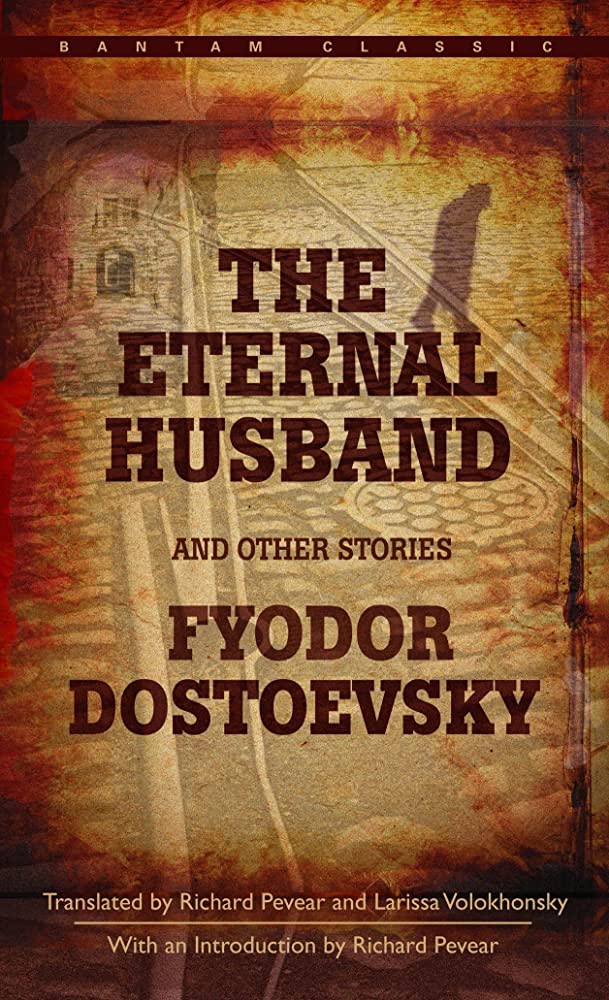
The Eternal Husband PDF - Fyodor Dostoevsky
Fyodor Dostoevsky • short stories • 435 Pages
(0)
Author
Fyodor DostoevskyCategory
literatureSection
Number Of Downloads
41
Number Of Reads
212
File Size
1.71 MB
Views
1,099
Quate
Review
Save
Share
Book Description
The Eternal Husband by Fyodor Dostoevsky: A Psychological Classic of Jealousy, Guilt, and Moral Unease
The Eternal Husband by Fyodor Dostoevsky is a compact yet deeply unsettling work of classic Russian literature, a psychological novella that turns a seemingly simple encounter into a tense study of memory, humiliation, rivalry, and hidden guilt. First published in 1870, the book belongs to Dostoevsky’s mature period and carries many of the qualities readers associate with his greatest fiction: emotional intensity, moral ambiguity, inward conflict, and a penetrating interest in the secret motives people conceal even from themselves.
At the center of the story is the troubled relationship between Alexei Ivanovich Velchaninov, a weary and self-conscious man haunted by his past, and Pavel Pavlovich Trusotsky, a widower whose late wife once had a connection with Velchaninov. What begins as an awkward reunion gradually becomes a charged psychological duel, shaped by jealousy, suspicion, shame, and a strange dependency between the two men. Dostoevsky does not present their conflict as a straightforward confrontation between victim and guilty party; instead, he creates a world where emotional power shifts constantly, where wounded pride becomes a form of obsession, and where the past refuses to remain buried.
A Darkly Intimate Dostoevsky Novella
Unlike the vast social and philosophical scope of novels such as Crime and Punishment, The Idiot, or The Brothers Karamazov, The Eternal Husband works through compression. Its power comes from claustrophobia, from the way a small circle of characters reveals immense emotional pressure. The plot is outwardly restrained, but beneath the surface Dostoevsky builds a disturbing drama of accusation, denial, rivalry, and psychological exposure. This makes the book especially appealing to readers looking for a shorter Dostoevsky work that still contains his signature depth.
The title itself points toward one of the novella’s central ideas: the figure of the “eternal husband,” a man trapped in the role of the betrayed spouse, defined by marriage, humiliation, and dependence even after his wife’s death. Pavel Pavlovich is not merely a comic or pathetic figure; he is one of Dostoevsky’s complex wounded men, capable of appearing ridiculous, pitiable, manipulative, and dangerous within the same scene. Velchaninov, meanwhile, is not allowed the comfort of simple superiority. His intelligence and social polish cannot protect him from the return of guilt, nor from the possibility that his past actions have consequences he never fully understood.
Themes of Marriage, Betrayal, and Psychological Revenge
One of the strongest reasons to read The Eternal Husband is its sharp exploration of marriage and betrayal without reducing either subject to melodrama. Dostoevsky is less interested in scandal itself than in what scandal does to the human soul. The dead wife, Natalya, remains absent yet powerful, shaping the behavior of the living through memory, resentment, and unanswered questions. Her absence intensifies the atmosphere: every conversation seems to circle around something unsaid, and every gesture carries the weight of hidden knowledge.
The novella also examines revenge in an unusually psychological form. Pavel Pavlovich’s behavior is difficult to categorize because his motives are unstable, or perhaps because he does not fully understand them himself. He may want recognition, punishment, companionship, confession, humiliation, or control. Velchaninov, drawn into this emotional maze, becomes both observer and participant. Their relationship develops into a disturbing mutual entanglement, making the book a memorable example of Dostoevsky’s psychological fiction and a fascinating study of how guilt and resentment can bind people together as strongly as affection.
A Study of Human Contradiction
Dostoevsky’s genius in The Eternal Husband lies in his ability to make contradiction feel truthful. Characters do not behave according to a single clean motive. They are proud and ashamed, cruel and vulnerable, calculating and impulsive. A scene may begin with social politeness and end in emotional exposure; a moment that seems comic may suddenly become painful or threatening. This instability gives the novella its distinctive energy and keeps the reader alert to every shift in tone.
For readers interested in 19th-century Russian literature, the book offers a powerful example of Dostoevsky’s gift for turning social encounters into moral and psychological crises. Drawing rooms, visits, illnesses, letters, memories, and chance meetings become instruments of pressure. The suspense does not depend only on what will happen next, but on what each character is trying to hide, what he suspects, and what he cannot bear to admit. In that sense, The Eternal Husband reads almost like a psychological thriller, though its real mystery is the human heart.
Why Readers Still Return to The Eternal Husband
Modern readers continue to find The Eternal Husband compelling because its emotional questions remain recognizable. How does a person live with guilt that has never been confessed? Can humiliation become a lifelong identity? Why do people seek out those who have injured them, or those whom they themselves have harmed? Dostoevsky approaches these questions with intensity and irony, refusing easy answers. The result is a book that feels intimate, uncomfortable, and strangely alive.
The novella is also a valuable choice for readers who want to begin exploring Dostoevsky beyond his longest novels. It is shorter and more focused than his major masterpieces, yet it contains many of his essential concerns: moral responsibility, wounded ego, spiritual unease, irrational behavior, and the terrifying complexity of human relationships. Readers who appreciate psychological drama, classic fiction, Russian novels and novellas, and morally layered character studies will find this work especially rewarding.
A Powerful Classic for Readers of Psychological and Literary Fiction
The Eternal Husband by Fyodor Dostoevsky is a concentrated work of literary intensity, a story of betrayal and obsession that becomes much more than a tale of adultery or revenge. Through Velchaninov and Pavel Pavlovich, Dostoevsky creates a haunting portrait of men trapped by memory, pride, and emotional dependence. The book’s atmosphere is tense, ironic, and deeply human, revealing how the past can return not as a simple fact, but as a living force that unsettles identity and conscience.
For anyone searching for a meaningful Dostoevsky book in English, a shorter classic of Russian psychological fiction, or a profound exploration of jealousy, guilt, and moral discomfort, The Eternal Husband offers an unforgettable reading experience. It is a novella of uneasy conversations, hidden wounds, and shifting power, written with the insight that makes Dostoevsky one of the defining voices of world literature.
Fyodor Dostoevsky
Fyodor Dostoevsky was a Russian novelist, philosopher, and essayist, widely considered to be one of the greatest writers in Western literature. He was born in Moscow in 1821 and raised in a middle-class family. His father was a doctor who treated the poor for free, which instilled in Dostoevsky a deep sense of social justice and compassion for the downtrodden.
Dostoevsky began his writing career in the 1840s, with a series of novellas and short stories that explored the complexities of human nature and the dark side of Russian society. His first major novel, "Poor Folk," was published in 1846 and won critical acclaim. However, it was his later works, such as "Crime and Punishment," "The Idiot," and "The Brothers Karamazov," that established him as a literary master.
Dostoevsky's writing is known for its psychological depth, philosophical themes, and exploration of the human condition. His characters often struggle with moral dilemmas and existential questions, grappling with issues of faith, morality, and the meaning of life. His works also explore the political and social issues of his time, including poverty, crime, and political oppression.
Dostoevsky's life was marked by personal tragedy and political turmoil. He was arrested in 1849 for his involvement with a group of liberal intellectuals and sentenced to death, only to have the sentence commuted to hard labor in Siberia. He returned to Russia after serving his sentence, but continued to struggle with poverty and illness throughout his life. He died in 1881 at the age of 59.
Despite his tumultuous life, Dostoevsky's legacy as a writer and thinker endures. His works continue to be widely read and studied today, and his ideas about the human condition and the role of faith in society continue to resonate with readers around the world.
Earn Rewards While Reading!
Every 10 pages you read and spent 30 seconds on every page, earns you 5 reward points! Keep reading to unlock achievements and exclusive benefits.
Read
Rate Now
5 Stars
4 Stars
3 Stars
2 Stars
1 Stars
The Eternal Husband Quotes
Top Rated
Latest
Quate
Be the first to leave a quote and earn 10 points
instead of 3
'%20/%3e%3c/svg%3e "The Brothers Karamazov")
Comments
Be the first to leave a comment and earn 5 points
instead of 3