

The source of the book
This book is published for the public benefit under a Creative Commons license, or with the permission of the author or publisher. If you have any objections to its publication, please contact us.
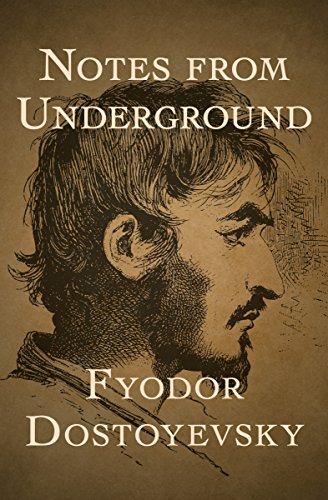
Notes from Underground PDF - Fyodor Dostoevsky
Fyodor Dostoevsky • Literary novels • 272 Pages
(0)
Author
Fyodor DostoevskyCategory
literatureSection
Number Of Downloads
43
Number Of Reads
204
File Size
67.46 MB
Views
1,071
Quate
Review
Save
Share
Book Description
Notes from Underground by Fyodor Dostoevsky: A Dark, Brilliant Study of the Human Mind
Notes from Underground by Fyodor Dostoevsky is one of the most intense and influential works in classic Russian literature, a short but remarkably powerful book that explores pride, isolation, free will, resentment, and the contradictions of human nature. Written with Dostoevsky’s unmistakable psychological depth, this philosophical novella introduces readers to one of literature’s most disturbing and unforgettable voices: the Underground Man, a former civil servant who speaks from the margins of society and from the darkest corners of his own consciousness.
Rather than offering a traditional plot-driven story, Notes from Underground invites readers into a restless inner world shaped by bitterness, intelligence, humiliation, and self-sabotage. The narrator is painfully aware of his flaws, yet he cannot free himself from them. He rejects simple explanations of human behavior and challenges the belief that people will always choose what is rational, useful, or good for them. Through this sharp and uncomfortable confession, Dostoevsky creates a work that feels both deeply nineteenth-century and strikingly modern.
A Landmark of Philosophical Fiction and Psychological Literature
At the heart of Notes from Underground is a question that continues to define much of modern literature and philosophy: what does it mean to be free? Dostoevsky’s narrator argues against the idea that human beings can be reduced to logic, social systems, or predictable self-interest. He insists that people often act against their own benefit simply to prove that they are alive, independent, and capable of choosing for themselves. This makes the book an essential work of philosophical fiction, especially for readers interested in existential literature, moral conflict, and the irrational forces that shape human life.
The novella is also a masterclass in psychological realism. Dostoevsky does not present the Underground Man as a hero, a victim, or a simple villain. Instead, he reveals him as a deeply divided person: intelligent yet petty, wounded yet cruel, desperate for connection yet determined to reject it. This complexity gives the book its lasting force. Readers are not asked to admire the narrator, but to confront the uncomfortable truths his voice exposes about vanity, shame, loneliness, and the desire to be recognized.
The Underground Man: Alienation, Pride, and Self-Consciousness
The Underground Man is one of Dostoevsky’s most important creations because he represents a new kind of literary character: the isolated modern individual who thinks too much, feels too sharply, and turns consciousness into a form of suffering. He is trapped not by prison walls, but by his own mind. His “underground” is both a physical and symbolic place, a state of withdrawal from society and from ordinary human warmth.
Through this narrator, Fyodor Dostoevsky examines the painful relationship between intelligence and action. The Underground Man analyzes everything, including his own motives, until he becomes incapable of living freely. His self-awareness does not make him wiser or kinder; instead, it often deepens his paralysis and resentment. This makes the book especially compelling for readers drawn to themes of alienation, overthinking, identity, social anxiety, humiliation, and inner conflict.
A Reading Experience That Is Challenging, Intense, and Unforgettable
Notes from Underground is not a comfortable book, and that is part of its power. Its voice is confrontational, ironic, wounded, and often deliberately contradictory. The narrator argues with imagined opponents, attacks fashionable ideas, exposes his own weaknesses, and then tries to defend them. This unstable rhythm creates a reading experience that feels like entering a mind at war with itself.
The book’s intensity makes it ideal for readers who appreciate literature that raises difficult questions rather than offering easy answers. Dostoevsky’s prose moves between philosophical argument and personal memory, between social criticism and emotional confession. The result is a compact work that rewards slow reading and reflection. Even though it is shorter than many of Dostoevsky’s major novels, it contains many of the ideas that later appear in his greatest works, including moral responsibility, spiritual emptiness, suffering, pride, guilt, and the human hunger for meaning.
Why Notes from Underground Still Feels Modern
More than a century after its publication, Notes from Underground continues to feel relevant because it speaks to problems that remain familiar: isolation in a crowded world, resentment toward society, distrust of progress, and the struggle to understand one’s own desires. The Underground Man’s anger and self-contradiction may be extreme, but his emotional landscape is recognizable. He wants dignity, yet he behaves in ways that destroy it. He wants connection, yet he pushes others away. He wants freedom, yet he is imprisoned by pride.
This is why the book is often discussed in relation to existentialism, modernism, and the development of the antihero in literature. Dostoevsky anticipates many later concerns of twentieth-century thought: the fragmented self, the limits of reason, the instability of identity, and the loneliness of the individual in an increasingly rationalized society. For readers interested in authors such as Franz Kafka, Albert Camus, Jean-Paul Sartre, or Friedrich Nietzsche, Notes from Underground offers an essential earlier vision of the alienated modern consciousness.
For Readers of Classic Russian Literature and Deep Psychological Novels
This book is a strong choice for readers who want a serious and thought-provoking introduction to Dostoevsky’s fiction. It is shorter and more concentrated than novels such as Crime and Punishment, The Idiot, or The Brothers Karamazov, but it carries the same fascination with moral psychology and spiritual conflict. Readers who enjoy character-driven literature, philosophical novels, dark introspection, and complex narrators will find Notes from Underground especially rewarding.
It is also an important text for students and readers exploring classic literature, Russian novels, existential fiction, psychological fiction, and nineteenth-century European thought. The book’s themes make it valuable for discussions of freedom, rationalism, individualism, human suffering, and the contradictions of modern life. Its narrator may be difficult and unreliable, but his voice opens a path into some of the deepest questions literature can ask.
A Powerful Classic About Freedom, Suffering, and the Divided Self
Notes from Underground by Fyodor Dostoevsky remains a powerful and unsettling classic because it refuses to simplify human nature. It shows that people are not always rational, noble, or even consistent with themselves. They may choose pain over comfort, pride over happiness, and isolation over love. In exposing these contradictions, Dostoevsky creates a book that is intellectually demanding, emotionally sharp, and impossible to forget.
For anyone seeking a profound work of classic philosophical literature, Russian psychological fiction, or existential fiction, Notes from Underground is an essential reading experience. It is a dark mirror held up to the human mind, revealing not only the bitterness of one isolated man, but also the deeper conflicts between reason and desire, freedom and self-destruction, loneliness and the need to be seen.
Fyodor Dostoevsky
Fyodor Dostoevsky was a Russian novelist, philosopher, and essayist, widely considered to be one of the greatest writers in Western literature. He was born in Moscow in 1821 and raised in a middle-class family. His father was a doctor who treated the poor for free, which instilled in Dostoevsky a deep sense of social justice and compassion for the downtrodden.
Dostoevsky began his writing career in the 1840s, with a series of novellas and short stories that explored the complexities of human nature and the dark side of Russian society. His first major novel, "Poor Folk," was published in 1846 and won critical acclaim. However, it was his later works, such as "Crime and Punishment," "The Idiot," and "The Brothers Karamazov," that established him as a literary master.
Dostoevsky's writing is known for its psychological depth, philosophical themes, and exploration of the human condition. His characters often struggle with moral dilemmas and existential questions, grappling with issues of faith, morality, and the meaning of life. His works also explore the political and social issues of his time, including poverty, crime, and political oppression.
Dostoevsky's life was marked by personal tragedy and political turmoil. He was arrested in 1849 for his involvement with a group of liberal intellectuals and sentenced to death, only to have the sentence commuted to hard labor in Siberia. He returned to Russia after serving his sentence, but continued to struggle with poverty and illness throughout his life. He died in 1881 at the age of 59.
Despite his tumultuous life, Dostoevsky's legacy as a writer and thinker endures. His works continue to be widely read and studied today, and his ideas about the human condition and the role of faith in society continue to resonate with readers around the world.
Earn Rewards While Reading!
Every 10 pages you read and spent 30 seconds on every page, earns you 5 reward points! Keep reading to unlock achievements and exclusive benefits.
Read
Rate Now
5 Stars
4 Stars
3 Stars
2 Stars
1 Stars
Notes from Underground Quotes
Top Rated
Latest
Quate
Be the first to leave a quote and earn 10 points
instead of 3
'%20/%3e%3c/svg%3e "The Brothers Karamazov")
Comments
Be the first to leave a comment and earn 5 points
instead of 3