

The source of the book
This book is published for the public benefit under a Creative Commons license, or with the permission of the author or publisher. If you have any objections to its publication, please contact us.
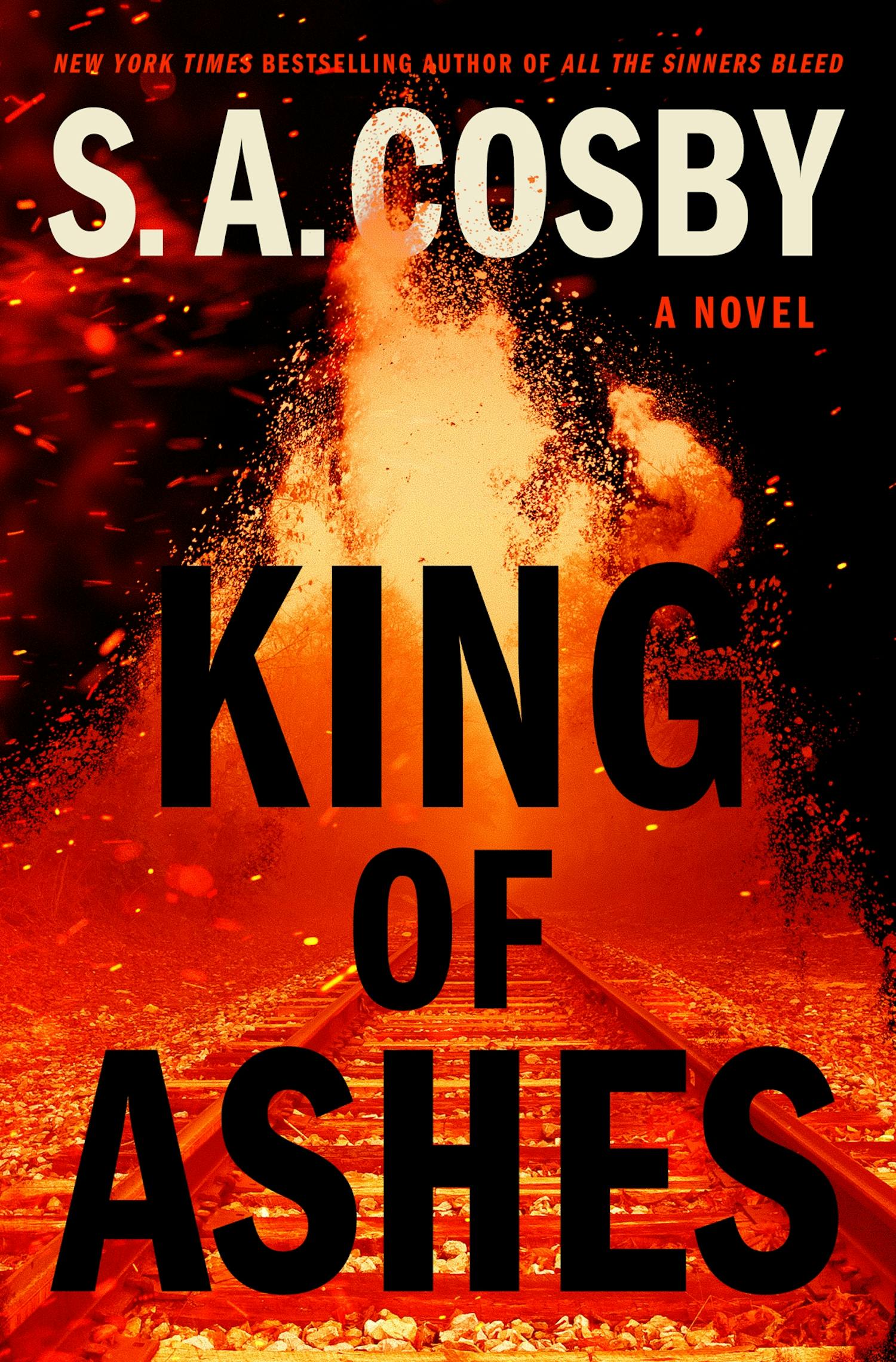
King of Ashes PDF - S.A. Cosby
S.A. Cosby • Drama novels • 333 Pages
(0)
Quate
Review
Save
Share
Book Description
King of Ashes by S.A. Cosby is a fierce, atmospheric, and emotionally charged Southern noir thriller about family loyalty, inherited violence, criminal power, and the terrible cost of trying to save the people who may destroy you. Published by Flatiron Books: Pine & Cedar, the novel continues Cosby’s reputation for hard-hitting crime fiction rooted in the American South, following the acclaimed author of Blacktop Wasteland, Razorblade Tears, and All the Sinners Bleed into a story of betrayal, debt, grief, and revenge. The publisher describes King of Ashes as a Godfather-inspired Southern crime epic and a family drama, and the book was released on June 10, 2025. (Macmillan Publishers)
A Southern Crime Epic About Family, Debt, and Fire
At the center of King of Ashes is Roman Carruthers, a successful financial strategist in Atlanta who has worked hard to put distance between himself and the troubled hometown he left behind. Roman has money, taste, control, and a talent for making rich people richer. But when he is summoned back to Jefferson Run, Virginia, after his father is left in a coma following a car accident, he returns to a family already close to collapse. His younger brother, Dante, is in debt to dangerous criminals, while his sister, Neveah, is exhausted from trying to hold together both the family and the family business. That business, Carruthers Crematorium, gives the novel one of its most memorable settings: a place where death is not abstract, but daily, physical, and unavoidable. (Macmillan Publishers)
The danger grows when Roman realizes his father’s crash was no accident. Dante’s recklessness has placed the entire family in the path of violent people, and Roman’s first instinct is to solve the crisis the way he solves financial problems: with intelligence, calculation, negotiation, and money. But the criminal world waiting for him in Jefferson Run does not obey the clean rules of business strategy. As Roman’s options burn away, he discovers that what he can offer may not be cash, but himself—his skill with numbers, his willingness to manipulate systems, and a darker capacity for survival that he may have underestimated. (Macmillan Publishers)
Roman Carruthers and the Return of the Prodigal Son
Roman is one of Cosby’s morally complicated protagonists: intelligent, stylish, ambitious, wounded, and far from innocent. He is not a simple hero returning home to rescue his family with clean hands. Instead, he is a man whose success has not freed him from the past, and whose polished life in Atlanta cannot protect him from blood ties, old grief, and the brutal realities of his hometown. His return to Jefferson Run forces him to confront not only his brother’s debt and his father’s condition, but also the question of who he becomes when loyalty demands violence.
This makes King of Ashes especially powerful as a crime novel about family obligation. Roman’s love for his siblings is real, but love in Cosby’s world is rarely gentle or uncomplicated. It becomes bargaining power, weakness, fuel, and sometimes a weapon. The more Roman tries to protect the Carruthers name, the deeper he is drawn into a world of gangsters, threats, revenge, and moral compromise. His financial intelligence, which once made him valuable in elite circles, becomes something more dangerous when applied to the criminal underworld.
Neveah, Dante, and the Broken Carruthers Family
While Roman carries much of the novel’s momentum, King of Ashes is also a story about siblings trapped by the same family history in very different ways. Dante’s debt is the immediate crisis, but his choices reveal a deeper pattern of damage, irresponsibility, and desperation. Neveah, meanwhile, represents the cost of staying. She has remained close to the family business, close to their father, and close to the physical labor of death, while Roman built a separate life elsewhere. Her exhaustion gives the novel emotional weight because she is not simply a supporting character; she embodies the quiet burden of the person who stayed behind when others escaped.
The Carruthers family is haunted by more than current danger. Neveah also tries to uncover the long-buried mystery of what happened to their mother, who disappeared when the siblings were teenagers. This older wound runs beneath the main crime plot, adding grief, suspicion, and unresolved trauma to the novel’s atmosphere. The mystery of their mother’s disappearance gives King of Ashes a second emotional engine: while Roman fights the danger in front of him, the past continues to rise through memory, rumor, and unanswered questions. (Macmillan Publishers)
The Power of Southern Noir
Readers looking for a Southern noir thriller, literary crime fiction, or a dark family crime saga will find King of Ashes firmly in the tradition that has made S.A. Cosby one of the most distinctive voices in contemporary crime writing. His South is not decorative. Jefferson Run is a place shaped by poverty, violence, memory, racial tension, small-town reputation, dying industries, and the uneasy closeness of people who know one another’s secrets. Cosby’s landscapes often feel morally charged, and in this novel, the crematorium becomes a striking symbol of what the book is about: what remains after love, anger, violence, and ambition have all burned through a family.
The title itself carries rich thematic weight. Ashes suggest destruction, mourning, evidence, memory, and transformation. In King of Ashes, fire is not only literal but symbolic. It represents what violence consumes, what families hide, what grief leaves behind, and what power can reduce people to when they believe survival requires brutality. Cosby’s crime fiction is known for its speed and force, but here the imagery of burning and remains gives the novel a tragic quality, turning a thriller plot into a meditation on inheritance and ruin.
A Story of Morality Under Pressure
One of the central questions in King of Ashes is how far a person can go in the name of family before protection becomes corruption. Roman begins with a recognizable motive: he wants to save his brother, help his sister, understand what happened to his father, and prevent his family from being destroyed. Yet the novel complicates every step of that mission. The more Roman negotiates with violent men, the more he must decide whether morality is a fixed line or a luxury people abandon when survival is at stake.
This is where Cosby’s writing stands apart from ordinary revenge fiction. King of Ashes does not treat violence as simple satisfaction. It asks what violence does to the person who uses it, even when that person believes he has no choice. It also explores the connection between economic power and criminal power, showing how Roman’s financial skills can move between legitimate wealth and illegal ambition more easily than anyone wants to admit. The result is a morally complex thriller where danger comes not only from enemies, but from the seductive logic of becoming ruthless enough to win.
Why S.A. Cosby Readers Will Be Drawn to King of Ashes
For readers who admired Blacktop Wasteland, Razorblade Tears, and All the Sinners Bleed, this novel offers many of the qualities associated with S.A. Cosby books: fast pacing, sharp prose, violent stakes, vivid Southern atmosphere, damaged families, and protagonists caught between love and destruction. Cosby’s fiction often places ordinary people in extraordinary pressure until their buried selves emerge. In King of Ashes, Roman’s return home becomes the spark that reveals what has been waiting inside him all along.
The novel also appeals to readers who enjoy crime fiction with literary ambition. It is not only about whether Roman can outmaneuver criminals or protect his siblings. It is about the shape of a family after years of secrets, the emotional debt children inherit from parents, and the way a town can hold violence in its soil. The publisher notes that the novel became an instant New York Times bestseller and lists it among several major best-of-the-year selections, reflecting the broad attention the book received as one of Cosby’s major releases. (Macmillan Publishers)
A Dark, Gripping Novel About What Survives the Flames
King of Ashes is a powerful choice for readers who want a thriller that is both explosive and emotionally serious. It combines the tension of organized crime, the intimacy of family drama, the atmosphere of Southern Gothic fiction, and the moral pressure of a man discovering that saving his family may require sacrificing the version of himself he thought he had become. Roman Carruthers returns home believing he can manage a crisis, but Jefferson Run teaches him that some fires cannot be controlled once they begin.
In the end, King of Ashes by S.A. Cosby is a novel about blood ties, buried secrets, criminal ambition, and the remains of love after violence has done its work. It is dark, propulsive, and tragic, built for readers who appreciate Southern crime fiction, noir family sagas, and thrillers where every choice carries a cost. Cosby turns a story of debt and revenge into something larger: a portrait of a family standing in the heat of its own history, trying to decide what can still be saved before everything burns.
S.A. Cosby
S.A. Cosby is an American crime writer whose work has become closely associated with Southern noir, hard-edged thrillers, morally complicated characters, and stories rooted in the social realities of the American South. His fiction is fast, violent, atmospheric, and emotionally serious, but its power comes from more than suspense. Cosby uses crime to examine poverty, racism, masculinity, grief, family loyalty, inherited trauma, and the difficult line between justice and revenge. His publisher identifies him as a bestselling writer from southeastern Virginia and lists major works including All the Sinners Bleed, Razorblade Tears, and Blacktop Wasteland. The same author profile notes that All the Sinners Bleed appeared on more than forty best-of-the-year lists, Razorblade Tears was an Edgar Award finalist, Blacktop Wasteland won the Los Angeles Times Book Prize, and Cosby has won or been recognized by major crime and thriller awards including the Anthony Award, the International Thriller Writers Award, the Barry Award, the Macavity Award, the Black Caucus of the American Library Association Award, and the Audie Award.
What makes S.A. Cosby distinctive is his ability to write crime fiction that feels both propulsive and deeply human. His novels often begin with people under pressure: a mechanic trying to protect his family, fathers grieving murdered sons, a sheriff facing a brutal crime in a divided town, or a son returning home to find his family business and siblings caught in danger. These characters are not simple heroes or villains. They are people shaped by desperation, memory, pride, fear, and love. Cosby is especially skilled at showing how ordinary life can become criminally explosive when financial pressure, social prejudice, and personal history converge. The result is fiction that reads with the speed of a thriller but carries the emotional gravity of tragedy.
Blacktop Wasteland is one of the clearest examples of Cosby’s storytelling power. The novel follows a man with a criminal past who has tried to build an honest life but is pulled back toward danger by economic pressure and family need. What might seem at first like a heist novel becomes something richer: a story about identity, fatherhood, temptation, and the fear that the past may be stronger than the future a person is trying to build. The book’s appeal lies in its movement, but its depth lies in its understanding of how poverty and pride can narrow a person’s choices until the wrong decision begins to look like the only available road.
In Razorblade Tears, Cosby turns revenge into a study of grief, shame, prejudice, and late awakening. The novel follows fathers who must confront not only the violence that took their sons but also the ways they failed them in life. That emotional structure gives the book its sharp moral force. Cosby writes action and violence with intensity, but he is equally interested in remorse and transformation. He asks what it means to seek justice when anger is mixed with guilt, and what kind of redemption may remain for people who have spent too long refusing to see the truth about those they loved.
All the Sinners Bleed broadens Cosby’s Southern canvas through the story of the first Black sheriff in a small Southern town facing a devastating crime and the tensions of a community shaped by race, religion, memory, and public performance. The novel uses the structure of a murder investigation to explore institutions, faith, history, and the difficulty of enforcing law in a place where the past remains politically and emotionally alive. Cosby’s later novel King of Ashes, published in 2025, is described by its publisher as a Southern crime epic and family drama inspired by the world of criminal dynasties. It follows Roman Carruthers as he returns home after his father’s accident and finds his brother in debt to dangerous criminals while his sister struggles to hold the family business together.
Cosby’s style is intense, visual, and rhythmically confident. He writes rural roads, garages, churches, funeral homes, bars, courtrooms, and damaged family houses with a sense of place that makes the landscape feel alive. His South is not a decorative setting; it is a living moral terrain marked by beauty, violence, memory, and contradiction. He understands the seduction of speed, the weight of debt, the danger of pride, and the way love can push people toward sacrifice or destruction. His novels often ask whether a person can escape the story written by blood, class, history, and family, or whether survival sometimes means becoming the very thing one has tried to outrun.
For readers who enjoy literary crime fiction, Southern noir, revenge thrillers, morally gray protagonists, and emotionally charged suspense, S.A. Cosby is one of the essential contemporary names in the genre. His books deliver danger, momentum, and sharp plotting, but they also offer social insight and human ache. He writes about violence without making it empty, about family without making it sentimental, and about justice without pretending that justice is simple. His fiction leaves readers with the feeling that every crime has roots, every choice has a cost, and every person carries a past that may one day demand payment.
Earn Rewards While Reading!
Every 10 pages you read and spent 30 seconds on every page, earns you 5 reward points! Keep reading to unlock achievements and exclusive benefits.
Read
Rate Now
5 Stars
4 Stars
3 Stars
2 Stars
1 Stars
King of Ashes Quotes
Top Rated
Latest
Quate
Be the first to leave a quote and earn 10 points
instead of 3
'%20/%3e%3c/svg%3e "Razorblade Tears")
Comments
Be the first to leave a comment and earn 5 points
instead of 3