

The source of the book
This book is published for the public benefit under a Creative Commons license, or with the permission of the author or publisher. If you have any objections to its publication, please contact us.
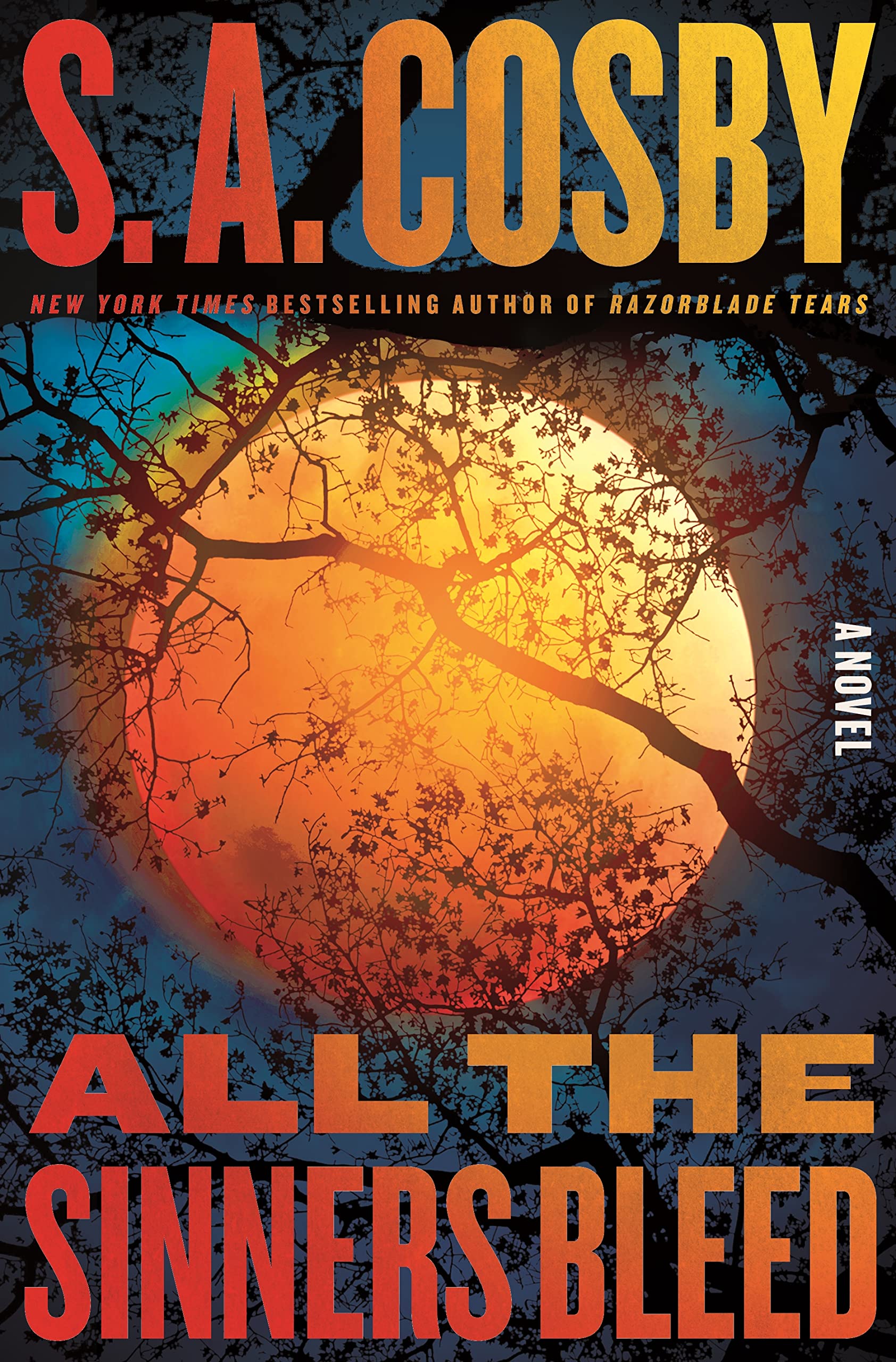
All the Sinners Bleed PDF - S.A. Cosby
S.A. Cosby • Drama novels • 338 Pages
(0)
Quate
Review
Save
Share
Book Description
All the Sinners Bleed by S.A. Cosby is a powerful Southern noir thriller that blends a gripping murder investigation with a fierce examination of race, faith, violence, memory, and justice in the American South. Set in the fictional Charon County, Virginia, the novel follows Titus Crown, the first Black sheriff in the county’s history, as he is pulled into a case that exposes not only a hidden serial killer but also the deep fractures running beneath the surface of his hometown. Published by Flatiron Books in 2023, the book is a 352-page thriller and became an instant New York Times bestseller, receiving wide recognition from major book lists and crime fiction awards.
A Dark and Urgent Southern Crime Novel
At the center of All the Sinners Bleed is Titus Crown, a former FBI agent who has returned to his hometown and taken on the difficult role of sheriff in a place that is both familiar and deeply troubling to him. Charon County may appear quiet, rural, and traditional, but Titus understands that small towns often hide their worst secrets behind politeness, church language, family names, and public rituals. His position is already complicated: he is a Black lawman serving a community shaped by racial history, local pride, political tension, and mistrust of authority. When violence erupts at a school and a teacher is killed by a former student, the tragedy quickly opens into something larger and more horrifying than anyone first imagined.
As Titus investigates the shooting, he uncovers evidence of crimes that suggest a serial killer has been operating in the shadows of Charon County. The case forces him to confront the hidden brutality of a place he knows intimately, while also managing the public pressure that comes with being sheriff in a divided town. Cosby gives the investigation an intense procedural drive, but the novel is never only about finding a killer. It is about what happens when a community’s carefully maintained image collapses, when violence reveals itself as part of a longer history, and when a man sworn to protect the law must decide how to pursue justice in a place where justice has often failed.
Titus Crown: A Sheriff Between Duty and History
Titus Crown is one of the novel’s strongest elements because he is not written as a simple hero. He is intelligent, controlled, wounded, and deeply aware of the contradictions of his position. As the first Black sheriff of Charon County, he represents progress to some people, a threat to others, and a complicated symbol even to himself. His previous experience as an FBI agent gives him the skills to investigate violence with discipline and insight, but his return home also places him among old memories, family ties, local resentments, and a personal past he cannot fully escape.
Through Titus, S.A. Cosby explores the emotional cost of public responsibility. Titus must project strength even when the case unsettles him. He must enforce the law while knowing that the law has not always protected people who look like him. He must confront white resentment, institutional pressure, community fear, and the burden of being watched from every side. This makes All the Sinners Bleed a compelling crime thriller with a morally complex protagonist, because Titus is constantly balancing professional duty with private pain, public leadership with personal memory, and justice with the temptation of anger.
Race, Religion, and Violence in Charon County
One of the reasons All the Sinners Bleed stands out in contemporary crime fiction is the way it uses the serial killer plot to explore larger social tensions. The novel’s crime is terrifying, but the world around the crime is equally important. Charon County is a place where religion, racial history, Confederate memory, political performance, and everyday violence intersect. As the investigation unfolds, Titus must also deal with a far-right group planning a parade celebrating the town’s Confederate history, adding another layer of public conflict to an already explosive atmosphere.
Cosby does not treat these themes as background decoration. Faith in the novel can be a source of comfort, community, and moral language, but it can also be used to conceal cruelty or justify silence. History is not something safely buried in the past; it continues to shape the town’s arguments, symbols, institutions, and fears. Violence is not only the work of one monstrous individual, but part of a broader landscape where personal sin and collective sin overlap. This gives the book its title a powerful resonance: the sinners in the novel are not limited to criminals alone, and the bleeding is not only physical.
A Thriller with Literary Weight
Readers looking for a fast, dark, and emotionally charged serial killer thriller will find plenty of momentum in All the Sinners Bleed. The novel includes the urgency of a manhunt, the tension of a community under pressure, and the dread of discovering that evil has been hiding close to ordinary life. Yet Cosby’s writing also gives the book a literary intensity that makes it more than a conventional crime story. His prose is sharp, atmospheric, and often forceful, capturing rural roads, churches, homes, fields, and public spaces with a sense that every place carries memory.
The publisher’s materials describe the novel as a story of “a Black sheriff, a serial killer, and a small town ready to combust,” a phrase that captures the pressure-cooker quality of the book without reducing its complexity. The suspense comes from the investigation, but the deeper unease comes from the knowledge that Charon County is full of people who know more than they say, believe more than they admit, and fear what might happen if the truth comes fully into the open. Cosby builds dread not only through violence, but through silence, history, and the sense that the town itself is resisting exposure.
Why S.A. Cosby’s Crime Fiction Matters
S.A. Cosby has become one of the most distinctive voices in modern American crime fiction because he writes thrillers that are both muscular and socially aware. His earlier novels, including Blacktop Wasteland and Razorblade Tears, established his reputation for stories about men under pressure, families shaped by regret, and violence rooted in economic and emotional desperation. With All the Sinners Bleed, he expands that vision into a broader and more politically charged portrait of a Southern community facing its own darkness.
The novel has been widely recognized as one of Cosby’s major works. Macmillan’s listing notes that it was an instant New York Times bestseller, a USA Today bestseller, a Goodreads Choice Award nominee, a Washington Post best thriller selection, a Time must-read book, and an Andrew Carnegie Medal for Excellence in Fiction longlist title, among other honors and recognitions. This acclaim reflects the way the book satisfies readers who want a gripping mystery while also appealing to those who value character depth, social insight, and morally challenging storytelling.
A Powerful Read for Fans of Southern Noir
All the Sinners Bleed is an excellent choice for readers who enjoy Southern noir, literary crime fiction, police procedurals, serial killer investigations, and thrillers that examine the darker side of small-town life. It is especially compelling for readers who want suspense with emotional substance: a novel where the search for a murderer also becomes a search through history, guilt, faith, and the complicated meanings of justice.
The book is dark, violent, and unsettling, but it is also deeply human. Titus Crown’s investigation forces him to confront not only a killer, but the wounds of his community and the unresolved pain within himself. Through him, S.A. Cosby creates a story about what it means to stand for the law when the law is imperfect, to love a home that has hurt you, and to seek truth in a place built on secrets. All the Sinners Bleed is a tense and unforgettable thriller about sin, reckoning, and the blood that history leaves behind.
S.A. Cosby
S.A. Cosby is an American crime writer whose work has become closely associated with Southern noir, hard-edged thrillers, morally complicated characters, and stories rooted in the social realities of the American South. His fiction is fast, violent, atmospheric, and emotionally serious, but its power comes from more than suspense. Cosby uses crime to examine poverty, racism, masculinity, grief, family loyalty, inherited trauma, and the difficult line between justice and revenge. His publisher identifies him as a bestselling writer from southeastern Virginia and lists major works including All the Sinners Bleed, Razorblade Tears, and Blacktop Wasteland. The same author profile notes that All the Sinners Bleed appeared on more than forty best-of-the-year lists, Razorblade Tears was an Edgar Award finalist, Blacktop Wasteland won the Los Angeles Times Book Prize, and Cosby has won or been recognized by major crime and thriller awards including the Anthony Award, the International Thriller Writers Award, the Barry Award, the Macavity Award, the Black Caucus of the American Library Association Award, and the Audie Award.
What makes S.A. Cosby distinctive is his ability to write crime fiction that feels both propulsive and deeply human. His novels often begin with people under pressure: a mechanic trying to protect his family, fathers grieving murdered sons, a sheriff facing a brutal crime in a divided town, or a son returning home to find his family business and siblings caught in danger. These characters are not simple heroes or villains. They are people shaped by desperation, memory, pride, fear, and love. Cosby is especially skilled at showing how ordinary life can become criminally explosive when financial pressure, social prejudice, and personal history converge. The result is fiction that reads with the speed of a thriller but carries the emotional gravity of tragedy.
Blacktop Wasteland is one of the clearest examples of Cosby’s storytelling power. The novel follows a man with a criminal past who has tried to build an honest life but is pulled back toward danger by economic pressure and family need. What might seem at first like a heist novel becomes something richer: a story about identity, fatherhood, temptation, and the fear that the past may be stronger than the future a person is trying to build. The book’s appeal lies in its movement, but its depth lies in its understanding of how poverty and pride can narrow a person’s choices until the wrong decision begins to look like the only available road.
In Razorblade Tears, Cosby turns revenge into a study of grief, shame, prejudice, and late awakening. The novel follows fathers who must confront not only the violence that took their sons but also the ways they failed them in life. That emotional structure gives the book its sharp moral force. Cosby writes action and violence with intensity, but he is equally interested in remorse and transformation. He asks what it means to seek justice when anger is mixed with guilt, and what kind of redemption may remain for people who have spent too long refusing to see the truth about those they loved.
All the Sinners Bleed broadens Cosby’s Southern canvas through the story of the first Black sheriff in a small Southern town facing a devastating crime and the tensions of a community shaped by race, religion, memory, and public performance. The novel uses the structure of a murder investigation to explore institutions, faith, history, and the difficulty of enforcing law in a place where the past remains politically and emotionally alive. Cosby’s later novel King of Ashes, published in 2025, is described by its publisher as a Southern crime epic and family drama inspired by the world of criminal dynasties. It follows Roman Carruthers as he returns home after his father’s accident and finds his brother in debt to dangerous criminals while his sister struggles to hold the family business together.
Cosby’s style is intense, visual, and rhythmically confident. He writes rural roads, garages, churches, funeral homes, bars, courtrooms, and damaged family houses with a sense of place that makes the landscape feel alive. His South is not a decorative setting; it is a living moral terrain marked by beauty, violence, memory, and contradiction. He understands the seduction of speed, the weight of debt, the danger of pride, and the way love can push people toward sacrifice or destruction. His novels often ask whether a person can escape the story written by blood, class, history, and family, or whether survival sometimes means becoming the very thing one has tried to outrun.
For readers who enjoy literary crime fiction, Southern noir, revenge thrillers, morally gray protagonists, and emotionally charged suspense, S.A. Cosby is one of the essential contemporary names in the genre. His books deliver danger, momentum, and sharp plotting, but they also offer social insight and human ache. He writes about violence without making it empty, about family without making it sentimental, and about justice without pretending that justice is simple. His fiction leaves readers with the feeling that every crime has roots, every choice has a cost, and every person carries a past that may one day demand payment.
Earn Rewards While Reading!
Every 10 pages you read and spent 30 seconds on every page, earns you 5 reward points! Keep reading to unlock achievements and exclusive benefits.
Read
Rate Now
5 Stars
4 Stars
3 Stars
2 Stars
1 Stars
All the Sinners Bleed Quotes
Top Rated
Latest
Quate
Be the first to leave a quote and earn 10 points
instead of 3
'%20/%3e%3c/svg%3e "Razorblade Tears")
Comments
Be the first to leave a comment and earn 5 points
instead of 3