

The source of the book
This book is published for the public benefit under a Creative Commons license, or with the permission of the author or publisher. If you have any objections to its publication, please contact us.
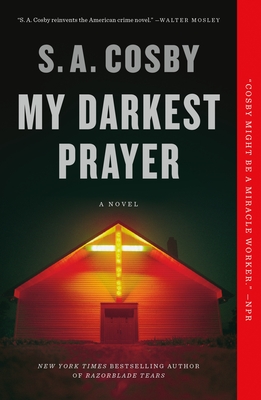
My Darkest Prayer PDF - S.A. Cosby
S.A. Cosby • Crime novels and mysteries • 288 Pages
(0)
Quate
Review
Save
Share
Book Description
My Darkest Prayer by S.A. Cosby is a gritty, hard-hitting Southern noir thriller that introduces readers to the raw power, dark humor, moral tension, and social intensity that would later make Cosby one of the most distinctive voices in contemporary American crime fiction. Republished in a new edition by Flatiron Books with a new introduction from the author, this debut novel centers on Nathan Waymaker, a former Marine and former sheriff’s deputy who now works at his cousin’s funeral home in rural Virginia. Nathan is a man who knows how to handle death, trouble, and dangerous people, but when the suspicious death of a local minister threatens to disappear beneath small-town silence, he is pulled into a violent maze of corruption, secrets, and old wounds. (Macmillan Publishers)
A Southern Noir Thriller with a Powerful Voice
At the heart of My Darkest Prayer is Nathan Waymaker, one of S.A. Cosby’s most memorable early protagonists. He is physically imposing, sharp-tongued, observant, and deeply marked by everything he has survived. His life has moved through war, law enforcement, grief, and now the funeral business, giving him a relationship with death that is both practical and personal. In the small Southern community where he lives, Nathan has built a reputation as someone people turn to when official channels fail, when the police do not care enough, or when a problem has become too dangerous for ordinary solutions.
That reputation becomes crucial when a beloved local minister is found dead and members of the community fear the truth will be ignored. What begins as a seemingly simple request soon becomes far more dangerous. Nathan’s investigation draws him into a world of small-town corruption, violent criminals, crooked police officers, false piety, organized vice, and people who understand that power is often protected by fear. The publisher describes the plot as descending into mayhem involving wannabe gangsters, vicious crime lords, porn stars, corrupt police, and a treacherous preacher with a mysterious wife, giving the novel the kind of unpredictable momentum readers expect from a tough, fast-moving crime story. (Macmillan Publishers)
Nathan Waymaker and the Burden of the Past
Nathan is not a polished detective or a conventional hero. He is a man shaped by war, family loss, racial tension, anger, humor, and the kind of experience that makes innocence impossible. His work in a funeral home gives the novel a striking atmosphere from the beginning, placing the reader close to mortality before the main investigation even fully begins. Death is not abstract in My Darkest Prayer; it is handled, prepared, transported, buried, and mourned. This setting gives the story a distinctive edge, because Nathan’s connection to the dead is not symbolic only. It is his daily work, his emotional terrain, and the place from which he begins to judge the living.
As Nathan follows the trail behind the minister’s death, his own secrets and unresolved pain begin to press against the surface. This is one of the reasons My Darkest Prayer works as more than a mystery. The investigation matters, but the novel is equally interested in what happens when a man who has spent years managing violence, grief, and anger is forced to confront the parts of himself he would rather keep buried. Nathan’s voice is rough, funny, wounded, and forceful, giving the book a strong first-person immediacy that makes the story feel personal even when the action becomes explosive.
Small-Town Corruption, Faith, and Moral Compromise
The world of My Darkest Prayer is rooted in a Southern town where churches, funeral homes, law enforcement, bars, family reputations, and criminal networks exist uncomfortably close to one another. Cosby uses this setting to explore how corruption survives in places where everyone knows everyone, where public respectability can hide private cruelty, and where people with power often depend on others being too afraid or too tired to ask questions. The death of a minister gives the story a religious and moral charge, but the novel does not treat faith as simple decoration. It places religious authority, community trust, hypocrisy, and spiritual language inside a world where violence and greed are never far away.
This makes the book especially compelling for readers interested in crime fiction with social depth. Cosby’s Southern setting is not just a backdrop for gunfights and confrontations. It is a living environment shaped by race, class, poverty, grief, masculinity, and the long memory of injustice. In Nathan’s town, danger does not come only from obvious criminals. It also comes from institutions that fail, officers who abuse authority, public figures who hide behind respectability, and citizens who have learned that truth can be costly. The result is a thriller that moves quickly while still carrying the heavy atmosphere of a community built on secrets.
The Debut That Reveals Cosby’s Signature Strengths
For readers who discovered S.A. Cosby through later novels such as Blacktop Wasteland, Razorblade Tears, or All the Sinners Bleed, My Darkest Prayer offers a fascinating look at the beginning of his crime-fiction voice. Macmillan identifies Cosby as a New York Times bestselling writer from southeastern Virginia and notes that his later works have received major recognition, including the Los Angeles Times Book Prize for Blacktop Wasteland, Edgar Award finalist status for Razorblade Tears, and appearances on more than forty best-of-the-year lists for All the Sinners Bleed. His official author profile also lists major honors including the Anthony Award, ITW Thriller Award, Barry Award, Macavity Award, BCALA Award, and Audie Award. (Macmillan Publishers)
Those later achievements help explain why My Darkest Prayer is so valuable for readers exploring S.A. Cosby books. Even in this debut, many of his defining qualities are already visible: muscular prose, vivid violence, dark humor, emotionally burdened men, corrupt systems, Southern atmosphere, and a deep concern with the cost of survival. Cosby has a gift for writing characters who are dangerous without being empty and wounded without being sentimental. Nathan Waymaker belongs in that tradition, standing as an early example of the morally complicated figures who make Cosby’s fiction so intense and memorable.
A Gritty Mystery for Readers Who Like Their Thrillers Dark
My Darkest Prayer is a strong choice for readers who enjoy Southern noir, hardboiled mystery, gritty crime novels, and thrillers driven by voice as much as plot. The novel offers a compelling investigation, but its real appeal lies in the way it combines action, attitude, grief, and social observation. Nathan’s search for the truth leads him through dangerous rooms and violent encounters, but it also exposes the emotional and moral rot beneath the town’s surface. Every new layer of the mystery suggests that the minister’s death is not an isolated event, but part of a larger pattern of compromise and exploitation.
The book is also ideal for readers who appreciate protagonists who are not easily categorized. Nathan can be funny, brutal, compassionate, reckless, insightful, and deeply angry, sometimes within the same scene. He is not untouched by the violence around him, and he is not pretending to be pure. That complexity gives the novel its edge. Instead of presenting justice as clean and simple, My Darkest Prayer asks what justice looks like when the official system cannot be trusted, when good people are afraid, and when the person asking questions may be carrying darkness of his own.
A Fierce Beginning to an Important Crime-Writing Career
Ultimately, My Darkest Prayer is a fierce, atmospheric, and character-driven debut that shows S.A. Cosby already working with the themes that define his most celebrated fiction: violence and grief, race and power, family and loss, faith and hypocrisy, rage and redemption. Its rural Virginia setting, funeral-home atmosphere, corrupt local power structures, and unforgettable central character create a reading experience that is both entertaining and unsettling. The novel does not soften its world, but it does give that world urgency, humor, and emotional force.
For anyone searching for a dark Southern thriller, a crime novel about small-town corruption, or the first novel by S.A. Cosby, My Darkest Prayer offers a gripping entry point into the author’s powerful imagination. It is a story about buried truths, dangerous men, failed institutions, and the fragile hope that someone with enough courage and enough anger might still force the dead to be heard.
S.A. Cosby
S.A. Cosby is an American crime writer whose work has become closely associated with Southern noir, hard-edged thrillers, morally complicated characters, and stories rooted in the social realities of the American South. His fiction is fast, violent, atmospheric, and emotionally serious, but its power comes from more than suspense. Cosby uses crime to examine poverty, racism, masculinity, grief, family loyalty, inherited trauma, and the difficult line between justice and revenge. His publisher identifies him as a bestselling writer from southeastern Virginia and lists major works including All the Sinners Bleed, Razorblade Tears, and Blacktop Wasteland. The same author profile notes that All the Sinners Bleed appeared on more than forty best-of-the-year lists, Razorblade Tears was an Edgar Award finalist, Blacktop Wasteland won the Los Angeles Times Book Prize, and Cosby has won or been recognized by major crime and thriller awards including the Anthony Award, the International Thriller Writers Award, the Barry Award, the Macavity Award, the Black Caucus of the American Library Association Award, and the Audie Award.
What makes S.A. Cosby distinctive is his ability to write crime fiction that feels both propulsive and deeply human. His novels often begin with people under pressure: a mechanic trying to protect his family, fathers grieving murdered sons, a sheriff facing a brutal crime in a divided town, or a son returning home to find his family business and siblings caught in danger. These characters are not simple heroes or villains. They are people shaped by desperation, memory, pride, fear, and love. Cosby is especially skilled at showing how ordinary life can become criminally explosive when financial pressure, social prejudice, and personal history converge. The result is fiction that reads with the speed of a thriller but carries the emotional gravity of tragedy.
Blacktop Wasteland is one of the clearest examples of Cosby’s storytelling power. The novel follows a man with a criminal past who has tried to build an honest life but is pulled back toward danger by economic pressure and family need. What might seem at first like a heist novel becomes something richer: a story about identity, fatherhood, temptation, and the fear that the past may be stronger than the future a person is trying to build. The book’s appeal lies in its movement, but its depth lies in its understanding of how poverty and pride can narrow a person’s choices until the wrong decision begins to look like the only available road.
In Razorblade Tears, Cosby turns revenge into a study of grief, shame, prejudice, and late awakening. The novel follows fathers who must confront not only the violence that took their sons but also the ways they failed them in life. That emotional structure gives the book its sharp moral force. Cosby writes action and violence with intensity, but he is equally interested in remorse and transformation. He asks what it means to seek justice when anger is mixed with guilt, and what kind of redemption may remain for people who have spent too long refusing to see the truth about those they loved.
All the Sinners Bleed broadens Cosby’s Southern canvas through the story of the first Black sheriff in a small Southern town facing a devastating crime and the tensions of a community shaped by race, religion, memory, and public performance. The novel uses the structure of a murder investigation to explore institutions, faith, history, and the difficulty of enforcing law in a place where the past remains politically and emotionally alive. Cosby’s later novel King of Ashes, published in 2025, is described by its publisher as a Southern crime epic and family drama inspired by the world of criminal dynasties. It follows Roman Carruthers as he returns home after his father’s accident and finds his brother in debt to dangerous criminals while his sister struggles to hold the family business together.
Cosby’s style is intense, visual, and rhythmically confident. He writes rural roads, garages, churches, funeral homes, bars, courtrooms, and damaged family houses with a sense of place that makes the landscape feel alive. His South is not a decorative setting; it is a living moral terrain marked by beauty, violence, memory, and contradiction. He understands the seduction of speed, the weight of debt, the danger of pride, and the way love can push people toward sacrifice or destruction. His novels often ask whether a person can escape the story written by blood, class, history, and family, or whether survival sometimes means becoming the very thing one has tried to outrun.
For readers who enjoy literary crime fiction, Southern noir, revenge thrillers, morally gray protagonists, and emotionally charged suspense, S.A. Cosby is one of the essential contemporary names in the genre. His books deliver danger, momentum, and sharp plotting, but they also offer social insight and human ache. He writes about violence without making it empty, about family without making it sentimental, and about justice without pretending that justice is simple. His fiction leaves readers with the feeling that every crime has roots, every choice has a cost, and every person carries a past that may one day demand payment.
Earn Rewards While Reading!
Every 10 pages you read and spent 30 seconds on every page, earns you 5 reward points! Keep reading to unlock achievements and exclusive benefits.
Read
Rate Now
5 Stars
4 Stars
3 Stars
2 Stars
1 Stars
My Darkest Prayer Quotes
Top Rated
Latest
Quate
Be the first to leave a quote and earn 10 points
instead of 3
Other books by S.A. Cosby
Other books like My Darkest Prayer
'%20/%3e%3c/svg%3e "The Harbinger: The Ancient Mystery that Holds the Secret of America's Future")
Jonathan Cahn.
Crime novels and mysteries
(0)
2958
English
Jonathan Cahn.
Crime novels and mysteries
(0)
2610
English
Comments
Be the first to leave a comment and earn 5 points
instead of 3