

The source of the book
This book is published for the public benefit under a Creative Commons license, or with the permission of the author or publisher. If you have any objections to its publication, please contact us.
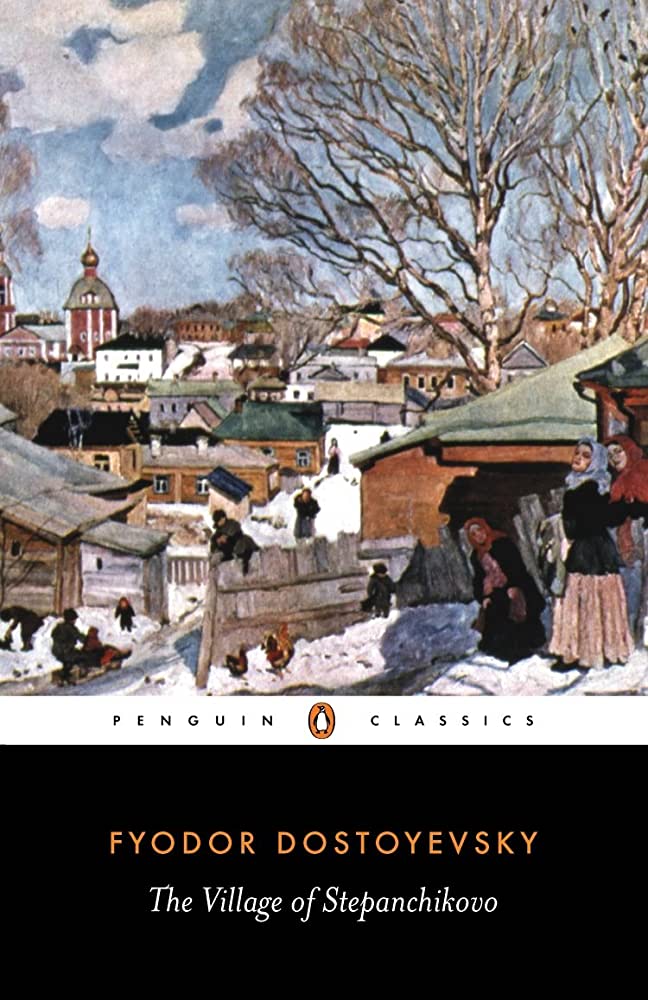
The Village of Stepanchikovo and Its Inhabitants PDF - Fyodor Dostoevsky
Fyodor Dostoevsky • Literary novels • 306 Pages
(0)
Author
Fyodor DostoevskyCategory
literatureSection
Number Of Downloads
21
Number Of Reads
179
File Size
1.58 MB
Views
729
Quate
Review
Save
Share
Book Description
The Village of Stepanchikovo by Fyodor Dostoevsky
The Village of Stepanchikovo by Fyodor Dostoevsky is a brilliant and often overlooked work of classic Russian literature, combining sharp social comedy, psychological observation, and satirical portraiture in a story of domestic tyranny and moral absurdity. First published in 1859 under the fuller title The Village of Stepanchikovo and Its Inhabitants, the novel belongs to the period after Dostoevsky’s return from Siberian punishment and military service, and it reveals a lighter, more theatrical side of the author while still carrying the emotional tension and human insight that would define his later masterpieces.
A comic Russian classic about power, vanity, and manipulation
The story begins when the young narrator, Sergey Alexandrovich, is summoned from St. Petersburg to the country estate of his uncle, the kind-hearted retired colonel Yegor Rostanev. What should be a family visit soon turns into an encounter with a household ruled by confusion, emotional pressure, and ridiculous authority. At the center of this chaos stands Foma Opiskin, a pretentious and manipulative dependent who has managed to present himself as a moral guide while bending the entire estate to his will. Through Sergey’s eyes, the reader enters a world where good intentions are exploited, vanity disguises itself as virtue, and private family life becomes a stage for comic humiliation and psychological control.
The reading experience: satire with Dostoevsky’s psychological depth
Although Dostoevsky is best known for intense philosophical novels such as Crime and Punishment, The Idiot, Demons, and The Brothers Karamazov, this book shows his gift for comedy, caricature, and dramatic confrontation. The Village of Stepanchikovo is often described as Gogolian in style and tone, and its humor comes from exaggeration, social embarrassment, absurd speeches, theatrical reversals, and the exposure of false moral superiority. Yet beneath the farce lies a serious study of domination: how a weak but self-righteous personality can control others through guilt, flattery, fear, and performance. A memorable portrait of Foma Opiskin
Foma Opiskin is one of Dostoevsky’s most vivid comic creations: ridiculous, cruel, wounded, vain, and strangely powerful. He is not a ruler by wealth or rank, but by psychological pressure. He survives by making others feel morally inferior, and he transforms ordinary domestic situations into ceremonies of obedience. For readers interested in Dostoevsky’s characters, Foma is especially fascinating because he anticipates later figures in the author’s fiction: people who use ideas, language, suffering, or supposed virtue as instruments of power. His presence makes the novel both entertaining and unsettling, because the comedy repeatedly reveals how easily kindness can become submissiveness when confronted by shameless manipulation.
Themes of family, authority, and social performance
At its heart, The Village of Stepanchikovo is a novel about a household losing its sense of proportion. Dostoevsky explores the fragile boundaries between generosity and weakness, morality and vanity, respect and servility. Colonel Rostanev is gentle and sincere, but his goodness leaves him vulnerable to stronger and more theatrical personalities. Around him gather relatives, dependents, servants, matchmakers, and social climbers, each adding to the pressure inside the estate. The result is a richly populated comic world where every conversation carries hidden motives and every gesture may become part of a larger struggle for influence.
Why this book matters in Dostoevsky’s work
For readers approaching Fyodor Dostoevsky beyond his most famous novels, The Village of Stepanchikovo offers an important glimpse into his development as a writer. It is less dark than many of his later works, but it already contains the seeds of his mature art: intense dialogue, unstable social situations, wounded pride, moral performance, and characters who reveal themselves through contradiction. Penguin Classics notes that the novel offers insight into the genesis of characters and situations that would later appear in major works such as The Idiot, Devils, and The Brothers Karamazov.
For readers of Russian literature and classic fiction
This novel will appeal to readers who enjoy Russian classics, satirical fiction, literary comedy, and character-driven novels about family conflict and social hypocrisy. It is also a strong choice for readers who want a different entry point into Dostoevsky: one that is comic, energetic, and theatrical rather than immediately tragic or philosophical. While the book has the density and emotional intensity expected from nineteenth-century Russian literature, its domestic setting and farcical structure make it unusually lively, filled with scenes of argument, misunderstanding, and escalating absurdity.
A distinctive and rewarding Dostoevsky novel
The Village of Stepanchikovo remains a rewarding work because it reveals how comedy can expose serious truths. Dostoevsky turns a country estate into a miniature society, showing how people submit to false authority, how vanity can imitate wisdom, and how moral language can become a mask for selfishness. The novel’s humor is not merely decorative; it is a way of uncovering the hidden violence of everyday manipulation. For anyone interested in Dostoevsky’s lesser-known books, classic Russian satire, or the early forms of his psychological fiction, The Village of Stepanchikovo is a rich, lively, and memorable reading experience.
Fyodor Dostoevsky
Fyodor Dostoevsky was a Russian novelist, philosopher, and essayist, widely considered to be one of the greatest writers in Western literature. He was born in Moscow in 1821 and raised in a middle-class family. His father was a doctor who treated the poor for free, which instilled in Dostoevsky a deep sense of social justice and compassion for the downtrodden.
Dostoevsky began his writing career in the 1840s, with a series of novellas and short stories that explored the complexities of human nature and the dark side of Russian society. His first major novel, "Poor Folk," was published in 1846 and won critical acclaim. However, it was his later works, such as "Crime and Punishment," "The Idiot," and "The Brothers Karamazov," that established him as a literary master.
Dostoevsky's writing is known for its psychological depth, philosophical themes, and exploration of the human condition. His characters often struggle with moral dilemmas and existential questions, grappling with issues of faith, morality, and the meaning of life. His works also explore the political and social issues of his time, including poverty, crime, and political oppression.
Dostoevsky's life was marked by personal tragedy and political turmoil. He was arrested in 1849 for his involvement with a group of liberal intellectuals and sentenced to death, only to have the sentence commuted to hard labor in Siberia. He returned to Russia after serving his sentence, but continued to struggle with poverty and illness throughout his life. He died in 1881 at the age of 59.
Despite his tumultuous life, Dostoevsky's legacy as a writer and thinker endures. His works continue to be widely read and studied today, and his ideas about the human condition and the role of faith in society continue to resonate with readers around the world.
Earn Rewards While Reading!
Every 10 pages you read and spent 30 seconds on every page, earns you 5 reward points! Keep reading to unlock achievements and exclusive benefits.
Read
Rate Now
5 Stars
4 Stars
3 Stars
2 Stars
1 Stars
The Village of Stepanchikovo and Its Inhabitants Quotes
Top Rated
Latest
Quate
Be the first to leave a quote and earn 10 points
instead of 3
'%20/%3e%3c/svg%3e "The Brothers Karamazov")
Comments
Be the first to leave a comment and earn 5 points
instead of 3