

The source of the book
This book is published for the public benefit under a Creative Commons license, or with the permission of the author or publisher. If you have any objections to its publication, please contact us.
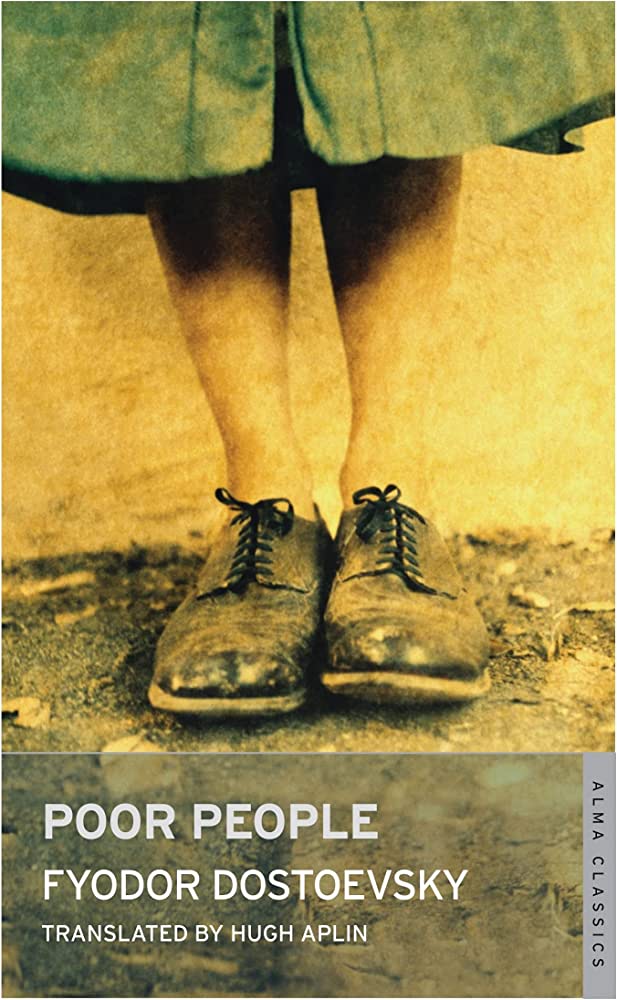
Poor People PDF - Fyodor Dostoevsky
Fyodor Dostoevsky • Literary novels • 223 Pages
(0)
Author
Fyodor DostoevskyCategory
literatureSection
Number Of Downloads
18
Number Of Reads
200
File Size
1.43 MB
Views
768
Quate
Review
Save
Share
Book Description
Poor People by Fyodor Dostoevsky: A Moving Early Classic of Russian Literature
Poor People, also widely known in English as Poor Folk, is the first published novel by Fyodor Dostoevsky, one of the most important writers in world literature. First published in 1846, this early work introduces many of the concerns that would later define Dostoevsky’s fiction: poverty, shame, moral vulnerability, human dignity, social injustice, emotional dependence, and the inner life of people pushed to the edges of society. Written as an epistolary novel, the book unfolds through letters exchanged between two poor residents of St. Petersburg, Makar Devushkin and Varvara Dobroselova, whose fragile bond becomes a quiet but deeply affecting portrait of hardship and compassion.
A Tender Story Told Through Letters
The power of Poor People by Fyodor Dostoevsky lies in its intimate form. Rather than presenting the story from a distant narrator’s point of view, Dostoevsky allows the characters to reveal themselves through their own words. Their letters are full of worry, tenderness, embarrassment, pride, fear, hope, and misunderstanding. This gives the novel a personal immediacy that makes the reader feel close to the emotional lives of its characters, as if reading not only a story about poverty but also a private record of the human need to be seen and valued.
At the center of the novel is the relationship between Makar Devushkin, a poor copy clerk, and Varvara Dobroselova, a young woman facing her own precarious circumstances. Their connection is marked by care, dependence, sacrifice, and emotional delicacy. Makar’s letters often show his desperate wish to protect Varvara and preserve his own sense of worth, while Varvara’s responses reveal intelligence, vulnerability, memory, and a painful awareness of the narrow choices available to someone in her position. Through their correspondence, Dostoevsky creates a world where small gestures carry enormous emotional weight.
Poverty, Dignity, and the “Little Man”
As a classic Russian novel about poverty, Poor People is not simply interested in economic hardship as background detail. Poverty shapes the characters’ speech, decisions, self-image, relationships, and sense of possibility. Dostoevsky shows how material deprivation can become psychological pressure: a worn coat, a borrowed coin, an unpaid debt, or a humiliating encounter can affect a person’s entire understanding of himself. The novel is especially powerful in its portrayal of the “little man,” a figure in Russian literature often associated with humble clerks, minor officials, and ordinary people whose lives are overlooked by the powerful.
Yet Dostoevsky does not reduce his characters to symbols of misery. Makar and Varvara are poor, but they are not empty figures of pity. They think, feel, dream, read, judge, remember, and suffer with complexity. The novel asks the reader to recognize the full humanity of people whom society tends to ignore. This is one reason Poor People remains an important work for readers interested in social realism, psychological fiction, nineteenth-century Russian literature, and Dostoevsky’s early writing.
The Beginning of Dostoevsky’s Literary World
For readers discovering Fyodor Dostoevsky, Poor People offers a fascinating entry point into the author’s development. Later masterpieces such as Crime and Punishment, The Idiot, Demons, and The Brothers Karamazov would explore moral conflict, spiritual crisis, guilt, freedom, and suffering on a vast scale. In Poor People, those themes appear in a quieter, more concentrated form. The setting is narrower, the plot is more restrained, and the emotional drama is built through letters rather than dramatic confrontation, but the Dostoevskian intensity is already visible.
The novel also belongs to the literary atmosphere of nineteenth-century St. Petersburg, a city that would become one of Dostoevsky’s most memorable fictional landscapes. In Poor People, St. Petersburg is not merely a location; it is a social environment of cramped rooms, fragile reputations, bureaucratic dependence, and constant financial anxiety. The city presses upon the characters, reminding them of their vulnerability while also intensifying their longing for affection, respect, and escape. Project Gutenberg identifies the work as centered on two impoverished distant relatives in St. Petersburg, and Britannica notes its importance as Dostoevsky’s first major literary success.
An Emotional Reading Experience Without Sentimentality
Although Poor People is a deeply emotional book, its emotional force does not come from exaggerated drama. Much of its impact comes from restraint. Dostoevsky pays attention to the small humiliations that accumulate in the lives of the poor and to the ways people try to protect themselves from shame. Makar’s tenderness can be moving, but it can also be anxious and self-deceiving. Varvara’s vulnerability invites sympathy, but her voice is not passive; she observes, remembers, and understands more than others may realize. This emotional complexity keeps the novel from becoming a simple tale of suffering.
The letter form also makes the reading experience unusually intimate. Each character is partly honest and partly guarded. What they say matters, but what they avoid saying matters too. Their words reveal affection, but also dependence and fear. Their kindness can be generous, but it can also be painful because it exists in a world where kindness alone cannot solve material hardship. This tension gives Poor People its lasting poignancy and makes it rewarding for readers who appreciate character-driven literary fiction.
Who Should Read Poor People?
Poor People is an excellent choice for readers interested in Dostoevsky’s first novel, Russian classics, epistolary fiction, and literature that explores the relationship between social conditions and inner life. It is especially valuable for those who want to understand how Dostoevsky began as a writer before the major philosophical novels that made him internationally famous. Readers who enjoy psychologically detailed fiction will find in Makar and Varvara early examples of Dostoevsky’s gift for revealing conflict within ordinary speech and emotion.
This book may also appeal to readers of Nikolai Gogol, Charles Dickens, and other writers concerned with poverty, bureaucracy, compassion, and social inequality. Like many great works of nineteenth-century literature, Poor People combines social observation with moral sensitivity. It asks not only how people survive hardship, but how they preserve self-respect when the world repeatedly denies them comfort, security, and recognition.
Why Poor People Still Matters
The lasting value of Poor People by Fyodor Dostoevsky comes from its quiet insistence that no human life is small from the inside. The novel shows how poverty can distort relationships, limit choices, and expose people to humiliation, but it also shows how deeply people continue to need affection, meaning, and dignity. Its characters may live in narrow circumstances, yet their emotional lives are vast. That contrast gives the book much of its beauty.
For anyone searching for a thoughtful Poor People book description, a meaningful introduction to Fyodor Dostoevsky’s early work, or a classic novel about poverty and human dignity, this book remains a compelling and important read. It is a tender, sorrowful, and psychologically rich work that reveals the young Dostoevsky already attentive to the hidden drama of ordinary people, and to the moral seriousness of lives that society too easily overlooks.
Fyodor Dostoevsky
Fyodor Dostoevsky was a Russian novelist, philosopher, and essayist, widely considered to be one of the greatest writers in Western literature. He was born in Moscow in 1821 and raised in a middle-class family. His father was a doctor who treated the poor for free, which instilled in Dostoevsky a deep sense of social justice and compassion for the downtrodden.
Dostoevsky began his writing career in the 1840s, with a series of novellas and short stories that explored the complexities of human nature and the dark side of Russian society. His first major novel, "Poor Folk," was published in 1846 and won critical acclaim. However, it was his later works, such as "Crime and Punishment," "The Idiot," and "The Brothers Karamazov," that established him as a literary master.
Dostoevsky's writing is known for its psychological depth, philosophical themes, and exploration of the human condition. His characters often struggle with moral dilemmas and existential questions, grappling with issues of faith, morality, and the meaning of life. His works also explore the political and social issues of his time, including poverty, crime, and political oppression.
Dostoevsky's life was marked by personal tragedy and political turmoil. He was arrested in 1849 for his involvement with a group of liberal intellectuals and sentenced to death, only to have the sentence commuted to hard labor in Siberia. He returned to Russia after serving his sentence, but continued to struggle with poverty and illness throughout his life. He died in 1881 at the age of 59.
Despite his tumultuous life, Dostoevsky's legacy as a writer and thinker endures. His works continue to be widely read and studied today, and his ideas about the human condition and the role of faith in society continue to resonate with readers around the world.
Earn Rewards While Reading!
Every 10 pages you read and spent 30 seconds on every page, earns you 5 reward points! Keep reading to unlock achievements and exclusive benefits.
Read
Rate Now
5 Stars
4 Stars
3 Stars
2 Stars
1 Stars
Poor People Quotes
Top Rated
Latest
Quate
Be the first to leave a quote and earn 10 points
instead of 3
'%20/%3e%3c/svg%3e "The Brothers Karamazov")
Comments
Be the first to leave a comment and earn 5 points
instead of 3