
Newly released
This book is new and will be uploaded as soon as it becomes available to us and if we secure the necessary publishing rights.
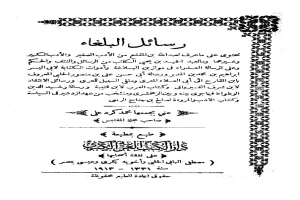
رسائل البلغاء PDF - Abdullah bin Muqaffa
Abdullah bin Muqaffa • literature • 326 Pages
(0)
Quate
Review
Save
Share
Book Description
Abdullah bin Muqaffa
Abdullah ibn al-Muqaffa was one of the most influential prose writers, translators, and intellectual figures of the early Abbasid period, and his name remains closely associated with the formation of refined Arabic prose, ethical literature, political counsel, and narrative wisdom. His importance lies not only in the texts attributed to him, but also in the literary method he helped establish: a method that combines clarity of expression, disciplined style, moral instruction, political insight, and an elegant ability to turn inherited stories into living works for new readers. Born into a Persian cultural background and writing within the Arabic Islamic world, he became a major figure in the movement of cultural transmission that enriched Arabic letters during the eighth century. His most famous work is Kalila wa Dimna, a celebrated collection of animal fables and political parables adapted into Arabic from earlier traditions. The book uses stories of lions, jackals, birds, and other creatures to explore human conduct, the dangers of ambition, the value of wise counsel, the fragility of friendship, the corruption of power, and the complex relationship between rulers and advisers. Through this literary form, Abdullah ibn al-Muqaffa made difficult questions accessible to a broad audience while preserving layers of meaning for rulers, scholars, students, and thoughtful readers. He understood that a story could teach more effectively than a direct lecture, because narrative allows readers to observe consequences, recognize patterns, and judge motives without feeling forced into obedience. This quality explains why Kalila wa Dimna has remained a classic for centuries and why it has continued to attract readers interested in literature, leadership, ethics, and the history of ideas. Abdullah ibn al-Muqaffa is also associated with works of conduct and counsel, including The Greater Book of Manners, The Lesser Book of Manners, and writings concerned with governance, loyalty, public service, and the moral formation of the educated person. In these works, the ideal reader is not merely someone who knows beautiful language, but someone who can master the self, speak with restraint, choose companions carefully, understand social rank without becoming servile, and recognize that wisdom is valuable only when joined to action. His prose is admired for its balance, precision, sobriety, and power. It does not rely on excessive ornament; instead, it builds authority through order, proportion, and carefully arranged thought. This made him a model for later Arabic prose writers and a key figure in the history of adab, the broad tradition of cultivated knowledge, moral refinement, and literary education. The life of Abdullah ibn al-Muqaffa also carries a dramatic historical dimension. He lived near the world of officials, secretaries, governors, and caliphal politics, and later accounts connect his death with the dangers of political expression in a turbulent age. Whether read as a translator, an author, a stylist, a political thinker, or a mediator between civilizations, he remains a central figure for anyone studying classical Arabic literature. His legacy is especially valuable for book websites, libraries, and readers because it links storytelling with practical wisdom. He shows that literature can entertain, instruct, warn, and refine at the same time. His influence crosses linguistic and cultural boundaries, and his works continue to speak to modern readers who are interested in power, character, justice, prudence, friendship, and the timeless art of saying profound things with memorable simplicity.
Book Currently Unavailable
This book is currently unavailable for publication. We obtained it under a Creative Commons license, but the author or publisher has not granted permission to publish it.
Rate Now
5 Stars
4 Stars
3 Stars
2 Stars
1 Stars
رسائل البلغاء Quotes
Top Rated
Latest
Quate
Be the first to leave a quote and earn 10 points
instead of 3
'%20/%3e%3c/svg%3e "كليلة ودمنة")
Comments
Be the first to leave a comment and earn 5 points
instead of 3