

The source of the book
This book is published for the public benefit under a Creative Commons license, or with the permission of the author or publisher. If you have any objections to its publication, please contact us.
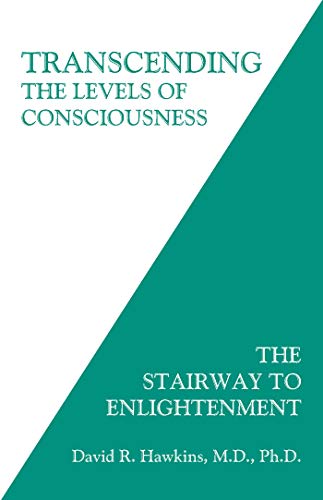
Transcending the Levels of Consciousness PDF - David R. Hawkins
David R. Hawkins • Human Development • 454 Pages
(0)
Author
David R. HawkinsCategory
Social sciencesSection
Number Of Downloads
112
Number Of Reads
275
File Size
0.00 MB
Views
3,835
Quate
Review
Save
Share
Book Description
Transcending the Levels of Consciousness: The Stairway to Enlightenment by David R. Hawkins, M.D., Ph.D. is a deep and contemplative work of spiritual growth, consciousness studies, self-transformation, and ego transcendence. Building on the author’s widely known Map of Consciousness, the book explores the inner states that shape human perception, emotion, behavior, and spiritual development. The Hay House edition lists the book at 416 pages, and its description presents it as a guide to transcending ego limitations, relieving suffering, and advancing consciousness within Hawkins’s spiritual framework.
A Guide to the Inner Movement from Ego to Awareness
At the heart of Transcending the Levels of Consciousness is Hawkins’s central question: how can a person move beyond the restrictive patterns of the ego and awaken to a freer, more truthful way of being? Rather than treating consciousness as a vague idea, Hawkins organizes it into recognizable inner states, showing how emotions such as shame, guilt, grief, fear, desire, anger, and pride can dominate perception and create suffering. He then contrasts these states with higher qualities such as courage, neutrality, willingness, acceptance, reason, love, joy, and enlightenment, presenting spiritual progress as a gradual surrender of false identifications.
The book is especially valuable for readers who want more than a general inspirational text. Hawkins writes with the seriousness of someone attempting to map the structure of inner experience. He examines the ego not merely as selfishness, but as a system of attachments, defenses, judgments, emotional payoffs, and limited viewpoints. This makes the book relevant to readers interested in spiritual psychology, nonduality, self-inquiry, personal development, and the deeper mechanics of transformation.
Exploring the Map of Consciousness
One of the major reasons readers search for Transcending the Levels of Consciousness by David R. Hawkins is its connection to the author’s larger body of work, especially Power vs. Force, where Hawkins first presented the Map of Consciousness. In this book, he expands that framework by discussing the ego’s expressions and limitations in more detail, offering explanations and instructions for transcending them.
The structure gives readers a way to reflect on their own patterns without reducing the spiritual path to simple positive thinking. Hawkins presents lower states of consciousness as contracted forms of perception, where life may be filtered through fear, resentment, control, victimhood, craving, or defensiveness. Higher states are described as progressively more open, compassionate, peaceful, and aligned with truth. Whether approached as a spiritual model, a contemplative tool, or a language for self-observation, the book invites readers to look honestly at the inner motives that shape their experience.
Themes of Surrender, Ego, Healing, and Spiritual Evolution
A central theme in the book is surrender. Hawkins repeatedly points toward the release of resistance, the letting go of positionality, and the willingness to move beyond the mind’s insistence on being right. This makes the book closely connected in spirit to his later work Letting Go: The Pathway of Surrender, while remaining more focused on the graduated levels of consciousness and their spiritual implications.
The book also speaks to the relationship between suffering and identification. Hawkins suggests that much of human pain arises not simply from external events, but from the meanings, attachments, and ego positions placed upon them. Through this lens, spiritual development is not an escape from life but a transformation of perception. A person begins to see how pride protects insecurity, how anger may mask fear, how desire creates dependency, and how acceptance opens the possibility of peace.
A Reading Experience for Serious Spiritual Seekers
Transcending the Levels of Consciousness is not a light or casual self-help book. It is best suited for readers who are ready to engage with a dense, reflective, and metaphysical approach to inner growth. Hawkins blends spiritual teaching, psychological observation, philosophical reflection, and devotional language, creating a reading experience that feels both analytical and contemplative. Readers familiar with his earlier works will recognize his emphasis on truth, humility, surrender, and the movement from linear thinking toward a more expansive awareness.
For newcomers, the book can serve as a substantial introduction to Hawkins’s understanding of consciousness, although some readers may find it especially rewarding after reading Power vs. Force. The chapters move through many emotional and spiritual states, giving readers a vocabulary for recognizing where they may be identified with fear, grief, pride, or control, and how these states may be transcended through awareness, willingness, and surrender.
Who Should Read Transcending the Levels of Consciousness?
This book is ideal for readers interested in consciousness, enlightenment, spiritual awakening, ego transcendence, inner healing, and the psychology of spiritual growth. It will appeal to those who are drawn to authors and traditions that explore nonduality, mysticism, contemplative practice, and the transformation of the self. It is also useful for readers who want a more structured way to understand emotional states and spiritual development, especially within Hawkins’s own terminology.
Readers looking for a conventional psychology book, a purely scientific study, or a quick motivational guide may find the work more metaphysical than expected. Hawkins’s approach is best read as a spiritual and philosophical system rather than a standard clinical manual. For those open to that framework, however, the book offers a detailed path of self-examination and inner refinement.
Why This Book Remains Important in David R. Hawkins’s Work
Within David R. Hawkins’s catalog, Transcending the Levels of Consciousness occupies an important place because it directly develops the practical and spiritual meaning of the Map of Consciousness. It does not merely present a chart or theory; it explores the lived experience of each level, the limitations that keep a person identified with it, and the possibility of moving beyond it. Google Books describes the work as returning to the exploration of the ego’s expressions and limitations, with detailed explanations and instructions for transcending them.
The result is a book that speaks to the long-term spiritual journey. It encourages readers to examine not only what they believe, but how they perceive, react, defend, desire, judge, and surrender. In Hawkins’s view, the path upward is not achieved by force, ambition, or spiritual performance, but by truthfulness, humility, devotion, and the gradual relinquishment of the ego’s claims.
A Profound Book on Consciousness and Inner Freedom
Transcending the Levels of Consciousness: The Stairway to Enlightenment is a thoughtful and demanding book for readers who want to explore the inner architecture of spiritual transformation. Through its discussion of emotional states, ego mechanisms, consciousness levels, surrender, love, reason, joy, and enlightenment, David R. Hawkins offers a framework for understanding the movement from suffering toward greater peace and awareness.
For anyone searching for a serious David R. Hawkins book on consciousness, a guide to transcending the ego, or a spiritual text that connects inner healing with the evolution of awareness, this work provides a rich and structured path of reflection. It invites the reader to look beyond surface behavior and into the deeper field of consciousness itself, where transformation begins with the willingness to see clearly, surrender honestly, and move toward a more liberated way of being.
David R. Hawkins
Dr. David R. Hawkins, born David Ramon Hawkins, was an American psychiatrist, physician, researcher, lecturer, spiritual teacher, and bestselling author whose work became widely associated with consciousness studies, emotional healing, devotional spirituality, and practical inner transformation. Born in Milwaukee, Wisconsin, on June 3, 1927, and deceased in Sedona, Arizona, on September 19, 2012, Hawkins built a career that moved from clinical psychiatry into a broader body of spiritual and philosophical writing. His official biography identifies him as Medical Director of the North Nassau Mental Health Center from 1956 to 1980 and Director of Research at Brunswick Hospital from 1968 to 1979, details that help explain the clinical language that appears throughout his books on suffering, recovery, surrender, addiction, fear, guilt, anger, and the search for peace. In 1973, he co-authored Orthomolecular Psychiatry with Nobel Prize-winning chemist Linus Pauling, a collaboration that placed him within a debated but historically significant area of psychiatry, nutrition, and biological approaches to mental health. As an author, Hawkins is best known for Power vs. Force: The Hidden Determinants of Human Behavior, Letting Go: The Pathway of Surrender, The Eye of the I, I: Reality and Subjectivity, Truth vs. Falsehood, Transcending the Levels of Consciousness, and Healing and Recovery. These works made him especially visible among readers searching for books on consciousness, spiritual awakening, emotional release, self-inquiry, nonduality, meditation, and the psychology of transformation. In Power vs. Force, Hawkins introduced the framework he called the Map of Consciousness, a symbolic and spiritual model that organizes human attitudes and emotions from states such as shame, fear, anger, and pride toward courage, acceptance, love, joy, peace, and enlightenment. The model should be understood as part of Hawkins’s own spiritual-philosophical system rather than as a substitute for mainstream medical, psychological, or psychiatric treatment. His later and highly popular book Letting Go presents a “surrender” approach to emotional life, encouraging readers to observe, allow, and release inner resistance rather than suppressing or dramatizing difficult feelings. This emphasis on surrender made Hawkins especially influential among readers interested in emotional freedom, mindfulness, forgiveness, recovery, and spiritual self-help. His style is direct, devotional, and often didactic: he writes as a physician familiar with pain, as a contemplative teacher concerned with the ego, and as a spiritual author attempting to connect everyday human struggle with questions of truth, compassion, and ultimate reality. His official biography also notes that he founded the Institute for Spiritual Research in 1983 and the Path of Devotional Nonduality in 2003, and that he lectured at universities, spiritual centers, and public forums. For a book website, David R. Hawkins can be presented as a major modern author in the fields of spirituality, consciousness, and inner healing, particularly suited to readers seeking thoughtful works on letting go, personal transformation, recovery, devotion, awareness, and the movement from emotional suffering toward a more peaceful and meaningful life.
Earn Rewards While Reading!
Every 10 pages you read and spent 30 seconds on every page, earns you 5 reward points! Keep reading to unlock achievements and exclusive benefits.
Read
Rate Now
5 Stars
4 Stars
3 Stars
2 Stars
1 Stars
Transcending the Levels of Consciousness Quotes
Top Rated
Latest
Quate
Be the first to leave a quote and earn 10 points
instead of 3
Other books by David R. Hawkins
'%20/%3e%3c/svg%3e "The Eye of the I: From Which Nothing is Hidden")
David R. Hawkins.
Human Development
(0)
6546
English
Comments
Be the first to leave a comment and earn 5 points
instead of 3