

The source of the book
This book is published for the public benefit under a Creative Commons license, or with the permission of the author or publisher. If you have any objections to its publication, please contact us.
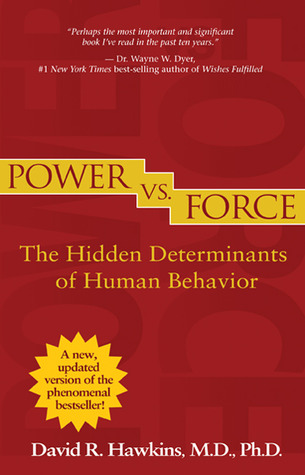
Power vs. Force PDF - David R. Hawkins
David R. Hawkins • psychology • 243 Pages
(0)
Author
David R. HawkinsCategory
Social sciencesSection
Number Of Downloads
501
Number Of Reads
331
File Size
1.56 MB
Views
10,493
Quate
Review
Save
Share
Book Description
Power vs. Force: The Hidden Determinants of Human Behavior by David R. Hawkins is a thought-provoking work of spiritual psychology, consciousness studies, and personal development that explores one central question: what truly gives human beings strength? Rather than defining power as control, dominance, pressure, or external success, Hawkins presents a deeper distinction between authentic power and mere force. In his view, force depends on resistance, manipulation, fear, and ego, while true power arises from truth, integrity, courage, compassion, and alignment with higher levels of consciousness. The book is widely associated with Hawkins’s “Map of Consciousness” framework and remains one of his best-known works for readers interested in self-awareness, spiritual growth, emotional mastery, and the hidden motives behind human behavior.
A Book About the Inner Source of Human Strength
At the heart of Power vs. Force is the idea that human actions are shaped by invisible inner states. Hawkins argues that people, institutions, ideas, and cultures do not operate only through logic, strategy, or visible influence; they are also driven by levels of consciousness that determine whether their impact is life-supporting or draining. This makes the book especially appealing to readers who want more than practical productivity advice. It speaks to those searching for a framework that connects personal transformation, moral clarity, spiritual awareness, decision-making, and the search for truth.
Hawkins’s distinction between power and force gives the book its lasting appeal. Force may appear strong because it can dominate, compel, or produce quick results, but it requires constant effort to maintain. It is associated with control, opposition, pride, anger, fear, and the need to prove oneself. Power, by contrast, is presented as quiet, stable, self-sustaining, and rooted in alignment with truth. It does not need to overpower because it carries inner authority. For readers navigating conflict, ambition, relationships, leadership, or spiritual practice, this contrast offers a fresh way to examine whether their choices are coming from pressure or from genuine inner strength.
The Map of Consciousness and the Search for Truth
One of the most discussed elements of Power vs. Force is Hawkins’s model of calibrated levels of consciousness. The book presents a scale intended to describe different states of human awareness, ranging from lower states such as shame, guilt, apathy, grief, fear, desire, anger, and pride to higher states such as courage, neutrality, willingness, acceptance, reason, love, joy, peace, and enlightenment. This structure gives readers a language for reflecting on emotional energy, motivation, character, and spiritual development. It also explains why the book continues to attract readers interested in consciousness research, metaphysics, mindfulness, and the relationship between inner state and outer behavior.
The book also discusses Hawkins’s use of applied kinesiology, or muscle testing, as a method connected to his claims about truth and consciousness. Readers should approach this part of the book with discernment, especially if they are coming from a strictly scientific or clinical background. Power vs. Force is best read as a spiritual and philosophical framework for understanding human behavior rather than as a conventional academic psychology text. Its value for many readers lies in the questions it raises: What weakens us? What strengthens us? How do truth, intention, and integrity affect the quality of our lives? How can consciousness become a practical guide for personal and collective evolution?
Themes of Integrity, Courage, and Spiritual Growth
A major theme in Power vs. Force is the transformative role of integrity. Hawkins suggests that people become stronger when they align thought, speech, and action with truth. This does not mean perfection or moral superiority; it means a sincere willingness to move beyond self-deception, blame, resentment, and fear-based decision-making. In this sense, the book invites readers to examine not only what they do, but the inner condition from which they act. A choice made from fear may have a very different quality from a choice made from courage, acceptance, or love, even when the outward action looks similar.
The theme of courage is especially important because Hawkins presents it as a turning point in consciousness. Courage represents the willingness to face reality, take responsibility, and move beyond victimhood. Readers who are drawn to self-help books, emotional healing, spiritual awakening, or leadership development may find this part of the book particularly meaningful. It reframes growth not as forcing oneself to become better, but as gradually releasing lower motivations and choosing a more honest relationship with life.
Another central theme is the difference between ego-driven achievement and spiritually grounded power. The book challenges the common assumption that success, status, and control are the highest forms of strength. Instead, Hawkins points toward humility, compassion, forgiveness, and inner alignment as more enduring sources of influence. This makes Power vs. Force relevant not only for individual readers but also for those interested in ethics, culture, politics, business, education, and collective human behavior.
Reading Experience and Style
Power vs. Force is not a light inspirational book, although it can be deeply motivating. It combines spiritual language, psychological reflection, philosophical argument, and Hawkins’s own framework of consciousness. Some readers will be drawn to its ambitious attempt to explain human behavior through a unified scale of awareness, while others may find its claims unconventional. That complexity is part of the book’s identity. It is a work that asks to be read slowly, questioned carefully, and reflected on personally.
The reading experience is often strongest when approached as an invitation to self-observation. Rather than reading only to accept or reject every claim, readers can use the book to notice the difference between inner contraction and inner expansion, between reactions based on fear and choices based on clarity. In this way, Power vs. Force becomes more than a theory; it becomes a mirror for examining daily life, relationships, ambition, emotional patterns, and spiritual aspiration.
Who Should Read Power vs. Force?
Power vs. Force by David R. Hawkins is well suited for readers interested in spiritual development, consciousness, emotional healing, self-mastery, and the deeper causes behind human behavior. It will appeal to those who enjoy books that blend psychology, philosophy, spirituality, and personal transformation. Readers of works on mindfulness, enlightenment, energy, inner peace, and the evolution of consciousness may find Hawkins’s ideas especially engaging.
The book is also valuable for readers who feel that ordinary definitions of power are incomplete. Anyone who has seen forceful people create fear without respect, or gentle people influence others through truth and presence, will recognize the importance of Hawkins’s central distinction. It is a book for people asking how to live with more integrity, how to recognize what is life-affirming, and how to move from reaction to awareness.
A Lasting Work on Consciousness and Human Potential
Power vs. Force remains a distinctive and influential book because it offers a bold vision of human potential. It does not reduce life to external achievement or psychological technique. Instead, it suggests that the quality of consciousness behind every action matters. Whether readers approach it as spiritual teaching, personal development, philosophical inquiry, or a framework for self-reflection, the book encourages a deeper understanding of strength, truth, and responsibility.
For those seeking a book that challenges conventional ideas about power, invites serious inner reflection, and explores the relationship between consciousness and behavior, Power vs. Force: The Hidden Determinants of Human Behavior offers a rich and memorable reading experience. It is a work that asks readers to look beneath appearances and consider a profound possibility: that real power is not something we impose on the world, but something that emerges when we align ourselves with truth.
David R. Hawkins
Dr. David R. Hawkins, born David Ramon Hawkins, was an American psychiatrist, physician, researcher, lecturer, spiritual teacher, and bestselling author whose work became widely associated with consciousness studies, emotional healing, devotional spirituality, and practical inner transformation. Born in Milwaukee, Wisconsin, on June 3, 1927, and deceased in Sedona, Arizona, on September 19, 2012, Hawkins built a career that moved from clinical psychiatry into a broader body of spiritual and philosophical writing. His official biography identifies him as Medical Director of the North Nassau Mental Health Center from 1956 to 1980 and Director of Research at Brunswick Hospital from 1968 to 1979, details that help explain the clinical language that appears throughout his books on suffering, recovery, surrender, addiction, fear, guilt, anger, and the search for peace. In 1973, he co-authored Orthomolecular Psychiatry with Nobel Prize-winning chemist Linus Pauling, a collaboration that placed him within a debated but historically significant area of psychiatry, nutrition, and biological approaches to mental health. As an author, Hawkins is best known for Power vs. Force: The Hidden Determinants of Human Behavior, Letting Go: The Pathway of Surrender, The Eye of the I, I: Reality and Subjectivity, Truth vs. Falsehood, Transcending the Levels of Consciousness, and Healing and Recovery. These works made him especially visible among readers searching for books on consciousness, spiritual awakening, emotional release, self-inquiry, nonduality, meditation, and the psychology of transformation. In Power vs. Force, Hawkins introduced the framework he called the Map of Consciousness, a symbolic and spiritual model that organizes human attitudes and emotions from states such as shame, fear, anger, and pride toward courage, acceptance, love, joy, peace, and enlightenment. The model should be understood as part of Hawkins’s own spiritual-philosophical system rather than as a substitute for mainstream medical, psychological, or psychiatric treatment. His later and highly popular book Letting Go presents a “surrender” approach to emotional life, encouraging readers to observe, allow, and release inner resistance rather than suppressing or dramatizing difficult feelings. This emphasis on surrender made Hawkins especially influential among readers interested in emotional freedom, mindfulness, forgiveness, recovery, and spiritual self-help. His style is direct, devotional, and often didactic: he writes as a physician familiar with pain, as a contemplative teacher concerned with the ego, and as a spiritual author attempting to connect everyday human struggle with questions of truth, compassion, and ultimate reality. His official biography also notes that he founded the Institute for Spiritual Research in 1983 and the Path of Devotional Nonduality in 2003, and that he lectured at universities, spiritual centers, and public forums. For a book website, David R. Hawkins can be presented as a major modern author in the fields of spirituality, consciousness, and inner healing, particularly suited to readers seeking thoughtful works on letting go, personal transformation, recovery, devotion, awareness, and the movement from emotional suffering toward a more peaceful and meaningful life.
Earn Rewards While Reading!
Every 10 pages you read and spent 30 seconds on every page, earns you 5 reward points! Keep reading to unlock achievements and exclusive benefits.
Read
Rate Now
5 Stars
4 Stars
3 Stars
2 Stars
1 Stars
Power vs. Force Quotes
Top Rated
Latest
Quate
Be the first to leave a quote and earn 10 points
instead of 3
Other books by David R. Hawkins
'%20/%3e%3c/svg%3e "The Eye of the I: From Which Nothing is Hidden")
David R. Hawkins.
Human Development
(0)
6538
English
Comments
Be the first to leave a comment and earn 5 points
instead of 3