

The source of the book
This book is published for the public benefit under a Creative Commons license, or with the permission of the author or publisher. If you have any objections to its publication, please contact us.
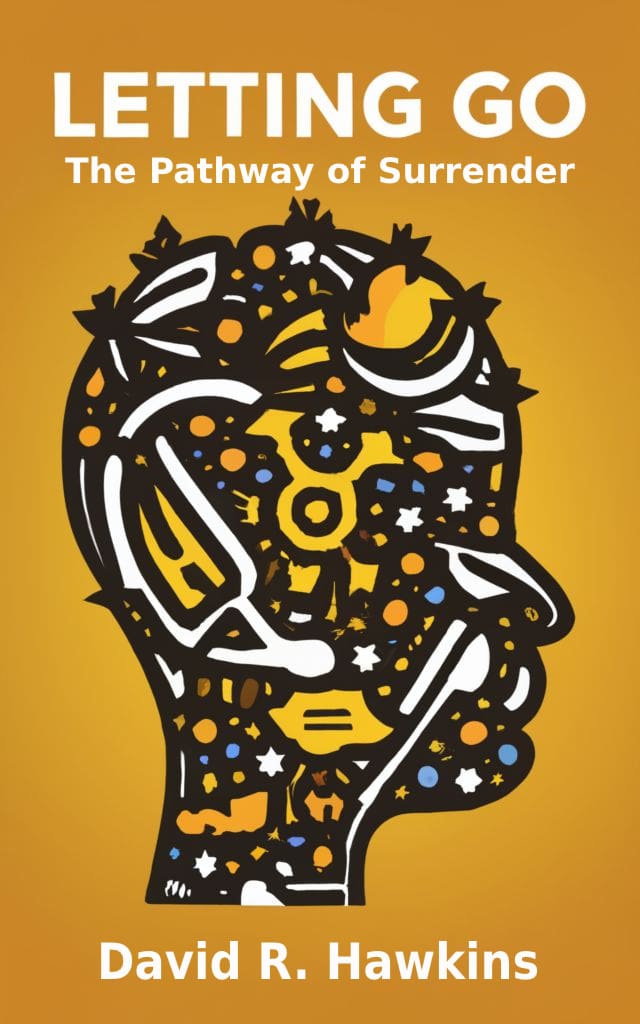
Letting Go: The Pathway of Surrender PDF - David R. Hawkins
David R. Hawkins • Human Development • 259 Pages
(0)
Author
David R. HawkinsCategory
Social sciencesSection
Number Of Downloads
1,699
Number Of Reads
721
File Size
0.00 MB
Views
37,549
Quate
Review
Save
Share
Book Description
Letting Go: The Pathway of Surrender by David R. Hawkins is a deeply influential work of self-development, emotional healing, and spiritual growth that explores one central question: how can human beings become free from the inner pressure of fear, anger, guilt, grief, pride, and resistance? Rather than focusing on external control or complicated mental techniques, Hawkins presents a simple but profound inner process known as surrender—the willingness to allow feelings to arise, be fully experienced, and dissolve without suppression, denial, or attachment.
This book speaks to readers who are searching for a practical way to reduce emotional suffering, understand the roots of negativity, and move toward greater peace of mind. Hawkins approaches the subject from a distinctive blend of psychology, spirituality, and consciousness studies, making Letting Go especially appealing to those interested in personal transformation, emotional freedom, mindfulness, inner peace, and the deeper meaning of human experience.
A Practical Guide to Emotional Release
At the heart of Letting Go: The Pathway of Surrender is the idea that many of life’s difficulties are intensified not only by circumstances themselves, but by the emotions and inner resistance attached to them. Hawkins explains that people often try to escape uncomfortable feelings through distraction, repression, blame, overthinking, or constant activity. Yet these strategies can leave the original emotional energy unresolved, repeating itself in relationships, decisions, self-image, and everyday stress.
The method described in the book encourages the reader to stop fighting inner experience and instead become aware of feelings as they are. This does not mean passivity or resignation; rather, it is a disciplined practice of observing emotion without feeding it, judging it, or turning it into a story. Through this process, Hawkins suggests that emotional charge can lose its grip, allowing the mind to become clearer and the heart more open.
Themes of Surrender, Consciousness, and Inner Freedom
David R. Hawkins is known for writing about consciousness, spirituality, human behavior, and the movement from lower emotional states toward higher awareness. In Letting Go, these themes are presented in a way that is accessible to readers who may be new to his work, while still offering depth for those familiar with his broader teachings. The book examines emotional states such as apathy, grief, fear, desire, anger, pride, courage, acceptance, love, peace, and joy, showing how each state affects perception and behavior.
One of the most valuable aspects of the book is its focus on the inner mechanism behind emotional patterns. Hawkins invites readers to notice how fear can shape choices, how guilt can distort self-worth, how resentment can keep the past alive, and how attachment can create anxiety. By learning to surrender these inner reactions, the reader is guided toward a more peaceful and spacious way of living.
A Book for Readers Seeking Healing and Self-Understanding
Letting Go is especially meaningful for readers who feel emotionally burdened, mentally overactive, spiritually curious, or caught in repeating cycles of stress and dissatisfaction. It can be read as a self-help book, a spiritual guide, or a reflective manual for emotional awareness. Its appeal lies in the fact that it does not require the reader to adopt a complicated system. Instead, it offers a direct practice that can be applied in ordinary life—during conflict, disappointment, uncertainty, ambition, loss, or personal change.
For readers interested in emotional healing, the book provides language for experiences that are often difficult to name. It helps explain why certain reactions feel automatic, why old wounds may continue to influence the present, and why forcing positivity is not the same as true inner freedom. Hawkins encourages a more honest path: acknowledging what is present, allowing it without resistance, and releasing the need to control every emotional outcome.
The Reading Experience
The reading experience of Letting Go: The Pathway of Surrender is calm, reflective, and practical, yet also philosophical. Hawkins writes with the tone of a teacher guiding the reader through inner observation. The book does not depend on dramatic storytelling or quick motivational formulas. Instead, it builds gradually, inviting the reader to examine the emotional roots of suffering and to practice a different relationship with the mind.
Many readers are drawn to the book because it addresses both everyday concerns and deeper spiritual questions. It discusses relationships, success, health, creativity, happiness, and personal fulfillment, but always returns to the same essential point: lasting change begins with what is released internally. This makes the book relevant not only for moments of crisis, but also for anyone seeking a more conscious, peaceful, and authentic life.
Why Letting Go Remains Powerful
The enduring strength of Letting Go comes from its simplicity. The phrase “letting go” is familiar, but Hawkins gives it a deeper and more practical meaning. In this book, letting go is not forgetting, avoiding, giving up, or pretending not to care. It is the release of inner resistance, the softening of emotional attachment, and the gradual discovery that peace is not created by controlling the world, but by changing one’s relationship to inner experience.
For readers of spiritual self-help, consciousness studies, psychology-based personal growth, and books about emotional freedom, Letting Go: The Pathway of Surrender offers a thoughtful and transformative approach. It encourages the reader to look inward with honesty, patience, and compassion, making it a valuable companion for anyone interested in overcoming negativity, deepening self-awareness, and living with greater clarity.
A Meaningful Work by David R. Hawkins
David R. Hawkins brings together the perspectives of clinician, spiritual teacher, and researcher of consciousness in a way that gives the book its distinctive voice. His writing invites readers to see emotional life not as an obstacle to spiritual growth, but as the very place where growth can begin. By becoming aware of feelings and surrendering resistance to them, the reader is led toward a more peaceful relationship with the self and the world.
Letting Go: The Pathway of Surrender is a powerful book for anyone seeking emotional release, inner peace, and personal transformation. It offers a practical path for moving beyond fear, anger, guilt, and limitation, while opening the possibility of greater acceptance, love, and freedom. For readers looking for a clear and compassionate guide to surrender, consciousness, and spiritual growth, this book remains a profound and useful resource.
David R. Hawkins
Dr. David R. Hawkins, born David Ramon Hawkins, was an American psychiatrist, physician, researcher, lecturer, spiritual teacher, and bestselling author whose work became widely associated with consciousness studies, emotional healing, devotional spirituality, and practical inner transformation. Born in Milwaukee, Wisconsin, on June 3, 1927, and deceased in Sedona, Arizona, on September 19, 2012, Hawkins built a career that moved from clinical psychiatry into a broader body of spiritual and philosophical writing. His official biography identifies him as Medical Director of the North Nassau Mental Health Center from 1956 to 1980 and Director of Research at Brunswick Hospital from 1968 to 1979, details that help explain the clinical language that appears throughout his books on suffering, recovery, surrender, addiction, fear, guilt, anger, and the search for peace. In 1973, he co-authored Orthomolecular Psychiatry with Nobel Prize-winning chemist Linus Pauling, a collaboration that placed him within a debated but historically significant area of psychiatry, nutrition, and biological approaches to mental health. As an author, Hawkins is best known for Power vs. Force: The Hidden Determinants of Human Behavior, Letting Go: The Pathway of Surrender, The Eye of the I, I: Reality and Subjectivity, Truth vs. Falsehood, Transcending the Levels of Consciousness, and Healing and Recovery. These works made him especially visible among readers searching for books on consciousness, spiritual awakening, emotional release, self-inquiry, nonduality, meditation, and the psychology of transformation. In Power vs. Force, Hawkins introduced the framework he called the Map of Consciousness, a symbolic and spiritual model that organizes human attitudes and emotions from states such as shame, fear, anger, and pride toward courage, acceptance, love, joy, peace, and enlightenment. The model should be understood as part of Hawkins’s own spiritual-philosophical system rather than as a substitute for mainstream medical, psychological, or psychiatric treatment. His later and highly popular book Letting Go presents a “surrender” approach to emotional life, encouraging readers to observe, allow, and release inner resistance rather than suppressing or dramatizing difficult feelings. This emphasis on surrender made Hawkins especially influential among readers interested in emotional freedom, mindfulness, forgiveness, recovery, and spiritual self-help. His style is direct, devotional, and often didactic: he writes as a physician familiar with pain, as a contemplative teacher concerned with the ego, and as a spiritual author attempting to connect everyday human struggle with questions of truth, compassion, and ultimate reality. His official biography also notes that he founded the Institute for Spiritual Research in 1983 and the Path of Devotional Nonduality in 2003, and that he lectured at universities, spiritual centers, and public forums. For a book website, David R. Hawkins can be presented as a major modern author in the fields of spirituality, consciousness, and inner healing, particularly suited to readers seeking thoughtful works on letting go, personal transformation, recovery, devotion, awareness, and the movement from emotional suffering toward a more peaceful and meaningful life.
Earn Rewards While Reading!
Every 10 pages you read and spent 30 seconds on every page, earns you 5 reward points! Keep reading to unlock achievements and exclusive benefits.
Read
Rate Now
5 Stars
4 Stars
3 Stars
2 Stars
1 Stars
Letting Go: The Pathway of Surrender Quotes
Top Rated
Latest
Quate
Be the first to leave a quote and earn 10 points
instead of 3
Other books by David R. Hawkins
'%20/%3e%3c/svg%3e "The Eye of the I: From Which Nothing is Hidden")
David R. Hawkins.
Human Development
(0)
6546
English
Comments
Be the first to leave a comment and earn 5 points
instead of 3