

The source of the book
This book is published for the public benefit under a Creative Commons license, or with the permission of the author or publisher. If you have any objections to its publication, please contact us.
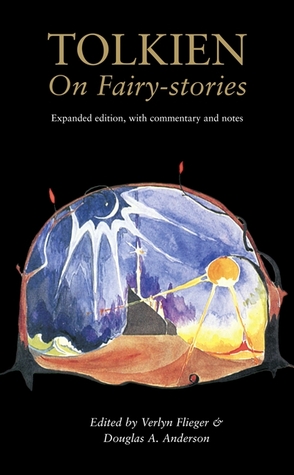
Tolkien on Fairy-stories PDF - J. R. R. Tolkien
J. R. R. Tolkien • Fantasy novels • 53 Pages
(0)
Quate
Review
Save
Share
Book Description
Tolkien on Fairy-Stories by J. R. R. Tolkien
Tolkien on Fairy-Stories is one of the most important and influential works ever written about fantasy literature, myth, imagination, and the purpose of storytelling. Originally developed from a 1939 lecture and later expanded into a landmark essay, this book offers readers a deep exploration of how fairy tales and fantasy narratives shape human understanding, creativity, and emotional experience. For readers interested in the foundations of modern fantasy, literary criticism, mythology, or the creative philosophy behind works like The Lord of the Rings and The Hobbit, this text remains essential reading. (Wikipedia)
Rather than treating fairy stories as simple children’s entertainment, Tolkien argues that fantasy literature is a serious and meaningful artistic form capable of expressing truth, wonder, recovery, and emotional depth. His ideas transformed the way scholars, writers, and readers think about fantasy fiction. Concepts such as “secondary worlds,” imaginative creation, escapism, and the emotional power of myth are explored with intellectual rigor and poetic insight. Many of the principles that later defined modern fantasy literature can be traced directly to the ideas developed in this remarkable essay. (Wikipedia)
A Foundational Text for Fantasy Literature
In this expanded edition of Tolkien on Fairy-Stories, readers encounter far more than the original essay alone. The volume includes commentary, drafts, historical context, and editorial analysis that reveal how Tolkien refined his ideas over time. Edited by Verlyn Flieger and Douglas A. Anderson, the book helps modern readers understand the evolution of Tolkien’s thinking and the intellectual background behind his literary philosophy. (seknfind.org)
The essay itself examines what defines a true fairy story and why fantasy matters deeply to human culture. Tolkien discusses imagination not as an escape from reality in a negative sense, but as a meaningful way to rediscover reality with renewed clarity and emotional intensity. His famous discussions of “recovery,” “escape,” and “consolation” continue to influence writers, critics, and readers across generations. These ideas have become central not only to fantasy studies but also to broader conversations about literature, creativity, and myth-making. (Wikipedia)
Readers interested in literary theory, folklore, mythology, medieval studies, and creative writing often consider this book indispensable. It bridges academic scholarship with imaginative reflection, making it accessible to thoughtful general readers while still offering depth for scholars and serious Tolkien enthusiasts.
Understanding Tolkien’s Creative Vision
One of the most compelling aspects of Tolkien on Fairy-Stories is how clearly it illuminates Tolkien’s own creative worldview. Readers gain insight into the philosophical and artistic foundations that later shaped Middle-earth and Tolkien’s legendary storytelling style. His discussion of “sub-creation” — the human ability to create imaginative worlds within the larger framework of reality — became one of the defining ideas of modern fantasy writing. (Wikipedia)
The book also reveals Tolkien’s deep respect for myth, folklore, language, and ancient storytelling traditions. His background as a philologist and scholar of Old English and Norse literature strongly influences the essay’s themes and arguments. Rather than dismissing fairy tales as unrealistic or childish, Tolkien presents them as profound expressions of human longing, beauty, morality, and wonder.
For readers exploring the history of fantasy literature, this text offers an invaluable perspective on how modern fantasy evolved into a respected literary genre. Many later fantasy authors, critics, and world-builders have drawn inspiration from Tolkien’s ideas about mythic storytelling and immersive fictional worlds.
Themes of Imagination, Escape, and Wonder
A major reason this work remains so widely discussed is its thoughtful defense of imagination itself. Tolkien argues that fantasy allows readers to experience wonder, emotional renewal, and a deeper appreciation of existence. He challenges dismissive attitudes toward fantasy fiction and instead frames imaginative literature as a powerful artistic and emotional experience.
The essay also explores the relationship between myth and truth, discussing how fictional stories can communicate emotional and spiritual realities that ordinary language sometimes cannot express directly. Tolkien’s reflections on enchantment, beauty, and the human desire for transcendence continue to resonate strongly with readers interested in philosophy, religion, literature, and storytelling traditions. (Wikipedia)
Many readers discover that the book not only enhances their appreciation of Tolkien’s own fiction but also changes how they think about fantasy as a whole. The ideas explored here continue to shape discussions about speculative fiction, epic fantasy, fairy tales, mythopoeia, and creative writing.
Expanded Edition and Scholarly Value
This expanded edition is especially valued because it contains earlier drafts, revisions, commentary, and historical materials connected to the original lecture and essay. These additions provide a rare glimpse into Tolkien’s writing process and intellectual development. Readers interested in Tolkien studies or literary scholarship often regard this edition as one of the most important resources for understanding his theoretical approach to fantasy literature. (seknfind.org)
The editorial commentary helps contextualize Tolkien’s references, revisions, and evolving arguments, making the text more approachable for modern readers while preserving its scholarly depth. Longtime Tolkien readers frequently appreciate how the expanded materials reveal the care and precision with which Tolkien developed his literary philosophy.
At the same time, newcomers to Tolkien’s nonfiction writing can still find the book rewarding because its central ideas remain timeless and highly readable. The combination of literary criticism, philosophy, mythology, and imaginative reflection gives the work a unique intellectual richness rarely found in discussions of fantasy literature.
Why Readers Continue to Return to This Book
Decades after its original publication, Tolkien on Fairy-Stories continues to attract readers interested in fantasy, mythology, storytelling, creative imagination, and literary criticism. Its influence can be seen across modern fantasy literature, world-building traditions, role-playing games, film adaptations, and contemporary discussions about mythic storytelling.
Whether approached as a scholarly work, a philosophical essay, or a guide to understanding fantasy literature more deeply, this book remains a cornerstone of Tolkien studies and imaginative literature. Readers searching for insight into the enduring appeal of fantasy worlds and the emotional power of myth will find this work thoughtful, intellectually engaging, and deeply rewarding. (Wikipedia)
J. R. R. Tolkien
J. R. R. Tolkien is widely regarded as one of the most influential authors of the twentieth century and the foundational figure of modern high fantasy literature. Best known for his masterpieces The Hobbit and The Lord of the Rings, Tolkien was not only a novelist but also a distinguished philologist and professor at the University of Oxford. His academic expertise in ancient languages, medieval literature, and linguistic structures profoundly shaped his creative work, giving his fictional world of Middle-earth an unprecedented depth and realism.
Born in 1892 in Bloemfontein, South Africa, Tolkien moved to England after the death of his father and was raised in the English countryside. From an early age, he developed a fascination with language, mythology, and storytelling. His academic career at Oxford focused on Old English literature, particularly texts such as Beowulf, which he both studied and helped reinterpret for modern scholarship.
Tolkien’s experience in World War I had a lasting impact on his worldview. The themes of loss, camaraderie, and the struggle between good and evil that appear throughout his writings are often connected to his wartime experiences. After the war, he began developing stories that would eventually become The Hobbit, published in 1937. Its success led to the creation of his epic legendarium, The Lord of the Rings, published in three volumes between 1954 and 1955.
What distinguishes Tolkien’s work is his meticulous world-building. He created not only stories but entire civilizations, complete with histories, genealogies, languages, and mythologies. His constructed languages, such as Quenya and Sindarin, remain among the most sophisticated fictional languages ever created.
Tolkien passed away in 1973, but his legacy continues to shape literature, film, and popular culture. His works have inspired countless authors and remain central to the fantasy genre.
Earn Rewards While Reading!
Every 10 pages you read and spent 30 seconds on every page, earns you 5 reward points! Keep reading to unlock achievements and exclusive benefits.
Read
Rate Now
5 Stars
4 Stars
3 Stars
2 Stars
1 Stars
Tolkien on Fairy-stories Quotes
Top Rated
Latest
Quate
Be the first to leave a quote and earn 10 points
instead of 3
Other books by J. R. R. Tolkien
Other books like Tolkien on Fairy-stories
'%20/%3e%3c/svg%3e "Fantastic Beasts: The Crimes of Grindelwald - the Original Screenplay")
J. K. Rowling.
Fantasy novels
(0)
7573
English
Comments
Be the first to leave a comment and earn 5 points
instead of 3