

The source of the book
This book is published for the public benefit under a Creative Commons license, or with the permission of the author or publisher. If you have any objections to its publication, please contact us.
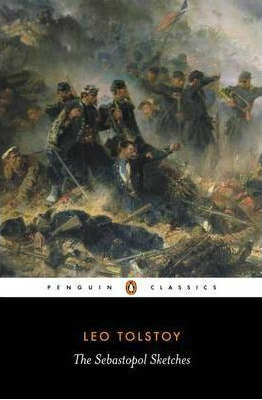
The Sebastopol Sketches PDF - Leo Tolstoy
Leo Tolstoy • Historical novels • 192 Pages
(0)
Quate
Review
Save
Share
Book Description
The Sebastopol Sketches by Leo Tolstoy: A Classic Portrait of War, Courage, and Human Truth
The Sebastopol Sketches by Leo Tolstoy is one of the most important early works by the great Russian author, offering a powerful and unusually honest view of war long before Tolstoy wrote his monumental novels War and Peace and Anna Karenina. Based on Tolstoy’s own experience as a young artillery officer during the Siege of Sevastopol in the Crimean War, this collection brings readers into the atmosphere of a city under attack, where bravery, fear, suffering, pride, patriotism, and moral doubt exist side by side. Rather than presenting war as a distant heroic legend, Tolstoy observes it closely, showing the wounded, the soldiers, the officers, the hospitals, the trenches, and the fragile inner lives of people caught inside history.
The book is traditionally made up of three connected sketches: “Sevastopol in December,” “Sevastopol in May,” and “Sevastopol in August 1855.” Together, they form a vivid literary record of wartime Sevastopol, but they are more than historical descriptions. They reveal the beginnings of Tolstoy’s mature artistic vision: his attention to ordinary people, his distrust of empty glory, his psychological realism, and his ability to find moral seriousness in the smallest details of human behavior. For readers searching for classic Russian literature, Tolstoy war stories, Crimean War literature, or an introduction to Tolstoy’s early fiction, this book offers a compact but deeply memorable reading experience.
A Firsthand View of the Crimean War
What makes The Sebastopol Sketches especially compelling is the sense that Tolstoy is writing from direct observation rather than from romantic imagination. The scenes are shaped by the reality of siege warfare: danger is constant, death is ordinary, and heroism often appears not as grand speech or theatrical action, but as endurance, discipline, and quiet persistence. Tolstoy’s Sevastopol is a place where cannons are heard in the background, wounded men are carried through crowded spaces, officers measure themselves against ideals of honor, and ordinary soldiers continue their duties with a courage that is rarely dramatic but often profound.
Tolstoy does not reduce war to simple patriotism or simple condemnation. Instead, he presents it as a human world full of contradictions. There is courage, but there is also vanity. There is sacrifice, but there is also ambition. There is loyalty, but there is also confusion, fear, and the desire to be seen as brave. This balance gives the sketches their lasting force. Readers are not told what to think through slogans; they are invited to witness, to feel, and to judge. The result is a work that remains valuable both as historical fiction inspired by real events and as a searching moral study of war.
The Beginning of Tolstoy’s Great Realism
Although The Sebastopol Sketches belongs to Tolstoy’s early career, it already contains many of the qualities that would later define his greatest writing. His realism is not only visual; it is psychological and ethical. He notices the way people speak when they are afraid, the way status shapes behavior, the way official language can hide suffering, and the way the idea of heroism can become tangled with self-consciousness. In these sketches, Tolstoy begins to ask the questions that would later become central to his fiction: What is true courage? What does history do to individuals? How do people behave when they are near death? Can glory ever justify suffering?
For readers familiar with War and Peace, this collection is particularly fascinating because it shows Tolstoy developing his lifelong interest in battle, military life, and the difference between public history and private experience. The battlefield is not presented as a clear, orderly scene controlled by great leaders. Instead, it appears fragmented, chaotic, and intensely human. Tolstoy’s attention moves from broad historical pressure to individual perception, from military events to the inner movement of conscience. This makes The Sebastopol Sketches an essential work for anyone studying Tolstoy’s development as a writer.
Themes of Heroism, Vanity, Fear, and Moral Courage
One of the central themes of The Sebastopol Sketches is the tension between real courage and the performance of courage. Tolstoy is deeply interested in the difference between those who act bravely without needing attention and those who imagine themselves as heroes while seeking admiration. This theme gives the book a sharp psychological edge. The sketches do not deny that bravery exists; rather, they ask what kind of bravery deserves respect. Is courage found in dramatic gestures, or in the quiet acceptance of danger? Is honor a public reputation, or a private moral quality?
The book also explores the emotional cost of war. Tolstoy’s descriptions of hospitals, wounded bodies, military routines, and exhausted men create an atmosphere that is both concrete and reflective. He does not rely on exaggerated horror, but the details accumulate with great power. The reader feels the pressure of a world in which life can be interrupted at any moment, and where people must continue acting, speaking, eating, joking, commanding, obeying, and hoping despite the nearness of death. This is one reason the collection remains important in the wider tradition of anti-war literature and realist war writing.
At the same time, Tolstoy gives dignity to ordinary soldiers. He sees courage not only in officers or famous names, but in simple men who endure suffering without theatrical display. This democratic moral vision is one of the most moving aspects of the book. The greatness of the sketches lies not in battle scenes alone, but in Tolstoy’s ability to recognize humanity everywhere: in the wounded, the frightened, the proud, the humble, the young, the experienced, and the forgotten.
A Reading Experience That Is Brief but Deep
Readers who approach The Sebastopol Sketches should expect a work that is concise compared with Tolstoy’s major novels, yet rich in atmosphere and meaning. The book does not unfold like a conventional novel with a single plotline and a traditional hero. Instead, it offers a sequence of powerful impressions, scenes, observations, and moral reflections. This structure suits the subject perfectly. The experience of siege warfare is presented as immediate and unstable, made up of glimpses rather than neat conclusions.
The style is clear, intense, and observant. Tolstoy’s prose moves between outward description and inward analysis, allowing readers to see both the physical world of Sevastopol and the mental world of those who inhabit it. The sketches can be read as literary journalism, early fiction, war testimony, psychological study, and historical narrative all at once. This mixture gives the book a distinctive place in nineteenth-century Russian literature and makes it appealing to readers interested in both literature and history.
Because the work is shorter than Tolstoy’s great novels, it can also serve as an excellent entry point for readers who want to begin exploring his writing. It introduces major Tolstoyan concerns without requiring the commitment of a long novel. Yet its brevity should not be mistaken for simplicity. The moral questions it raises are large, and its images of war remain difficult to forget.
Who Should Read The Sebastopol Sketches?
The Sebastopol Sketches by Leo Tolstoy is ideal for readers who appreciate classic literature, Russian realism, historical war writing, and books that examine human nature under extreme pressure. It will especially interest readers of War and Peace, students of nineteenth-century literature, and anyone looking for a serious literary work about the Crimean War. The book is also valuable for readers who want to understand how Tolstoy’s early experiences shaped his later artistic and moral vision.
This collection is not a simple adventure story or a patriotic military tale. Its appeal lies in its honesty, depth, and restraint. Tolstoy is concerned with what war reveals about people: their courage, their illusions, their selfishness, their tenderness, and their capacity to endure. Readers who enjoy reflective, psychologically rich literature will find the sketches especially rewarding, while those interested in military history will discover a rare literary perspective from a writer who witnessed the world he describes.
Why This Tolstoy Classic Still Matters
More than a century and a half after its publication, The Sebastopol Sketches continues to speak to modern readers because it refuses to turn war into abstraction. Tolstoy brings war back to the level of the human face, the individual body, the private fear, and the moral choice. His Sevastopol is not merely a historical location; it becomes a testing ground for truth. In these pages, glory is questioned, suffering is made visible, and courage is separated from empty display.
For anyone seeking a meaningful introduction to Leo Tolstoy’s early works, this book is an essential choice. It shows a young writer already capable of extraordinary insight, already suspicious of false heroism, and already committed to portraying life with honesty and moral seriousness. The Sebastopol Sketches stands as a powerful classic of war literature, a historically grounded portrait of the Crimean War, and a revealing first glimpse of the genius that would later transform the modern novel.
Leo Tolstoy
Leo Tolstoy is one of the most influential writers in world literature, a Russian novelist, moral thinker, and social critic whose work helped define the possibilities of the modern novel. Born into an aristocratic family in Russia, he grew up close to the rural estate life that later became central to his imagination, his ethical concerns, and his understanding of class, labor, family, faith, and personal responsibility. Tolstoy is best known for the monumental novels War and Peace and Anna Karenina, two works that continue to stand among the highest achievements of literary realism. His fiction is celebrated not merely for its scale, but for its extraordinary ability to portray human consciousness, social pressure, moral confusion, and the hidden movement of history through the lives of individuals. In War and Peace, Tolstoy transforms the historical novel into a vast meditation on war, fate, leadership, memory, and ordinary human experience. He portrays the Napoleonic era not as a simple sequence of heroic decisions, but as a complex web of personal choices, accidents, social customs, emotions, and forces beyond the control of any single ruler or general. In Anna Karenina, he offers one of literature’s most penetrating studies of love, marriage, desire, jealousy, social judgment, and spiritual hunger, creating characters whose inner lives feel immediate, contradictory, and painfully human. Tolstoy’s narrative style combines simplicity with depth: he can describe a ballroom, a battlefield, a family quarrel, a harvest, or a moment of private doubt with such precision that each scene becomes a window into moral and psychological truth. His characters are memorable because they are never reduced to symbols; they change, hesitate, deceive themselves, seek forgiveness, suffer, and grow. Beyond his novels, Tolstoy wrote short fiction, essays, autobiographical works, religious reflections, and educational writings that reveal a lifelong struggle to reconcile art, conscience, and everyday life. In his later years, he became increasingly concerned with questions of nonviolence, poverty, property, organized religion, and the ethical meaning of Christianity. His critique of violence and his insistence on moral self-examination influenced readers far beyond Russia and helped shape later discussions of peaceful resistance, social reform, and spiritual simplicity. As an author for book lovers, Tolstoy remains essential because his works speak to both private feeling and public history. He examines the intimate life of families while also asking how nations move toward war, how societies punish those who break their rules, and how individuals can live truthfully in a world built on pride, ambition, and illusion. His influence can be felt in modern realism, psychological fiction, historical narrative, philosophical literature, and moral essays. Readers return to Tolstoy because his books do not offer easy answers; they invite deep attention to life itself. He writes about birth, death, love, work, faith, conflict, and forgiveness with a seriousness that makes ordinary experience feel immense. Leo Tolstoy’s legacy endures because he created literature that is both artistically powerful and ethically demanding, literature that asks every generation to reconsider what it means to live honestly, love responsibly, and search for meaning in a complicated world.
Earn Rewards While Reading!
Every 10 pages you read and spent 30 seconds on every page, earns you 5 reward points! Keep reading to unlock achievements and exclusive benefits.
Read
Rate Now
5 Stars
4 Stars
3 Stars
2 Stars
1 Stars
The Sebastopol Sketches Quotes
Top Rated
Latest
Quate
Be the first to leave a quote and earn 10 points
instead of 3
'%20/%3e%3c/svg%3e "War and Peace")
Comments
Be the first to leave a comment and earn 5 points
instead of 3