

The source of the book
This book is published for the public benefit under a Creative Commons license, or with the permission of the author or publisher. If you have any objections to its publication, please contact us.
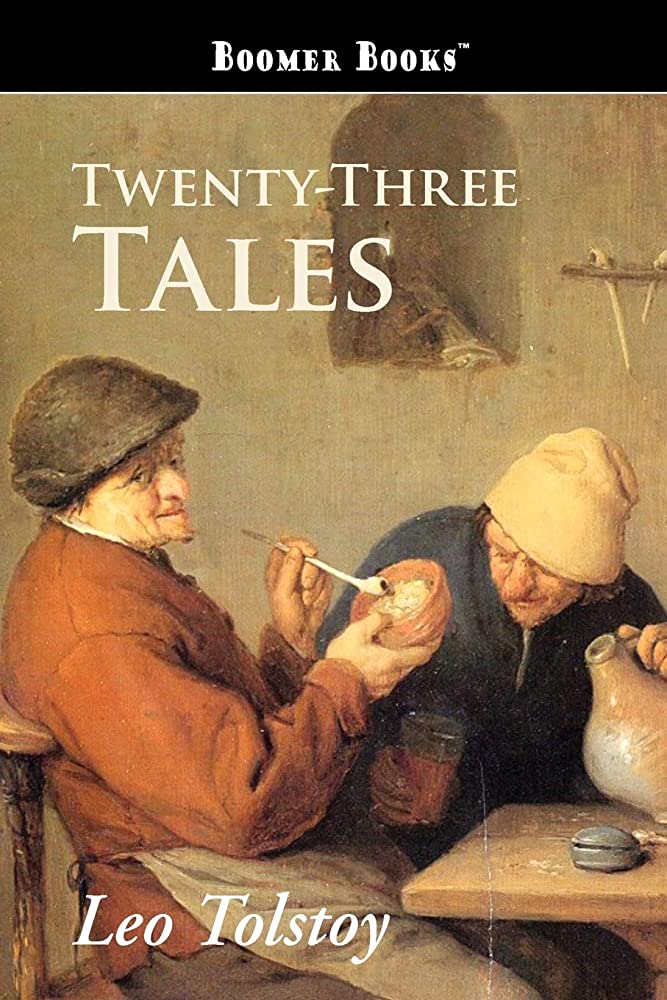
Twenty-Three Tales PDF - Leo Tolstoy
Leo Tolstoy • short stories • 312 Pages
(0)
Author
Leo TolstoyCategory
literatureSection
Number Of Downloads
29
Number Of Reads
327
File Size
8.80 MB
Views
1,047
Quate
Review
Save
Share
Book Description
Twenty-Three Tales by Leo Tolstoy
Twenty-Three Tales by Leo Tolstoy is a powerful collection of short stories that reflects the depth of moral philosophy, spiritual questioning, and human insight that define Tolstoy’s literary legacy. Written in clear, accessible English in many modern editions, this collection brings together some of Tolstoy’s most meaningful shorter works, offering readers a concentrated experience of his ideas about life, faith, justice, and the nature of human goodness. It is a book often searched for by readers interested in classic literature, Russian literary tradition, moral storytelling, and timeless philosophical fiction.
A Collection Rooted in Moral and Spiritual Inquiry
Twenty-Three Tales is not just a set of entertaining short stories; it is a carefully shaped literary window into Tolstoy’s evolving worldview. After his major novels, Tolstoy increasingly focused on simple storytelling as a way to communicate ethical and spiritual lessons to a broad audience. These tales often explore questions such as what it means to live a good life, how wealth and power influence morality, and whether true happiness comes from external success or internal clarity.
Across the collection, readers encounter stories that are intentionally straightforward in style but deeply layered in meaning. Tolstoy believed that literature should be understandable to everyone, not only the educated elite. As a result, the language in these tales is often simple, but the ideas are profound and thought-provoking. This combination is one of the reasons the book continues to be widely read in schools, universities, and personal reading lists around the world.
Key Themes and Literary Depth
One of the strongest elements of Twenty-Three Tales is its consistent exploration of universal human themes. Tolstoy repeatedly returns to moral responsibility, compassion, humility, and the tension between material life and spiritual fulfillment. Many of the stories present ordinary characters facing ethical dilemmas, allowing readers to reflect on their own values and decisions.
A recurring theme is the critique of materialism. Tolstoy often portrays characters who pursue wealth, status, or social recognition, only to discover that these pursuits do not lead to lasting happiness. In contrast, characters who embrace simplicity, kindness, and honesty are often depicted as closer to true fulfillment. This moral contrast is not presented in a heavy-handed way but through narrative situations that encourage reflection.
Another central theme is the fragility of human life and the importance of time. Several tales emphasize how quickly circumstances can change and how little control individuals truly have over external events. This awareness leads many characters toward humility and self-examination, which is a core philosophical concern in Tolstoy’s later works.
Writing Style and Reader Experience
The writing style in Twenty-Three Tales is deliberately simple, direct, and clear. Tolstoy avoids overly complex language or decorative descriptions, focusing instead on narrative clarity and emotional impact. This makes the collection highly accessible for English readers, including those who are new to classic literature or Russian fiction.
Despite the simplicity of the prose, the emotional and intellectual depth is significant. Each story is structured to build toward a moment of realization or moral insight. Readers often find themselves reflecting on the meaning of the story long after finishing it, which is a hallmark of Tolstoy’s storytelling approach.
The pacing of the stories is generally calm and steady, allowing time for reflection. There is rarely unnecessary action or distraction; instead, the focus remains on character choices and ethical consequences. This makes the reading experience meditative and thought-provoking rather than purely plot-driven.
Why Readers Still Choose This Book Today
Twenty-Three Tales continues to attract readers because of its timeless relevance. Even though the stories were written in a different historical and cultural context, the moral questions they raise remain highly applicable in modern life. Issues such as inequality, personal integrity, the search for meaning, and the value of compassion are still central to contemporary human experience.
Students of literature often read this collection to understand Tolstoy’s later philosophical phase, where his focus shifted more toward moral teaching and spiritual reflection. At the same time, general readers appreciate the emotional clarity and simplicity of the stories, which make complex ideas easy to engage with.
The book is also frequently recommended for readers interested in classic moral fiction, short story anthologies, and foundational works of European literature. Its structure allows readers to read one story at a time, making it suitable for both continuous reading and selective exploration.
Literary Significance and Tolstoy’s Legacy
As one of the most influential figures in world literature, Leo Tolstoy shaped not only the novel as a form but also the philosophical direction of modern storytelling. Twenty-Three Tales reflects his later-life commitment to writing as a moral and educational tool rather than purely artistic expression.
These stories are often studied alongside Tolstoy’s broader body of work to understand the evolution of his thinking. While his earlier novels are known for their complex social realism and psychological depth, these tales represent a shift toward simplicity and ethical clarity. This contrast makes the collection especially valuable for readers and scholars who want to trace the development of his ideas.
The influence of these stories extends beyond literature. Many writers, thinkers, and educators have drawn inspiration from Tolstoy’s approach to storytelling as a means of exploring ethical truth. The themes in Twenty-Three Tales continue to resonate in discussions about literature’s role in shaping human values.
A Meaningful Reading Choice for Classic Literature Lovers
Twenty-Three Tales is an ideal choice for readers who appreciate classic literature that combines simplicity with philosophical depth. It offers a variety of short narratives that can be read independently, making it flexible and approachable. At the same time, the collection as a whole provides a cohesive exploration of Tolstoy’s moral vision.
For those seeking English-language editions of classic Russian literature, this book serves as an accessible entry point into Tolstoy’s world. It bridges the gap between storytelling and philosophy, offering both emotional engagement and intellectual reflection.
Ultimately, Twenty-Three Tales remains a lasting example of how short fiction can carry profound meaning. Its continued popularity demonstrates the enduring power of Tolstoy’s voice and the universal relevance of his moral insights.
Leo Tolstoy
Leo Tolstoy is one of the most influential writers in world literature, a Russian novelist, moral thinker, and social critic whose work helped define the possibilities of the modern novel. Born into an aristocratic family in Russia, he grew up close to the rural estate life that later became central to his imagination, his ethical concerns, and his understanding of class, labor, family, faith, and personal responsibility. Tolstoy is best known for the monumental novels War and Peace and Anna Karenina, two works that continue to stand among the highest achievements of literary realism. His fiction is celebrated not merely for its scale, but for its extraordinary ability to portray human consciousness, social pressure, moral confusion, and the hidden movement of history through the lives of individuals. In War and Peace, Tolstoy transforms the historical novel into a vast meditation on war, fate, leadership, memory, and ordinary human experience. He portrays the Napoleonic era not as a simple sequence of heroic decisions, but as a complex web of personal choices, accidents, social customs, emotions, and forces beyond the control of any single ruler or general. In Anna Karenina, he offers one of literature’s most penetrating studies of love, marriage, desire, jealousy, social judgment, and spiritual hunger, creating characters whose inner lives feel immediate, contradictory, and painfully human. Tolstoy’s narrative style combines simplicity with depth: he can describe a ballroom, a battlefield, a family quarrel, a harvest, or a moment of private doubt with such precision that each scene becomes a window into moral and psychological truth. His characters are memorable because they are never reduced to symbols; they change, hesitate, deceive themselves, seek forgiveness, suffer, and grow. Beyond his novels, Tolstoy wrote short fiction, essays, autobiographical works, religious reflections, and educational writings that reveal a lifelong struggle to reconcile art, conscience, and everyday life. In his later years, he became increasingly concerned with questions of nonviolence, poverty, property, organized religion, and the ethical meaning of Christianity. His critique of violence and his insistence on moral self-examination influenced readers far beyond Russia and helped shape later discussions of peaceful resistance, social reform, and spiritual simplicity. As an author for book lovers, Tolstoy remains essential because his works speak to both private feeling and public history. He examines the intimate life of families while also asking how nations move toward war, how societies punish those who break their rules, and how individuals can live truthfully in a world built on pride, ambition, and illusion. His influence can be felt in modern realism, psychological fiction, historical narrative, philosophical literature, and moral essays. Readers return to Tolstoy because his books do not offer easy answers; they invite deep attention to life itself. He writes about birth, death, love, work, faith, conflict, and forgiveness with a seriousness that makes ordinary experience feel immense. Leo Tolstoy’s legacy endures because he created literature that is both artistically powerful and ethically demanding, literature that asks every generation to reconsider what it means to live honestly, love responsibly, and search for meaning in a complicated world.
Earn Rewards While Reading!
Every 10 pages you read and spent 30 seconds on every page, earns you 5 reward points! Keep reading to unlock achievements and exclusive benefits.
Read
Rate Now
5 Stars
4 Stars
3 Stars
2 Stars
1 Stars
Twenty-Three Tales Quotes
Top Rated
Latest
Quate
Be the first to leave a quote and earn 10 points
instead of 3
'%20/%3e%3c/svg%3e "War and Peace")
Comments
Be the first to leave a comment and earn 5 points
instead of 3