

The source of the book
This book is published for the public benefit under a Creative Commons license, or with the permission of the author or publisher. If you have any objections to its publication, please contact us.
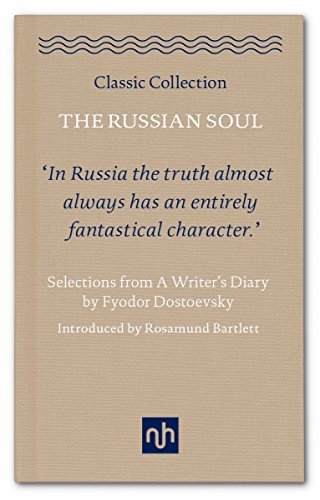
The Russian Soul PDF - Fyodor Dostoevsky
Fyodor Dostoevsky • literature • 103 Pages
(0)
Quate
Review
Save
Share
Book Description
The Russian Soul by Fyodor Dostoevsky
The Russian Soul by Fyodor Dostoevsky is a profound and searching collection drawn from Dostoevsky’s remarkable prose work A Writer’s Diary, a body of writing in which one of the greatest figures of Russian literature speaks not through fictional characters alone, but through essays, reflections, commentary, stories, moral inquiry, and direct engagement with the urgent questions of his age. Rather than offering a single novelistic plot, this book opens a window onto Dostoevsky’s mind as he considers Russia, Europe, faith, suffering, justice, freedom, national identity, human weakness, and the spiritual tensions that shaped nineteenth-century life and continue to feel strikingly relevant today.
A Powerful Introduction to Dostoevsky’s Thought
For readers who know Fyodor Dostoevsky through Crime and Punishment, The Brothers Karamazov, The Idiot, or Notes from Underground, The Russian Soul offers a different but deeply connected experience. Here, the reader encounters many of the same moral and philosophical concerns that animate his fiction: the mystery of conscience, the burden of guilt, the hunger for redemption, the conflict between reason and faith, and the painful dignity of ordinary human suffering. Yet these themes appear in a more direct, essayistic form, allowing readers to follow Dostoevsky’s reflections on culture, belief, society, and the human condition with unusual immediacy.
The title points to one of the most enduring ideas associated with Russian literature: the search for the Russian soul, a phrase often used to describe the spiritual depth, emotional intensity, moral struggle, and collective identity explored by writers such as Gogol, Tolstoy, and Dostoevsky. In Dostoevsky’s hands, this idea is never merely decorative or sentimental. It becomes a way of asking what a people believe, what they suffer, what they hope for, and how national identity is shaped by religion, poverty, history, compassion, pride, and moral contradiction.
Essays, Reflections, and Moral Questions
The Russian Soul: Selections from A Writer’s Diary brings together writings from a vast and varied project that Dostoevsky began in the 1870s as a way to speak more directly to his readers. A Writer’s Diary was not a conventional diary in the private sense; it was a public literary forum where Dostoevsky combined journalism, fiction, criticism, confession, political reflection, and spiritual meditation. This makes the book especially valuable for readers who want to understand not only Dostoevsky the novelist, but also Dostoevsky the thinker, observer, believer, and controversial commentator on modern life.
The selections reveal a writer intensely concerned with the moral direction of society. Dostoevsky writes from within a world marked by rapid change, ideological conflict, social unrest, religious doubt, and an uneasy relationship between Russia and Western Europe. His reflections often move between the intimate and the historical: a single human act may lead him toward questions about sin, responsibility, compassion, or national destiny. This ability to connect the smallest moral gesture with the largest spiritual crisis is one of the reasons Dostoevsky remains central to classic literature, Russian studies, theology, psychology, and existential thought.
The Meaning of the Russian Soul
The phrase Russian soul has a complex history, and this book is best read not as a simple explanation of national character, but as an exploration of identity under pressure. Dostoevsky’s Russia is not presented as an abstract idea; it is a living moral landscape filled with believers and skeptics, peasants and intellectuals, children and criminals, dreamers and cynics, saints and sinners. His concern is not only what Russia is, but what it might become if it loses, betrays, or rediscovers its spiritual foundations.
Readers interested in Russian philosophy, Christian existentialism, Slavic culture, and the history of ideas will find this collection especially rich. Dostoevsky’s reflections often circle around suffering, not as empty misery, but as a disturbing and sometimes transformative force in human life. He asks whether suffering can deepen compassion, whether freedom without moral responsibility becomes destructive, and whether modern society can survive when it treats the soul as something secondary to politics, comfort, or intellectual fashion. These questions make The Russian Soul feel less like a historical curiosity and more like a living conversation with the modern reader.
A Different Way to Read Dostoevsky
Unlike Dostoevsky’s major novels, this book does not rely on suspense, plot, or dramatic character development. Its power comes from the intensity of thought and the movement of the author’s mind. The reading experience is reflective, challenging, and often intimate, as though the reader is sitting beside Dostoevsky while he examines the moral anxieties of his time. The style can be passionate, argumentative, tender, severe, prophetic, and deeply humane, sometimes all within the same piece.
This makes The Russian Soul by Fyodor Dostoevsky an excellent choice for readers who want a more compact entrance into Dostoevsky’s worldview. It is also suitable for those who have already read his novels and want to understand the wider religious, political, and cultural concerns behind them. The collection helps illuminate why Dostoevsky’s fiction is so full of inner conflict, why his characters wrestle so fiercely with conscience, and why his work continues to attract readers searching for literature that takes moral life seriously.
Themes of Faith, Freedom, Suffering, and Identity
At the center of the book is Dostoevsky’s lifelong fascination with the human soul under extreme pressure. He returns again and again to questions of faith and doubt, personal freedom, social responsibility, national destiny, and the possibility of moral renewal. His writing resists easy optimism, but it also resists despair. Even when he describes darkness, cruelty, vanity, or spiritual confusion, he remains alert to the possibility of repentance, compassion, humility, and grace.
For contemporary readers, this is one of the most compelling reasons to read The Russian Soul. The book speaks to anxieties that remain familiar: the loss of shared values, the loneliness of modern life, the conflict between tradition and progress, the power of ideology, and the difficulty of preserving human dignity in a world of abstraction and argument. Dostoevsky’s answers may be challenging, and modern readers may not always agree with him, but the seriousness of his questions gives the book lasting force.
Who Should Read The Russian Soul?
The Russian Soul is ideal for readers of classic Russian literature, students of Fyodor Dostoevsky, and anyone interested in the moral and spiritual foundations of his fiction. It will appeal to those who enjoy literary essays, philosophical reflection, religious thought, and books that explore the relationship between personal conscience and cultural identity. Readers searching for a straightforward novel should know that this is a collection of selections rather than a single narrative, but those open to reflective prose will find it a rewarding and revealing companion to Dostoevsky’s better-known works.
The book is also valuable for readers who want to understand why Dostoevsky remains so influential beyond literature. His work has shaped discussions in philosophy, psychology, theology, political thought, and existential writing because he does not treat ideas as lifeless theories. For Dostoevsky, every idea eventually enters the human heart, changes how people live, and tests what they are willing to love, forgive, sacrifice, or destroy. That intensity is present throughout The Russian Soul, making it a meaningful read for anyone drawn to books that combine intellectual depth with emotional urgency.
A Lasting Portrait of Dostoevsky’s Moral Imagination
The Russian Soul by Fyodor Dostoevsky offers a concentrated encounter with one of literature’s most powerful moral imaginations. Through selections from A Writer’s Diary, the book reveals Dostoevsky as a writer who looked beyond surface events to the hidden spiritual drama beneath them. His reflections on Russia, humanity, suffering, belief, and freedom remain demanding because they refuse to separate public life from private conscience or social questions from the mystery of the soul.
For readers seeking a deeper understanding of Dostoevsky’s ideas, Russian literary culture, and the spiritual questions behind the great novels, this collection provides a thoughtful and memorable path. It is a book for slow reading, serious reflection, and renewed attention to the moral struggles that define both individuals and nations. In its pages, the search for the Russian soul becomes something larger than a national question: it becomes a search for what is most fragile, conflicted, and enduring in human life itself.
Fyodor Dostoevsky
Fyodor Dostoevsky was a Russian novelist, philosopher, and essayist, widely considered to be one of the greatest writers in Western literature. He was born in Moscow in 1821 and raised in a middle-class family. His father was a doctor who treated the poor for free, which instilled in Dostoevsky a deep sense of social justice and compassion for the downtrodden.
Dostoevsky began his writing career in the 1840s, with a series of novellas and short stories that explored the complexities of human nature and the dark side of Russian society. His first major novel, "Poor Folk," was published in 1846 and won critical acclaim. However, it was his later works, such as "Crime and Punishment," "The Idiot," and "The Brothers Karamazov," that established him as a literary master.
Dostoevsky's writing is known for its psychological depth, philosophical themes, and exploration of the human condition. His characters often struggle with moral dilemmas and existential questions, grappling with issues of faith, morality, and the meaning of life. His works also explore the political and social issues of his time, including poverty, crime, and political oppression.
Dostoevsky's life was marked by personal tragedy and political turmoil. He was arrested in 1849 for his involvement with a group of liberal intellectuals and sentenced to death, only to have the sentence commuted to hard labor in Siberia. He returned to Russia after serving his sentence, but continued to struggle with poverty and illness throughout his life. He died in 1881 at the age of 59.
Despite his tumultuous life, Dostoevsky's legacy as a writer and thinker endures. His works continue to be widely read and studied today, and his ideas about the human condition and the role of faith in society continue to resonate with readers around the world.
Earn Rewards While Reading!
Every 10 pages you read and spent 30 seconds on every page, earns you 5 reward points! Keep reading to unlock achievements and exclusive benefits.
Read
Rate Now
5 Stars
4 Stars
3 Stars
2 Stars
1 Stars
The Russian Soul Quotes
Top Rated
Latest
Quate
Be the first to leave a quote and earn 10 points
instead of 3
Other books by Fyodor Dostoevsky
Other books like The Russian Soul
'%20/%3e%3c/svg%3e "The Missionary Position: Mother Teresa in Theory and Practice")
3635
English
Comments
Be the first to leave a comment and earn 5 points
instead of 3