

The source of the book
This book is published for the public benefit under a Creative Commons license, or with the permission of the author or publisher. If you have any objections to its publication, please contact us.
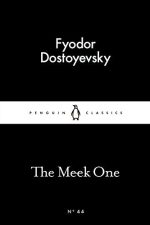
The Meek One PDF - Fyodor Dostoevsky
Fyodor Dostoevsky • literature • 59 Pages
(0)
Quate
Review
Save
Share
Book Description
The Meek One by Fyodor Dostoevsky
The Meek One by Fyodor Dostoevsky is a compact, unsettling, and deeply psychological work of classic Russian literature, also known in English as A Gentle Creature or The Gentle Spirit. First published in 1876 and associated with Dostoevsky’s experimental work A Writer’s Diary, the story carries the subtitle “A Fantastic Story,” not because it leaves reality behind, but because it enters the feverish inner world of a man trying to explain what may be impossible to explain. (موسوعة)
A Powerful Short Work from a Master of Psychological Fiction
In this intense short story, Dostoevsky turns his attention to a troubled marriage, a young woman’s silence, and a husband’s desperate attempt to make sense of loss, guilt, pride, and moral failure. The narrator is a pawnbroker, a man who believes himself rational, disciplined, and superior to the emotional confusion around him. Yet as he speaks, remembers, justifies, and contradicts himself, the reader begins to see that his account is not a simple confession but a psychological struggle. The story becomes less about what happened on the surface and more about the hidden violence of ego, control, humiliation, and emotional blindness.
For readers searching for Dostoevsky short stories, Russian psychological fiction, or a brief but profound introduction to the author’s work, The Meek One offers many of the qualities that make Dostoevsky enduringly important: moral tension, spiritual unease, unreliable narration, emotional extremity, and a penetrating interest in the darkest corners of the human heart. Dostoevsky is widely recognized for his extraordinary psychological depth and his exploration of guilt, self-destruction, domination, and inner conflict, qualities that are strongly present in this haunting story.
The Story’s Premise and Emotional Core
The narrative begins in the aftermath of tragedy. A husband stands before the body of his young wife and begins to speak, as if words might restore order to the chaos before him. He revisits their first meetings, their unequal relationship, their marriage, their silences, and the emotional distance that grew between them. What appears at first to be a recollection gradually becomes a self-examination, although not always an honest one. The narrator wants to understand his wife, but he also wants to defend himself; he wants to confess, but he also wants to remain in control of the story.
This tension gives The Meek One its disturbing power. Dostoevsky does not present the reader with a detached explanation of a failed marriage. Instead, he traps the reader inside the mind of a man who is trying to interpret another person’s soul while failing to understand his own. The young woman at the center of the story remains, in many ways, mysterious—not because she is empty or passive, but because the narrator’s pride and self-absorption prevent him from truly seeing her. Her meekness, gentleness, resistance, and silence become the emotional center of the work.
Themes of Pride, Silence, Guilt, and Power
One of the strongest themes in The Meek One is the danger of confusing possession with love. The narrator believes he has acted with generosity, discipline, and even sacrifice, yet his memories reveal a relationship shaped by imbalance and emotional domination. Dostoevsky explores how power can hide behind respectability, how cruelty can appear in the form of coldness, and how silence can become a battlefield between two people who cannot meet each other honestly.
The story is also a profound study of guilt and self-justification. The narrator is not a simple villain, and that complexity is part of Dostoevsky’s genius. He is intelligent, wounded, proud, and capable of suffering, but his suffering does not automatically make him innocent. As he speaks, readers must decide what to believe, what to question, and what remains unsaid. This makes the story especially compelling for anyone interested in unreliable narrators, moral ambiguity, and psychological realism in classic literature.
Another important theme is the loneliness of human beings who live close to each other without true understanding. The marriage in the story is not only a domestic arrangement; it is a moral and spiritual drama. Dostoevsky examines how two people can share a room, a household, and a life while remaining separated by pride, fear, poverty, resentment, and unspoken pain. The result is a work that feels intimate and claustrophobic, yet also universal in its treatment of failed communication and emotional isolation.
A Brief Story with the Weight of a Novel
Although The Meek One is much shorter than Dostoevsky’s major novels such as Crime and Punishment, The Idiot, or The Brothers Karamazov, it carries a remarkable emotional and philosophical weight. Its brevity makes every gesture, memory, and contradiction matter. There are no large social panoramas or sprawling subplots; instead, the entire force of the story is concentrated in one voice and one shattered relationship.
This makes the book an excellent choice for readers who want to experience Dostoevsky’s style without beginning with one of his longest novels. The story offers a direct encounter with his central concerns: the divided self, the hunger for moral explanation, the pain of humiliation, and the frightening ability of human beings to deceive themselves. It is short enough to read in a focused sitting, but dense enough to invite rereading, discussion, and literary analysis.
Who Should Read The Meek One?
The Meek One by Fyodor Dostoevsky is ideal for readers who appreciate serious, emotionally intense fiction. It will appeal to those interested in classic Russian literature, 19th-century fiction, psychological drama, existential literature, and stories that explore the consequences of pride and emotional repression. It is also valuable for students and readers studying Dostoevsky’s narrative techniques, especially his use of confession, inner monologue, fragmented memory, and moral uncertainty.
Readers who enjoy works centered on troubled consciousness, ethical conflict, and complex relationships will find this story especially rewarding. It is not a light or comforting read, and its subject matter can be painful, but its intensity is precisely what gives it lasting value. Dostoevsky does not offer easy judgment or simple consolation. Instead, he asks readers to sit with discomfort, to listen closely, and to recognize how difficult it can be to know another person—or even oneself.
Why The Meek One Still Matters
More than a century after its publication, The Meek One remains strikingly modern in its psychological structure. The story’s fragmented, urgent narration feels close to the movement of thought itself: repetitive, defensive, emotional, and unstable. The narrator’s voice pulls the reader into a mind in crisis, creating a reading experience that feels immediate rather than distant. This is one reason the story continues to attract readers interested in psychological fiction, literary classics, and Dostoevsky’s influence on modern narrative forms.
At its heart, The Meek One is a story about the failure to love rightly. It explores how pride can destroy tenderness, how silence can conceal suffering, and how the need to dominate can replace the ability to understand. Through a small domestic tragedy, Dostoevsky opens questions about freedom, responsibility, compassion, and the terrifying gap between how people see themselves and how they affect others.
For readers seeking a concise but unforgettable work by one of world literature’s greatest psychological writers, The Meek One is a powerful choice. It is a short story with the moral force of a novel, a portrait of grief that becomes an investigation of guilt, and a classic example of Dostoevsky’s ability to transform inner conflict into dramatic, unforgettable literature.
Fyodor Dostoevsky
Fyodor Dostoevsky was a Russian novelist, philosopher, and essayist, widely considered to be one of the greatest writers in Western literature. He was born in Moscow in 1821 and raised in a middle-class family. His father was a doctor who treated the poor for free, which instilled in Dostoevsky a deep sense of social justice and compassion for the downtrodden.
Dostoevsky began his writing career in the 1840s, with a series of novellas and short stories that explored the complexities of human nature and the dark side of Russian society. His first major novel, "Poor Folk," was published in 1846 and won critical acclaim. However, it was his later works, such as "Crime and Punishment," "The Idiot," and "The Brothers Karamazov," that established him as a literary master.
Dostoevsky's writing is known for its psychological depth, philosophical themes, and exploration of the human condition. His characters often struggle with moral dilemmas and existential questions, grappling with issues of faith, morality, and the meaning of life. His works also explore the political and social issues of his time, including poverty, crime, and political oppression.
Dostoevsky's life was marked by personal tragedy and political turmoil. He was arrested in 1849 for his involvement with a group of liberal intellectuals and sentenced to death, only to have the sentence commuted to hard labor in Siberia. He returned to Russia after serving his sentence, but continued to struggle with poverty and illness throughout his life. He died in 1881 at the age of 59.
Despite his tumultuous life, Dostoevsky's legacy as a writer and thinker endures. His works continue to be widely read and studied today, and his ideas about the human condition and the role of faith in society continue to resonate with readers around the world.
Earn Rewards While Reading!
Every 10 pages you read and spent 30 seconds on every page, earns you 5 reward points! Keep reading to unlock achievements and exclusive benefits.
Read
Rate Now
5 Stars
4 Stars
3 Stars
2 Stars
1 Stars
The Meek One Quotes
Top Rated
Latest
Quate
Be the first to leave a quote and earn 10 points
instead of 3
Other books by Fyodor Dostoevsky
Other books like The Meek One
'%20/%3e%3c/svg%3e "The Missionary Position: Mother Teresa in Theory and Practice")
3635
English
Comments
Be the first to leave a comment and earn 5 points
instead of 3