

The source of the book
This book is published for the public benefit under a Creative Commons license, or with the permission of the author or publisher. If you have any objections to its publication, please contact us.
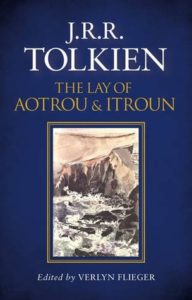
The Lay of Aotrou and Itroun PDF - J. R. R. Tolkien
J. R. R. Tolkien • Fantasy novels • 87 Pages
(0)
Quate
Review
Save
Share
Book Description
The Lay of Aotrou and Itroun by J. R. R. Tolkien
An Introduction to The Lay of Aotrou and Itroun
The Lay of Aotrou and Itroun is a narrative poem by J. R. R. Tolkien that reveals a lesser-known but deeply atmospheric side of the author best known for The Hobbit and The Lord of the Rings. Written in the style of traditional medieval lays and inspired by Breton folklore, this work reflects Tolkien’s lifelong fascination with myth, legend, and the moral weight of human choices. Rather than focusing on epic quests or sprawling fantasy worlds, this poem centers on a compact but emotionally intense story of love, temptation, and consequence set in a mythic version of medieval Brittany.
For readers searching for Tolkien’s poetic works, early myth-inspired literature, or adaptations of Celtic and Breton legends, The Lay of Aotrou and Itroun offers a rich and contemplative reading experience. It stands as a powerful example of Tolkien’s ability to merge philological depth with narrative poetry, creating a work that feels both ancient and carefully crafted for modern literary appreciation.
Story Overview and Narrative Essence
At its core, The Lay of Aotrou and Itroun follows the story of Lord Aotrou and Lady Itroun, a noble couple who long for an heir. Their desire for children becomes the emotional foundation of the poem, shaping the choices they make and the consequences that follow. When Aotrou seeks a supernatural remedy for their childlessness, he encounters a mysterious and otherworldly female figure often interpreted as a fairy or spirit associated with ancient folklore traditions.
This encounter sets the central conflict of the poem in motion. The supernatural being offers a solution, but it comes at a cost that is not immediately understood. As with many of Tolkien’s morally complex narratives, the story unfolds not through action-heavy sequences but through gradual tension, symbolic encounters, and the unfolding consequences of human decisions.
Itroun, meanwhile, represents patience, devotion, and emotional depth, embodying the human longing for fulfillment while remaining grounded in moral integrity. The poem builds toward a tragic resolution shaped by choices made under pressure, desire, and misunderstanding of forces beyond mortal control.
Rather than presenting a simple moral lesson, Tolkien crafts a layered narrative where fate, free will, and supernatural influence intertwine. The result is a haunting reflection on the limits of human desire and the consequences of crossing boundaries between the natural and supernatural worlds.
Themes and Symbolism in the Poem
One of the most important aspects of The Lay of Aotrou and Itroun is its thematic depth. Like much of Tolkien’s work, it explores the tension between mortal life and the supernatural realm. The fairy-like figure in the poem represents not only temptation but also the unpredictable and often dangerous allure of forces beyond human understanding.
A central theme is desire and consequence. The longing for children drives the narrative forward, but Tolkien does not present this desire as purely negative or positive. Instead, it is portrayed as a deeply human impulse that can lead to both hope and suffering. The poem suggests that even noble intentions can lead to tragic outcomes when they involve bargaining with unknown or powerful forces.
Another significant theme is mortality. Unlike many modern fantasy works that emphasize triumph over adversity, this poem embraces the inevitability of loss and the fragility of human life. Tolkien’s depiction of Aotrou and Itroun reflects a medieval worldview in which fate is both mysterious and inescapable, and moral decisions carry lasting spiritual weight.
The supernatural elements in the story also highlight the boundary between the seen and unseen worlds. The fairy or spirit figure embodies the seductive and dangerous nature of crossing that boundary. In doing so, Tolkien draws on ancient folklore traditions where encounters with otherworldly beings often result in irreversible consequences.
Literary Style and Tolkien’s Poetic Craft
The Lay of Aotrou and Itroun is written in a deliberate, archaic style that reflects Tolkien’s academic background in philology and medieval literature. The rhythm, diction, and structure of the poem are inspired by traditional narrative lays, giving it an old-world quality that feels rooted in oral storytelling traditions.
Tolkien’s use of language is both formal and musical, emphasizing repetition, alliteration, and rhythmic flow. This creates a reading experience that is closer to listening to an ancient tale being recited than reading a modern narrative poem. The style also reinforces the timeless quality of the story, placing it outside a specific historical moment and into a mythic continuum.
Unlike his more widely known prose works, this poem relies heavily on atmosphere and tone rather than detailed world-building. The landscapes, emotions, and supernatural encounters are described in a way that evokes imagery rather than explicit visual detail. This allows readers to engage with the story on an imaginative and interpretive level.
Connection to Tolkien’s Broader Legendarium
While The Lay of Aotrou and Itroun is not directly part of Tolkien’s Middle-earth legendarium, it shares many thematic and stylistic connections with it. The emphasis on fate, the moral consequences of interacting with supernatural beings, and the blending of myth and history are all recurring elements in Tolkien’s broader body of work.
Readers familiar with Tolkien’s mythology will recognize similar philosophical concerns, particularly the idea that power outside the natural order often comes at a spiritual or emotional cost. The poem can therefore be seen as part of Tolkien’s wider exploration of mythic storytelling, even though it stands independently from the narratives of Elves, Hobbits, and the One Ring.
Its connection to Breton and Celtic folklore also highlights Tolkien’s academic interest in European mythological traditions. He often drew inspiration from these sources to construct his fictional worlds, and this poem serves as a more direct engagement with those original cultural materials.
Audience Appeal and Reading Experience
The Lay of Aotrou and Itroun appeals to readers who appreciate literary fantasy, mythological reinterpretation, and poetic storytelling. It is particularly suited for those interested in J. R. R. Tolkien’s lesser-known works and his scholarly engagement with medieval literature.
Unlike fast-paced fantasy novels, this poem demands a slower, more reflective reading approach. Its value lies in its atmosphere, symbolism, and emotional resonance rather than in plot complexity or action. Readers who enjoy literary classics, narrative poetry, or folklore-based stories will find it especially rewarding.
It also appeals to audiences interested in tragic love stories and moral dilemmas. The emotional weight of the narrative, combined with its mythic framework, creates a reading experience that lingers beyond the final lines.
A Timeless Work of Mythic Imagination
Ultimately, The Lay of Aotrou and Itroun stands as a testament to J. R. R. Tolkien’s versatility as a writer. While he is best known for creating expansive fantasy worlds, this poem reveals his mastery of condensed, symbolic storytelling rooted in ancient literary traditions.
It is a work that explores human desire, supernatural consequence, and the fragile boundaries between hope and tragedy. Through its carefully crafted language and myth-inspired narrative, it offers readers a glimpse into the deeper philosophical and literary foundations that shaped Tolkien’s imagination.
For anyone seeking a Tolkien work that goes beyond Middle-earth and into the realm of mythic poetry, The Lay of Aotrou and Itroun remains a compelling and emotionally resonant choice.
J. R. R. Tolkien
J. R. R. Tolkien is widely regarded as one of the most influential authors of the twentieth century and the foundational figure of modern high fantasy literature. Best known for his masterpieces The Hobbit and The Lord of the Rings, Tolkien was not only a novelist but also a distinguished philologist and professor at the University of Oxford. His academic expertise in ancient languages, medieval literature, and linguistic structures profoundly shaped his creative work, giving his fictional world of Middle-earth an unprecedented depth and realism.
Born in 1892 in Bloemfontein, South Africa, Tolkien moved to England after the death of his father and was raised in the English countryside. From an early age, he developed a fascination with language, mythology, and storytelling. His academic career at Oxford focused on Old English literature, particularly texts such as Beowulf, which he both studied and helped reinterpret for modern scholarship.
Tolkien’s experience in World War I had a lasting impact on his worldview. The themes of loss, camaraderie, and the struggle between good and evil that appear throughout his writings are often connected to his wartime experiences. After the war, he began developing stories that would eventually become The Hobbit, published in 1937. Its success led to the creation of his epic legendarium, The Lord of the Rings, published in three volumes between 1954 and 1955.
What distinguishes Tolkien’s work is his meticulous world-building. He created not only stories but entire civilizations, complete with histories, genealogies, languages, and mythologies. His constructed languages, such as Quenya and Sindarin, remain among the most sophisticated fictional languages ever created.
Tolkien passed away in 1973, but his legacy continues to shape literature, film, and popular culture. His works have inspired countless authors and remain central to the fantasy genre.
Earn Rewards While Reading!
Every 10 pages you read and spent 30 seconds on every page, earns you 5 reward points! Keep reading to unlock achievements and exclusive benefits.
Read
Rate Now
5 Stars
4 Stars
3 Stars
2 Stars
1 Stars
The Lay of Aotrou and Itroun Quotes
Top Rated
Latest
Quate
Be the first to leave a quote and earn 10 points
instead of 3
Other books by J. R. R. Tolkien
Other books like The Lay of Aotrou and Itroun
'%20/%3e%3c/svg%3e "Fantastic Beasts: The Crimes of Grindelwald - the Original Screenplay")
J. K. Rowling.
Fantasy novels
(0)
7573
English
Comments
Be the first to leave a comment and earn 5 points
instead of 3