

The source of the book
This book is published for the public benefit under a Creative Commons license, or with the permission of the author or publisher. If you have any objections to its publication, please contact us.
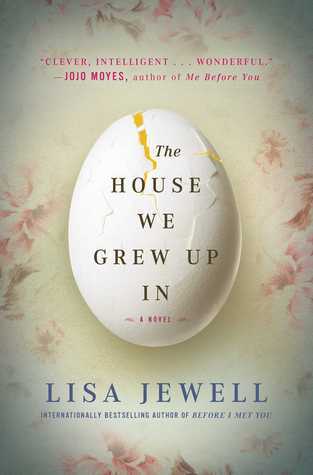
The House We Grew Up In PDF - Lisa Jewell
Lisa Jewell • Drama novels • 388 Pages
(0)
Quate
Review
Save
Share
Book Description
The House We Grew Up In by Lisa Jewell is an emotionally rich family drama and domestic mystery about memory, grief, hoarding, secrets, and the invisible damage that one tragedy can leave inside a family for decades. Before Jewell became one of the most recognizable names in contemporary psychological thrillers, she was already known for her sharp understanding of relationships, complicated households, and the way ordinary lives can conceal extraordinary pain. This novel brings those strengths together in a deeply moving story about the Bird family, whose seemingly idyllic childhood in a country cottage slowly gives way to silence, estrangement, and long-buried truth. The publisher describes the book as an unforgettable saga following the Bird family and the ripple effect of one tragedy across many years. (simonandschuster.com)
A Family Story Built Around a House Full of Memories
At the center of The House We Grew Up In is the Bird family: practical Meg, dreamy Beth, twins Rory and Rhys, their gentle father Colin, and their vivid, free-spirited mother Lorelei. In the beginning, their home appears to be the kind of place that childhood memories are made from: a simple brick house in a beautiful Cotswolds village, family meals, children’s artwork, cluttered rooms, and Easter celebrations shaped by Lorelei’s need to make every moment feel magical. The house is not only a setting; it is the emotional container of the novel, holding joy, denial, loss, guilt, and the physical evidence of everything the family cannot bear to face. (simonandschuster.com)
Jewell uses the Bird family home as a powerful symbol of love turned into burden. Lorelei begins as a mother who wants to preserve happiness by keeping mementos, decorations, children’s creations, and fragments of family life. What looks tender at first gradually becomes something more troubling, as the act of keeping things becomes a way of refusing to accept change, loss, and emotional reality. Years later, the house has become overwhelmed by objects, and Lorelei’s hoarding has isolated her from the people she once tried so hard to hold together. This makes the novel especially compelling for readers interested in family secrets, compulsive hoarding, and stories where a home reflects the inner life of the people who live inside it.
The Easter Weekend That Changes Everything
The emotional turning point of The House We Grew Up In is a devastating Easter weekend that breaks the Bird family apart. Jewell does not treat the tragedy as a simple plot device; instead, she explores how silence after trauma can be as destructive as the event itself. The family members cannot speak honestly about what has happened, and because they cannot speak, they begin to drift into separate lives shaped by guilt, avoidance, and misunderstanding. Penguin describes the Birds as a seemingly perfect family whose lives shatter after an unexpected Easter tragedy, forcing them years later to return to the house and confront what truly broke them apart. (penguin.co.uk)
This structure gives the novel its quiet suspense. The reader is not simply asking what happened; the deeper question is how each person survived it, or failed to survive it emotionally. Meg, Beth, Rory, and the rest of the family carry different versions of the past, and each version has shaped the adults they become. Jewell’s strength lies in showing that families rarely fracture all at once. They come apart through small silences, avoided conversations, unfair assumptions, and the gradual hardening of pain into habit. The novel’s mystery grows from emotional truth rather than from crime alone, making it ideal for readers who enjoy domestic suspense with psychological depth.
Lorelei Bird and the Pain of Holding On
Lorelei is one of the most memorable figures in The House We Grew Up In. She is charming, eccentric, loving, theatrical, and deeply flawed, a woman whose desire to preserve happiness becomes inseparable from her inability to let go. Her hoarding is not presented as a decorative quirk, but as a serious emotional condition that affects everyone around her. The publisher’s reading guide highlights the novel’s attention to Lorelei’s increasing hoarding problem and the different ways her family members respond to it, emphasizing how the issue becomes part of the family’s wider emotional damage. (simonandschuster.com)
Through Lorelei, Jewell explores the painful difference between treasuring the past and being trapped by it. Every saved wrapper, object, paper, and memory becomes a form of resistance against loss. Yet the more Lorelei keeps, the more she loses contact with the living people around her. This makes the novel especially affecting because it refuses to treat hoarding as merely shocking or strange. Instead, it connects accumulation to grief, fear, denial, and the longing to keep a vanished version of family life intact. For readers drawn to character-driven fiction, Lorelei’s story gives the book much of its emotional complexity.
Siblings, Estrangement, and the Long Shadow of Childhood
Another major strength of The House We Grew Up In is its portrait of siblings who grow up inside the same family but carry completely different emotional inheritances. Meg, Beth, Rory, and Rhys begin life in the same house, under the same parents, surrounded by the same rituals, yet they do not experience the family in identical ways. Their personalities, sensitivities, and responses to pain send them in different directions. As adults, they are connected by blood and memory, but separated by the things they never said and the wounds they never fully understood.
Jewell writes sibling estrangement with a clear sense of realism. The distance between the Bird children does not feel melodramatic; it feels like the natural consequence of a family that lost its language after trauma. Each person has built a life around avoidance, and returning to the house means returning to a version of themselves they may not want to recognize. That emotional return is one of the novel’s most powerful elements. The house becomes not just a property to clear or a childhood home to revisit, but a place where memory demands honesty.
A Different Kind of Lisa Jewell Novel
Readers who know Lisa Jewell mainly through later psychological thrillers such as Then She Was Gone, The Family Upstairs, and None of This Is True may find The House We Grew Up In slightly different in tone, but deeply connected to the same storytelling instincts. Jewell’s publisher identifies her as the number one New York Times bestselling author of twenty-four novels, with more than fifteen million copies sold internationally and translations into more than thirty languages. Her later reputation in suspense makes this earlier family-centered novel especially interesting, because it shows how her gifts for atmosphere, secrets, and emotional tension were already strongly developed. (simonandschuster.com)
This is not a thriller built around danger in the conventional sense. Its suspense comes from family history, withheld truth, emotional decay, and the slow revelation of what grief has done to each character. The result is a novel that can appeal both to fans of Lisa Jewell psychological suspense and to readers who prefer literary family sagas. It has mystery, but it also has tenderness. It has darkness, but it also understands love. It asks what happens when a family’s happiest rituals become permanently attached to its deepest wound.
Why The House We Grew Up In Is Worth Reading
The House We Grew Up In is a powerful choice for readers who enjoy family dramas, domestic fiction, emotional mysteries, and novels about the long-term consequences of trauma. It is especially effective for anyone interested in stories about mothers and children, sibling relationships, hoarding, memory, and the complicated meaning of home. Jewell does not offer a simple portrait of a broken family; she shows how love and damage can exist in the same rooms, how nostalgia can become dangerous, and how returning home can mean confronting the truth one has spent years avoiding.
At its heart, the novel is about the painful work of understanding. The Bird family must face not only what happened one Easter weekend, but also what they allowed to happen afterward: the silence, distance, denial, and emotional clutter that filled the spaces where honesty should have been. The House We Grew Up In is moving because it recognizes that families are made not only from shared joy, but also from shared grief, shared avoidance, and the possibility, however fragile, of finally naming what was lost. For readers looking for a beautifully layered Lisa Jewell novel with emotional weight, domestic mystery, and unforgettable family dynamics, this book offers a haunting and memorable reading experience.
Lisa Jewell
Lisa Jewell is a British author whose name has become strongly associated with psychological thrillers, domestic suspense, family secrets, missing-person mysteries, and emotionally layered crime fiction. Her fiction is widely read because it combines page-turning tension with a close understanding of ordinary lives: marriages, friendships, neighborhoods, memories, grief, obsession, and the quiet unease that can exist behind respectable doors. Her publisher describes her as a number one New York Times bestselling author of twenty-four novels, including Don’t Let Him In, None of This Is True, The Family Upstairs, Then She Was Gone, Invisible Girl, and Watching You; the same publisher notes that her novels have sold more than fifteen million copies internationally and have been translated into more than thirty languages.
Jewell’s career began with Ralph's Party, a novel that helped establish her as a fresh voice in popular fiction at the end of the 1990s. In her early work, she was often associated with warm, witty, relationship-driven fiction, but her career later moved into darker psychological territory. That shift is one of the reasons her body of work is so appealing: she did not abandon character or emotional realism when she entered the thriller field. Instead, she brought those strengths into stories about secrecy, manipulation, disappearance, memory, and danger. As a result, her thrillers feel intimate as well as suspenseful. The fear in her books often begins not with a spectacular crime scene, but with a person noticing that something in a familiar relationship does not quite fit.
One of Jewell’s defining qualities is her ability to make ordinary settings feel charged with hidden meaning. A family home, a London street, a garden, a pub, or a quiet community can become the center of a mystery where the past refuses to stay buried. In novels such as Then She Was Gone, The Family Upstairs, The Night She Disappeared, Invisible Girl, and None of This Is True, she often explores what happens when private histories collide with public identities. Her characters are rarely simple heroes or villains. They are grieving parents, lonely strangers, unreliable witnesses, wounded children, charming manipulators, and people who have learned to survive by hiding pieces of themselves. This psychological depth gives her stories a strong emotional pull.
Jewell is especially effective at writing suspense that is accessible without being shallow. Her chapters are usually shaped by momentum, revelation, and shifting points of view, but beneath the structure lies a steady interest in trauma, denial, family damage, and the stories people tell in order to protect themselves. Readers who come to her books for twists often stay for the emotional stakes. She understands that a secret is not only a plot device; it is also a burden that changes how people love, remember, trust, and fear. This makes her novels highly suitable for fans of domestic thrillers, crime fiction, book club mysteries, and psychological suspense novels that combine readability with emotional complexity.
Her reputation has continued to grow with the modern thriller audience. Penguin has described her as an author once beloved for romance who has become a household name in crime fiction, with books frequently appearing on the Sunday Times bestseller list. None of This Is True also became a major reader favorite; the BBC reported that it won Book of the Year at the 2024 TikTok Book Awards, reflecting the way Jewell’s suspense reaches both traditional readers and contemporary online reading communities.
A major part of Jewell’s appeal lies in her control of uncertainty. She rarely gives the reader a complete picture at the beginning. Instead, she offers fragments: a memory that may be wrong, a person whose charm feels slightly rehearsed, a disappearance that has never been fully explained, or a household whose surface calm hides something rotten. The reader is invited to assemble the truth alongside the characters, but the truth usually arrives with emotional consequences. That structure gives her books their compulsive rhythm, making them the kind of novels readers often describe as difficult to put down.
For readers discovering Lisa Jewell, her work offers a strong entry point into contemporary British suspense. She writes about fear, but also about longing, grief, family bonds, social performance, and the way the past can return through the smallest detail. Her novels appeal to readers who enjoy clever plotting, morally complicated characters, and stories where danger grows from the most familiar spaces. Whether the book begins with a missing girl, a strange inheritance, a dangerous friendship, or a man who seems too perfect to trust, Jewell’s fiction promises a carefully built atmosphere of suspicion and emotional discovery.
Earn Rewards While Reading!
Every 10 pages you read and spent 30 seconds on every page, earns you 5 reward points! Keep reading to unlock achievements and exclusive benefits.
Read
Rate Now
5 Stars
4 Stars
3 Stars
2 Stars
1 Stars
The House We Grew Up In Quotes
Top Rated
Latest
Quate
Be the first to leave a quote and earn 10 points
instead of 3
'%20/%3e%3c/svg%3e "None of This Is True")
Comments
Be the first to leave a comment and earn 5 points
instead of 3