

The source of the book
This book is published for the public benefit under a Creative Commons license, or with the permission of the author or publisher. If you have any objections to its publication, please contact us.
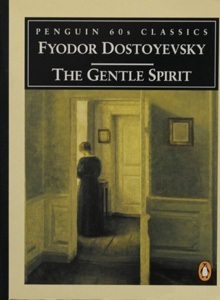
The Gentle Spirit PDF - Fyodor Dostoevsky
Fyodor Dostoevsky • literature • 100 Pages
(0)
Quate
Review
Save
Share
Book Description
The Gentle Spirit by Fyodor Dostoevsky
The Gentle Spirit by Fyodor Dostoevsky is a haunting psychological story about pride, silence, love, power, and the devastating distance that can grow between two people living under the same roof. Also known in English translation as A Gentle Creature or The Meek One, this intense short work belongs to Dostoevsky’s mature period and carries many of the qualities that make his fiction unforgettable: moral tension, emotional confession, spiritual unease, and a deep interest in the hidden motives of the human heart.
At the center of the story is an unnamed pawnbroker who attempts to explain, justify, and understand the tragedy that has overtaken his marriage. His young wife, fragile yet inwardly strong, remains partly mysterious because the entire narrative is filtered through his agitated voice. This gives The Gentle Spirit its extraordinary psychological power. Readers are not simply told what happened; they are placed inside the mind of a man trying to reconstruct the past while struggling against guilt, self-deception, wounded pride, and belated love.
A Dark and Intimate Psychological Story
Dostoevsky builds The Gentle Spirit around a confined domestic world, yet the emotional range of the story is vast. A pawnshop, a marriage, a few remembered conversations, and a final catastrophe become the materials for a profound exploration of control, vulnerability, and moral responsibility. The narrator believes he can explain everything, but his explanations often reveal more than he intends. His need to dominate the story mirrors his need to dominate the relationship, and this tension gives the work its unsettling force.
The story is especially powerful because it does not rely on outward action alone. Instead, Dostoevsky turns inward, examining the narrator’s shifting thoughts as he moves between confession, accusation, denial, tenderness, and despair. This makes The Gentle Spirit an essential read for anyone interested in classic Russian literature, psychological fiction, and stories that explore the complexity of marriage, guilt, and emotional cruelty. The drama unfolds not only between husband and wife, but within the narrator’s own divided consciousness.
Themes of Pride, Silence, and Moral Blindness
One of the central themes of The Gentle Spirit is the destructive nature of pride. The narrator is not a simple villain; he is far more disturbing because he is intelligent, wounded, and capable of moments of insight. He wants to be understood, respected, even loved, but his pride prevents him from offering the openness and compassion that love requires. In Dostoevsky’s hands, pride becomes a spiritual illness, a force that turns affection into possession and silence into punishment.
Silence is another major element in the story. The young wife’s quietness is not emptiness; it is part of her dignity, resistance, and suffering. The narrator repeatedly tries to interpret her, but his interpretations are shaped by his own ego. This creates one of the most important tensions in the book: the reader must listen to a narrator who is desperate to be believed, while also sensing the presence of another truth beneath his words. For readers searching for Dostoevsky books about guilt, marriage in literature, or unreliable narrator fiction, this work offers a concentrated and unforgettable example.
Dostoevsky’s Art of Confession
Fyodor Dostoevsky is famous for creating characters who speak from states of crisis, and The Gentle Spirit is one of his most compressed and intense confessional narratives. The narrator’s voice is restless, circular, and emotionally unstable, as if he is arguing with an invisible judge. He wants to arrange the facts in a way that will absolve him, yet the very act of speaking exposes the depth of his failure.
This confessional style connects the story to Dostoevsky’s broader literary world. Readers who admire Crime and Punishment, Notes from Underground, The Brothers Karamazov, or The Idiot will recognize the author’s fascination with conscience, suffering, humiliation, and the search for moral truth. However, The Gentle Spirit has a special intensity because of its brevity. It does not spread its questions across a large social canvas; it presses them into a single room, a single voice, and a single unbearable memory.
A Portrait of Vulnerability and Power
Although the narrator dominates the story’s language, the emotional center of The Gentle Spirit is the young woman whose life he tries to explain. She is described through his eyes, but Dostoevsky allows readers to sense her vulnerability, dignity, and isolation beyond his limited understanding. Her gentleness is not weakness in any simple sense. It is connected to endurance, inwardness, and a quiet moral presence that the narrator fails to honor until it is too late.
The relationship between the pawnbroker and his wife reflects wider questions about social power, gender, poverty, and dependence. The young woman enters the narrator’s life from a position of hardship, and he imagines himself as her rescuer. Yet rescue, in Dostoevsky’s world, can become another form of domination when it is mixed with vanity and control. This makes the story deeply relevant for readers interested in 19th-century Russian society, women in classic literature, and the emotional cost of unequal relationships.
Why The Gentle Spirit Still Matters
More than a century after its publication, The Gentle Spirit remains strikingly modern in its psychological insight. Dostoevsky understands how people can harm one another not only through violence or open hatred, but through pride, coldness, manipulation, and the refusal to truly listen. The narrator’s tragedy lies partly in his inability to recognize another person as fully separate from his own wounded imagination. He sees, but too late; he understands, but only after understanding can no longer repair what has been broken.
This is why the story continues to attract readers of literary classics, philosophical fiction, and dark psychological drama. It is brief enough to be read in one sitting, but its emotional and moral questions linger long afterward. Dostoevsky does not offer easy comfort or simple judgment. Instead, he asks readers to confront the painful gap between how people explain themselves and what their actions reveal.
For Readers of Classic Russian Literature
The Gentle Spirit is an excellent choice for readers who want to experience Dostoevsky’s genius in a shorter form. It contains many of his signature concerns—sin, conscience, humiliation, compassion, spiritual crisis, and the mystery of human freedom—without the scale of his major novels. For students, book clubs, and lovers of serious fiction, it offers rich material for discussion and interpretation.
The story is also ideal for readers drawn to short classic books, Russian novellas, existential literature, and emotionally charged narratives about guilt and self-knowledge. Its atmosphere is intimate and severe, but its insight is expansive. Dostoevsky turns a private tragedy into a study of the human soul, showing how love without humility can become destructive and how the need to possess another person can blind someone to the reality of that person’s suffering.
A Powerful Dostoevsky Classic in Miniature
The Gentle Spirit by Fyodor Dostoevsky is a compact masterpiece of psychological realism and moral drama. Through the voice of a grieving, conflicted narrator, Dostoevsky creates a story that is at once personal, philosophical, and deeply unsettling. It is a work about the failure to love rightly, the danger of pride, and the terrible clarity that can arrive only after loss.
For readers discovering Dostoevsky for the first time, The Gentle Spirit offers a concentrated introduction to his emotional depth and spiritual seriousness. For those already familiar with his great novels, it reveals the same brilliance in a smaller, sharper form. Quiet, tragic, and unforgettable, this story remains one of Dostoevsky’s most powerful examinations of conscience, tenderness, and the hidden violence of the human heart.
Fyodor Dostoevsky
Fyodor Dostoevsky was a Russian novelist, philosopher, and essayist, widely considered to be one of the greatest writers in Western literature. He was born in Moscow in 1821 and raised in a middle-class family. His father was a doctor who treated the poor for free, which instilled in Dostoevsky a deep sense of social justice and compassion for the downtrodden.
Dostoevsky began his writing career in the 1840s, with a series of novellas and short stories that explored the complexities of human nature and the dark side of Russian society. His first major novel, "Poor Folk," was published in 1846 and won critical acclaim. However, it was his later works, such as "Crime and Punishment," "The Idiot," and "The Brothers Karamazov," that established him as a literary master.
Dostoevsky's writing is known for its psychological depth, philosophical themes, and exploration of the human condition. His characters often struggle with moral dilemmas and existential questions, grappling with issues of faith, morality, and the meaning of life. His works also explore the political and social issues of his time, including poverty, crime, and political oppression.
Dostoevsky's life was marked by personal tragedy and political turmoil. He was arrested in 1849 for his involvement with a group of liberal intellectuals and sentenced to death, only to have the sentence commuted to hard labor in Siberia. He returned to Russia after serving his sentence, but continued to struggle with poverty and illness throughout his life. He died in 1881 at the age of 59.
Despite his tumultuous life, Dostoevsky's legacy as a writer and thinker endures. His works continue to be widely read and studied today, and his ideas about the human condition and the role of faith in society continue to resonate with readers around the world.
Earn Rewards While Reading!
Every 10 pages you read and spent 30 seconds on every page, earns you 5 reward points! Keep reading to unlock achievements and exclusive benefits.
Read
Rate Now
5 Stars
4 Stars
3 Stars
2 Stars
1 Stars
The Gentle Spirit Quotes
Top Rated
Latest
Quate
Be the first to leave a quote and earn 10 points
instead of 3
Other books by Fyodor Dostoevsky
Other books like The Gentle Spirit
'%20/%3e%3c/svg%3e "The Missionary Position: Mother Teresa in Theory and Practice")
3635
English
Comments
Be the first to leave a comment and earn 5 points
instead of 3