

The source of the book
This book is published for the public benefit under a Creative Commons license, or with the permission of the author or publisher. If you have any objections to its publication, please contact us.
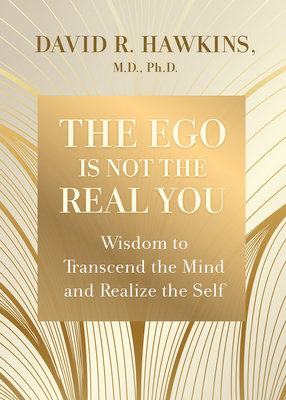
The Ego Is Not the Real You: Wisdom to Transcend the Mind and Realize the Self PDF - David R. Hawkins
David R. Hawkins • Human Development • 138 Pages
(0)
Quate
Review
Save
Share
Book Description
The Ego Is Not the Real You: Wisdom to Transcend the Mind and Realize the Self by David R. Hawkins is a concise yet deeply contemplative spiritual book for readers seeking freedom from overthinking, emotional reactivity, self-identification, and the restless demands of the mind. Drawing from Hawkins’s broader teachings on consciousness, surrender, spiritual awareness, and inner transformation, this book invites readers to question one of the most persistent assumptions of ordinary life: the belief that the ego, with its fears, desires, judgments, and personal stories, is the true self.
Rather than approaching spirituality as a complicated system of ideas, The Ego Is Not the Real You offers a clear and direct path into self-inquiry. It speaks to the reader who senses that there is something deeper than personality, social identity, mental noise, or the constant search for approval and control. Through selected teachings centered on the ego, the mind, and the realization of the Self, Hawkins guides readers toward a more peaceful understanding of who they are beneath conditioned thought and emotional attachment.
A Guide to Transcending the Ego and Discovering the Self
At the heart of The Ego Is Not the Real You is the spiritual insight that the ego is not an enemy to be fought, but an illusion to be seen through. The ego claims ownership of experience, builds identity from memory and preference, and tries to secure happiness through achievement, control, comparison, and validation. Hawkins’s teaching turns attention away from this unstable structure and toward the deeper awareness that observes it. In doing so, the book becomes a practical companion for anyone interested in ego transcendence, self-realization, and the journey from mental identification to inner freedom.
The book is especially valuable for readers who struggle with repetitive thoughts, emotional patterns, pride, guilt, fear, resentment, or the sense of being trapped inside the mind. Hawkins does not present the ego as something that must be violently suppressed. Instead, he emphasizes the power of letting go, surrender, and non-identification. When the reader stops believing every thought and stops treating every emotional reaction as personal truth, a new space opens within consciousness. That space is where peace, humility, compassion, and spiritual clarity become possible.
The Spiritual Wisdom of David R. Hawkins
David R. Hawkins, known for works such as Letting Go, Power vs. Force, and The Map of Consciousness Explained, writes from a distinctive blend of spiritual insight, psychological observation, and contemplative discipline. His work often explores how human suffering is maintained by attachment, resistance, false perception, and identification with limited states of consciousness. In The Ego Is Not the Real You, these themes are brought into a focused and accessible form, making the book suitable both for longtime students of Hawkins and for new readers looking for an entry point into his teachings.
Hawkins’s language is direct, reflective, and often meditative. He encourages the reader to look beyond intellectual understanding and into lived realization. This makes the book less of a conventional self-help manual and more of a spiritual mirror. Its purpose is not simply to provide information about the ego, but to help the reader recognize how the ego operates in daily life: in defensiveness, desire, self-importance, victimhood, control, judgment, and the endless need to be right. By recognizing these movements without condemnation, the reader begins to loosen their hold.
Letting Go of Mental Identification
One of the central strengths of The Ego Is Not the Real You is its emphasis on letting go of identification with the mind. The mind constantly produces commentary, interpretation, memory, projection, and analysis, yet Hawkins points toward the awareness behind all of these movements. The reader is invited to notice that thoughts arise and pass, emotions intensify and fade, roles change, and personal stories evolve, while awareness itself remains present. This distinction is essential for anyone seeking spiritual awakening, emotional healing, or a more stable sense of inner peace.
The book also speaks to a common challenge on the spiritual path: the ego’s ability to turn even spirituality into another identity. Spiritual pride, the desire to be advanced, the need to prove understanding, or the impulse to compare one’s progress with others can all become subtle forms of ego. Hawkins’s teaching gently redirects the reader toward humility, surrender, and devotion to truth rather than self-image. In this sense, the book is not only about transcending ordinary ego patterns but also about recognizing the more refined forms of ego that can appear in personal development and spiritual practice.
A Reading Experience for Seekers of Peace and Inner Freedom
Readers searching for a book on spiritual enlightenment, consciousness, mindfulness, nonduality, surrender, or self-realization will find The Ego Is Not the Real You especially meaningful. Its compact structure makes it easy to read slowly, revisit often, and use as a contemplative resource. Each passage encourages reflection rather than speed. This is the kind of book that can be read in quiet moments, returned to during emotional difficulty, or kept close as a reminder that the mind’s fears and opinions are not the final truth of who we are.
The reading experience is calm, concentrated, and inward-facing. Instead of offering dramatic promises or external formulas for success, Hawkins points toward a change in perception. The transformation suggested here is not about becoming a better ego, but about awakening from the belief that the ego is the center of existence. For readers who appreciate contemplative spirituality, devotional nonduality, and teachings that bridge psychology and inner work, this book offers a clear and steady voice.
Who Should Read The Ego Is Not the Real You?
The Ego Is Not the Real You is ideal for readers who want to understand the ego from a spiritual perspective and explore how surrender can lead to greater freedom. It will appeal to those who have read Letting Go: The Pathway of Surrender and want a more focused meditation on the ego and the real Self. It is also suitable for readers interested in authors and teachings connected with nondual awareness, inner peace, spiritual psychology, and the release of limiting beliefs.
The book can be especially helpful for people who feel exhausted by the constant activity of the mind or who are beginning to see that external achievements alone do not resolve inner dissatisfaction. Hawkins’s teachings suggest that true peace does not come from perfect circumstances, but from a shift in consciousness. As the reader releases attachment to egoic positions, emotional demands, and mental resistance, life can be experienced with more acceptance, compassion, and clarity.
Why This Book Matters
The Ego Is Not the Real You matters because it addresses a timeless spiritual question in a direct and accessible way: if the ego is not the true self, then what remains when identification with it begins to fall away? Hawkins’s answer points toward awareness, presence, love, and the realization of the Self beyond personal limitation. This makes the book not merely a discussion of ego, but an invitation to a different way of living.
For readers seeking a thoughtful and spiritually serious book about transcending the mind, letting go of the ego, and realizing a deeper truth of being, The Ego Is Not the Real You by David R. Hawkins offers guidance that is both simple and profound. It encourages a movement from control to surrender, from self-image to authenticity, from mental noise to stillness, and from the illusion of separateness toward the quiet recognition of the Self.
David R. Hawkins
Dr. David R. Hawkins, born David Ramon Hawkins, was an American psychiatrist, physician, researcher, lecturer, spiritual teacher, and bestselling author whose work became widely associated with consciousness studies, emotional healing, devotional spirituality, and practical inner transformation. Born in Milwaukee, Wisconsin, on June 3, 1927, and deceased in Sedona, Arizona, on September 19, 2012, Hawkins built a career that moved from clinical psychiatry into a broader body of spiritual and philosophical writing. His official biography identifies him as Medical Director of the North Nassau Mental Health Center from 1956 to 1980 and Director of Research at Brunswick Hospital from 1968 to 1979, details that help explain the clinical language that appears throughout his books on suffering, recovery, surrender, addiction, fear, guilt, anger, and the search for peace. In 1973, he co-authored Orthomolecular Psychiatry with Nobel Prize-winning chemist Linus Pauling, a collaboration that placed him within a debated but historically significant area of psychiatry, nutrition, and biological approaches to mental health. As an author, Hawkins is best known for Power vs. Force: The Hidden Determinants of Human Behavior, Letting Go: The Pathway of Surrender, The Eye of the I, I: Reality and Subjectivity, Truth vs. Falsehood, Transcending the Levels of Consciousness, and Healing and Recovery. These works made him especially visible among readers searching for books on consciousness, spiritual awakening, emotional release, self-inquiry, nonduality, meditation, and the psychology of transformation. In Power vs. Force, Hawkins introduced the framework he called the Map of Consciousness, a symbolic and spiritual model that organizes human attitudes and emotions from states such as shame, fear, anger, and pride toward courage, acceptance, love, joy, peace, and enlightenment. The model should be understood as part of Hawkins’s own spiritual-philosophical system rather than as a substitute for mainstream medical, psychological, or psychiatric treatment. His later and highly popular book Letting Go presents a “surrender” approach to emotional life, encouraging readers to observe, allow, and release inner resistance rather than suppressing or dramatizing difficult feelings. This emphasis on surrender made Hawkins especially influential among readers interested in emotional freedom, mindfulness, forgiveness, recovery, and spiritual self-help. His style is direct, devotional, and often didactic: he writes as a physician familiar with pain, as a contemplative teacher concerned with the ego, and as a spiritual author attempting to connect everyday human struggle with questions of truth, compassion, and ultimate reality. His official biography also notes that he founded the Institute for Spiritual Research in 1983 and the Path of Devotional Nonduality in 2003, and that he lectured at universities, spiritual centers, and public forums. For a book website, David R. Hawkins can be presented as a major modern author in the fields of spirituality, consciousness, and inner healing, particularly suited to readers seeking thoughtful works on letting go, personal transformation, recovery, devotion, awareness, and the movement from emotional suffering toward a more peaceful and meaningful life.
Earn Rewards While Reading!
Every 10 pages you read and spent 30 seconds on every page, earns you 5 reward points! Keep reading to unlock achievements and exclusive benefits.
Read
Rate Now
5 Stars
4 Stars
3 Stars
2 Stars
1 Stars
The Ego Is Not the Real You: Wisdom to Transcend the Mind and Realize the Self Quotes
Top Rated
Latest
Quate
Be the first to leave a quote and earn 10 points
instead of 3
Other books by David R. Hawkins
'%20/%3e%3c/svg%3e "The Eye of the I: From Which Nothing is Hidden")
David R. Hawkins.
Human Development
(0)
6504
English
Comments
Be the first to leave a comment and earn 5 points
instead of 3