

The source of the book
This book is published for the public benefit under a Creative Commons license, or with the permission of the author or publisher. If you have any objections to its publication, please contact us.
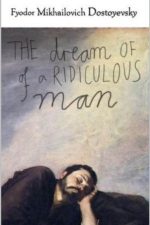
The Dream of a Ridiculous Man PDF - Fyodor Dostoevsky
Fyodor Dostoevsky • Literary novels • 31 Pages
(0)
Quate
Review
Save
Share
Book Description
The Dream of a Ridiculous Man by Fyodor Dostoevsky
The Dream of a Ridiculous Man by Fyodor Dostoevsky is a compact yet deeply resonant work of Russian literature, a philosophical short story that brings together many of the author’s most enduring concerns: despair, moral responsibility, spiritual awakening, human suffering, innocence, guilt, and the possibility of redemption. First published in Russian in 1877 as “Son smeshnogo cheloveka,” the story stands as one of Dostoevsky’s most concentrated explorations of the human soul, addressing questions of original sin, ideal society, human perfectibility, and the limits of purely rational answers to life’s deepest problems.
A Philosophical Story About Despair, Vision, and Awakening
At the center of The Dream of a Ridiculous Man is a narrator who sees himself as absurd, alienated, and disconnected from the world around him. He is a man who has come to believe that nothing matters, that life has no real value, and that his own existence is little more than a meaningless accident. Dostoevsky presents this inner state not as a simple mood, but as a spiritual crisis: the narrator’s despair is tied to nihilism, isolation, pride, and the terrible emptiness that comes when a person loses faith in love, truth, and human connection.
The story begins in darkness, both literal and emotional. The narrator moves through the city with a mind fixed on hopelessness, yet a small human encounter interrupts the certainty of his despair. A vulnerable child, asking for help, becomes the first crack in his closed world. Dostoevsky often builds his fiction around such moments, when a seemingly minor act reveals an entire moral universe. Here, that encounter becomes the starting point for a strange and visionary journey into dream, memory, conscience, and revelation.
The Dream as a Journey Into the Human Soul
The title of the story is essential. This is not merely a tale about a dream; it is a story about what dreams can reveal when ordinary logic fails. In the narrator’s dream, Dostoevsky creates a vision of another world, a place that appears innocent, harmonious, and free from the corruption that marks human society. The dream is beautiful, unsettling, and morally charged, because it forces the narrator to confront what humanity might be, what it has become, and what it loses when innocence gives way to egoism, false knowledge, pride, and domination.
Without reducing the story to a single lesson, The Dream of a Ridiculous Man asks whether people are naturally good, whether evil begins in the heart, and whether truth can be known through experience rather than abstract reasoning alone. The narrator’s journey is not a philosophical argument in the cold sense; it is an emotional and spiritual event. Dostoevsky makes the reader feel the movement from indifference to compassion, from self-absorption to responsibility, and from despair to a renewed sense of love for humankind.
Major Themes in The Dream of a Ridiculous Man
One of the most powerful themes in The Dream of a Ridiculous Man is the conflict between nihilism and spiritual truth. The narrator begins by believing that nothing matters, a belief that gives him a frightening kind of freedom. If nothing has value, then guilt, kindness, and suffering seem irrelevant. Yet Dostoevsky challenges this emptiness by showing that even a single plea for help can awaken conscience. The story suggests that human beings cannot fully escape moral responsibility, even when they try to deny it intellectually.
Another central theme is innocence and corruption. The dream world presents an image of human life before moral fracture, while the narrator’s presence raises troubling questions about how corruption spreads. Dostoevsky does not treat evil as something distant or abstract; he makes it intimate, contagious, and connected to desire, pride, and the misuse of knowledge. This gives the story a strong biblical and philosophical dimension, while keeping it grounded in the narrator’s personal transformation.
The story also explores madness, ridicule, and truth. The narrator calls himself ridiculous, and others may see him as foolish or insane, yet Dostoevsky repeatedly blurs the line between foolishness and wisdom. In this sense, the “ridiculous man” becomes a familiar Dostoevskian figure: someone who is socially dismissed but spiritually awakened, someone whose strange testimony may contain more truth than the confident opinions of ordinary society.
A Classic Dostoevsky Reading Experience in a Short Form
Readers who know Dostoevsky through major novels such as Crime and Punishment, The Idiot, Demons, or The Brothers Karamazov will recognize many of his signature concerns in this shorter work. The Dream of a Ridiculous Man contains the psychological intensity, moral urgency, and spiritual searching that define his fiction, but in a form that is brief, direct, and highly concentrated. It can be read as an introduction to Dostoevsky’s worldview or as a companion piece for readers already familiar with his larger novels.
The style is intimate and confessional. Dostoevsky draws the reader into the narrator’s mind, allowing every contradiction, fear, revelation, and change of heart to unfold from within. The result is not a conventional plot-driven story, but a psychological and philosophical experience. It moves through despair, dream, wonder, shame, and renewed purpose with unusual speed, yet it leaves behind questions that feel much larger than the story’s length.
Who Should Read The Dream of a Ridiculous Man?
The Dream of a Ridiculous Man is ideal for readers interested in classic Russian literature, philosophical fiction, existential literature, and stories about the search for meaning. It will appeal to those who are drawn to books about morality, faith, doubt, guilt, compassion, and the human condition. Because it is shorter than Dostoevsky’s major novels, it is also a strong choice for readers who want to experience his depth and intensity without beginning with a long and demanding work.
This story is especially valuable for readers exploring themes of nihilism, redemption, spiritual awakening, utopia, original sin, and moral transformation. It does not offer easy comfort, but it does offer a powerful vision of why love, compassion, and responsibility matter. Dostoevsky’s narrator begins from the conviction that life is meaningless, yet the story gradually opens toward the possibility that meaning may be found not in abstract certainty, but in the living reality of human love.
Why The Dream of a Ridiculous Man Still Matters
More than a century after its publication, The Dream of a Ridiculous Man remains strikingly relevant because it speaks to a crisis that modern readers still recognize: the feeling of being detached from the world, overwhelmed by meaninglessness, and uncertain whether goodness can survive in a flawed society. Dostoevsky does not ignore darkness; he enters it fully. Yet he also insists that the smallest moral awakening can change the direction of a life.
This is what makes the story enduring. It is both a work of psychological realism and a visionary moral fable. It is rooted in the inner pain of one isolated man, but it expands into questions about all humanity. Through a strange dream and a troubled confession, Dostoevsky creates a story about the fragile possibility of renewal, the burden of conscience, and the transformative power of compassion. For readers seeking a profound classic that is brief in length but immense in meaning, The Dream of a Ridiculous Man by Fyodor Dostoevsky offers one of the most memorable and thought-provoking experiences in nineteenth-century literature.
Fyodor Dostoevsky
Fyodor Dostoevsky was a Russian novelist, philosopher, and essayist, widely considered to be one of the greatest writers in Western literature. He was born in Moscow in 1821 and raised in a middle-class family. His father was a doctor who treated the poor for free, which instilled in Dostoevsky a deep sense of social justice and compassion for the downtrodden.
Dostoevsky began his writing career in the 1840s, with a series of novellas and short stories that explored the complexities of human nature and the dark side of Russian society. His first major novel, "Poor Folk," was published in 1846 and won critical acclaim. However, it was his later works, such as "Crime and Punishment," "The Idiot," and "The Brothers Karamazov," that established him as a literary master.
Dostoevsky's writing is known for its psychological depth, philosophical themes, and exploration of the human condition. His characters often struggle with moral dilemmas and existential questions, grappling with issues of faith, morality, and the meaning of life. His works also explore the political and social issues of his time, including poverty, crime, and political oppression.
Dostoevsky's life was marked by personal tragedy and political turmoil. He was arrested in 1849 for his involvement with a group of liberal intellectuals and sentenced to death, only to have the sentence commuted to hard labor in Siberia. He returned to Russia after serving his sentence, but continued to struggle with poverty and illness throughout his life. He died in 1881 at the age of 59.
Despite his tumultuous life, Dostoevsky's legacy as a writer and thinker endures. His works continue to be widely read and studied today, and his ideas about the human condition and the role of faith in society continue to resonate with readers around the world.
Earn Rewards While Reading!
Every 10 pages you read and spent 30 seconds on every page, earns you 5 reward points! Keep reading to unlock achievements and exclusive benefits.
Read
Rate Now
5 Stars
4 Stars
3 Stars
2 Stars
1 Stars
The Dream of a Ridiculous Man Quotes
Top Rated
Latest
Quate
Be the first to leave a quote and earn 10 points
instead of 3
'%20/%3e%3c/svg%3e "The Brothers Karamazov")
Comments
Be the first to leave a comment and earn 5 points
instead of 3