

The source of the book
This book is published for the public benefit under a Creative Commons license, or with the permission of the author or publisher. If you have any objections to its publication, please contact us.
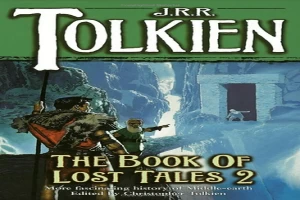
The Book of Lost Tales Part 2 PDF - J. R. R. Tolkien
J. R. R. Tolkien • science fiction novels • 527 Pages
(0)
Author
J. R. R. TolkienCategory
literatureSection
Number Of Downloads
135
Number Of Reads
298
File Size
4.51 MB
Views
3,383
Quate
Review
Save
Share
Book Description
The Book of Lost Tales Part 2 by J. R. R. Tolkien
The Book of Lost Tales Part 2 is an essential volume for readers who want to explore the earliest imaginative foundations of J. R. R. Tolkien’s Middle-earth mythology. As the second book in The History of Middle-earth series, this volume continues the remarkable journey into Tolkien’s first versions of the legends that would later grow into The Silmarillion, offering a rare view of Middle-earth, Valinor, Elves, heroes, dragons, hidden cities, ancient griefs, and mythic beauty in their earliest literary form. These tales were written by Tolkien in the years before his most famous published works, and they reveal the first shaping of the vast legendary world behind The Hobbit and The Lord of the Rings. (HarperCollins Publishers UK)
A Foundational Work in Tolkien’s Legendarium
This volume is not a conventional fantasy novel in the style of The Lord of the Rings. Instead, it is a deeply rewarding collection of early mythic narratives, edited and presented by Christopher Tolkien, who devoted decades to organizing and explaining his father’s unpublished manuscripts. For readers interested in Tolkien’s creative process, the origins of Middle-earth, or the development of the stories behind The Silmarillion, The Book of Lost Tales Part 2 offers a fascinating look at how familiar legends began, changed, and expanded over time. Christopher Tolkien’s editorial commentary helps connect the early versions with later forms, making the book especially valuable for serious Tolkien readers and students of fantasy literature. (HarperCollins Publishers UK)
At the heart of the book are early forms of some of Tolkien’s most powerful legends, including the stories of Beren and Lúthien, Túrin Turambar, the Fall of Gondolin, and the Necklace of the Dwarves. These narratives belong to the deep past of Tolkien’s world, a mythic age of courage, doom, beauty, betrayal, love, loss, and heroic resistance against overwhelming darkness. Readers who know these stories from The Silmarillion or later standalone editions will find here a different and often surprising experience: names, details, narrative structures, and atmospheres sometimes differ from the later versions, allowing the reader to witness Tolkien’s mythology in a living state of invention. (Tolkien Gateway)
Early Tales of Beren, Lúthien, Túrin, Gondolin, and Ancient Middle-earth
One of the great pleasures of The Book of Lost Tales Part 2 is the opportunity to encounter the earliest shape of tales that became central to Tolkien’s legendarium. The story of Beren and Lúthien appears here in a form that already carries the emotional force of love set against peril and enchantment, while also showing how much Tolkien’s mythology evolved over decades. The material connected with Túrin introduces one of the darkest and most tragic heroic figures in Tolkien’s world, presenting a mythic narrative marked by fate, pride, sorrow, and conflict with monstrous evil.
The volume also includes the early account of the Fall of Gondolin, one of the most dramatic episodes in Tolkien’s mythology. Gondolin, the hidden Elven city, occupies a special place in Tolkien’s imagination, and its fall became one of the defining tragedies of the First Age. In this early version, readers can sense the grandeur, urgency, and visual power that would continue to echo through Tolkien’s later writings. Alongside it, the tale of the Necklace of the Dwarves introduces themes of treasure, craft, desire, conflict, and the dangerous weight of ancient objects, all of which are central to Tolkien’s larger moral and mythic universe.
A Book for Readers Who Want the Deeper Tolkien
For many readers, The Book of Lost Tales Part 2 is best approached after becoming familiar with The Lord of the Rings, The Hobbit, and especially The Silmarillion. It speaks most strongly to those who want more than the finished story; it is for readers who want to understand how Tolkien built a mythology from language, legend, poetry, medieval influence, invented history, and deep imaginative discipline. The book rewards patience and curiosity, because its value lies not only in what happens in the tales, but in how Tolkien’s world emerges through variations, fragments, commentary, and early linguistic invention.
This makes the volume particularly appealing to fans searching for Tolkien books beyond The Lord of the Rings, readers interested in The History of Middle-earth series, and anyone studying the roots of modern high fantasy. The prose has an archaic and mythic quality, closer in spirit to legend, fairy tale, and ancient epic than to fast-paced contemporary fantasy. That tone is part of the book’s identity: it invites the reader into an older mode of storytelling, where names, places, songs, genealogies, and symbolic objects carry great weight.
Christopher Tolkien’s Commentary and the Evolution of the Myths
A major strength of this edition is the presence of Christopher Tolkien’s commentary, which guides readers through the manuscript tradition and explains the relationship between early versions and later developments. Each tale is followed by notes and analysis, including attention to changing names, early forms of Elvish vocabulary, and the gradual transformation of characters and events. This editorial framework gives the book a scholarly depth while still preserving the enchantment of the original stories.
For readers interested in Tolkien scholarship, this combination of narrative and commentary is invaluable. It shows that Middle-earth did not appear fully formed, but grew over many years through revision, linguistic invention, mythological layering, and imaginative reworking. The book reveals Tolkien not only as a storyteller, but as a myth-maker constructing a whole ancient world with its own memory, languages, heroic cycles, and tragic histories.
The Reading Experience
Reading The Book of Lost Tales Part 2 is like entering a hidden archive of Tolkien’s imagination. The book feels older, stranger, and more experimental than Tolkien’s most widely read works, yet it carries many of the emotional and thematic qualities that made his later fiction so enduring. There is beauty in exile, nobility in doomed resistance, wonder in the Elven realms, terror in dragons and dark powers, and deep sadness in the loss of ancient things. The experience is immersive, but in a different way from a traditional novel: it asks the reader to move slowly, to notice names and changes, and to appreciate the layered construction of a fictional mythology.
This is also a book that deepens appreciation for The Silmarillion. By seeing the early forms of major tales, readers can better understand the scale of Tolkien’s achievement and the long creative road behind the published legendarium. The differences between early and later versions are not distractions; they are part of the fascination. They show Tolkien’s world in motion, still forming, still changing, already powerful but not yet fixed.
Who Should Read The Book of Lost Tales Part 2?
The Book of Lost Tales Part 2 is ideal for devoted Tolkien readers, fantasy scholars, collectors of J. R. R. Tolkien books, and anyone interested in the origins of Middle-earth, Beleriand, Valinor, and the mythic background of the First Age. It is especially suited to readers who enjoy literary fantasy, mythology, philology, ancient-style storytelling, and annotated editions that reveal the craft behind a major imaginative work.
New readers may find the book denser than Tolkien’s more famous fiction, but experienced fans will discover a rich and rewarding volume that expands their understanding of the legendarium. It is not simply an early draft collection; it is a window into the first great flowering of Tolkien’s mythology, where the seeds of later masterpieces can be seen in vivid and often unexpected forms.
A Rare Window into the Beginning of Middle-earth
The Book of Lost Tales Part 2 by J. R. R. Tolkien remains one of the most important books for understanding the deep roots of Tolkien’s world. Through its early tales, editorial notes, mythic atmosphere, and connection to The Silmarillion, it offers readers a unique encounter with the beginnings of Middle-earth’s legendary history. For anyone drawn to Tolkien’s Elves, ancient cities, heroic tragedies, invented languages, and the vast background behind The Lord of the Rings, this volume provides a meaningful and memorable journey into the earliest landscapes of his imagination.
J. R. R. Tolkien
J. R. R. Tolkien is widely regarded as one of the most influential authors of the twentieth century and the foundational figure of modern high fantasy literature. Best known for his masterpieces The Hobbit and The Lord of the Rings, Tolkien was not only a novelist but also a distinguished philologist and professor at the University of Oxford. His academic expertise in ancient languages, medieval literature, and linguistic structures profoundly shaped his creative work, giving his fictional world of Middle-earth an unprecedented depth and realism.
Born in 1892 in Bloemfontein, South Africa, Tolkien moved to England after the death of his father and was raised in the English countryside. From an early age, he developed a fascination with language, mythology, and storytelling. His academic career at Oxford focused on Old English literature, particularly texts such as Beowulf, which he both studied and helped reinterpret for modern scholarship.
Tolkien’s experience in World War I had a lasting impact on his worldview. The themes of loss, camaraderie, and the struggle between good and evil that appear throughout his writings are often connected to his wartime experiences. After the war, he began developing stories that would eventually become The Hobbit, published in 1937. Its success led to the creation of his epic legendarium, The Lord of the Rings, published in three volumes between 1954 and 1955.
What distinguishes Tolkien’s work is his meticulous world-building. He created not only stories but entire civilizations, complete with histories, genealogies, languages, and mythologies. His constructed languages, such as Quenya and Sindarin, remain among the most sophisticated fictional languages ever created.
Tolkien passed away in 1973, but his legacy continues to shape literature, film, and popular culture. His works have inspired countless authors and remain central to the fantasy genre.
Earn Rewards While Reading!
Every 10 pages you read and spent 30 seconds on every page, earns you 5 reward points! Keep reading to unlock achievements and exclusive benefits.
Read
Rate Now
5 Stars
4 Stars
3 Stars
2 Stars
1 Stars
The Book of Lost Tales Part 2 Quotes
Top Rated
Latest
Quate
Be the first to leave a quote and earn 10 points
instead of 3
Other books by J. R. R. Tolkien
Other books like The Book of Lost Tales Part 2
'%20/%3e%3c/svg%3e "Imprisoned with the Pharaohs")
3040
English
Comments
Be the first to leave a comment and earn 5 points
instead of 3