

مصدر الكتاب
تم نشر هذا الكتاب بهدف النفع العام، وذلك بموجب رخصة المشاع الإبداعي، أو بناءً على موافقة من المؤلف أو دار النشر. في حال وجود أي اعتراض على النشر، يُرجى التواصل معنا لنتخذ الإجراء المناسب.
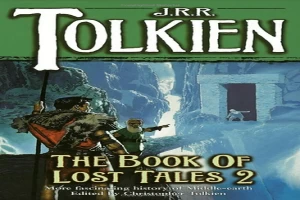
The Book of Lost Tales Part 2 PDF - جون رونالد تولكين
جون رونالد تولكين • روايات الخيال العلمي • ٥٢٧ الصفحات
(0)
المؤلف
جون رونالد تولكينالفئة
الادبالقسم
عدد التنزيلات
١٣٥
عدد القراءات
٢٩٩
حجم الملف
4.51 MB
المشاهدات
٣٬٣٨٦
اقتباس
مراجعة
حفظ
مشاركة
وصف الكتاب
The Book of Lost Tales Part 2 by J. R. R. Tolkien
The Book of Lost Tales Part 2 is an essential volume for readers who want to explore the earliest imaginative foundations of J. R. R. Tolkien’s Middle-earth mythology. As the second book in The History of Middle-earth series, this volume continues the remarkable journey into Tolkien’s first versions of the legends that would later grow into The Silmarillion, offering a rare view of Middle-earth, Valinor, Elves, heroes, dragons, hidden cities, ancient griefs, and mythic beauty in their earliest literary form. These tales were written by Tolkien in the years before his most famous published works, and they reveal the first shaping of the vast legendary world behind The Hobbit and The Lord of the Rings. (HarperCollins Publishers UK)
A Foundational Work in Tolkien’s Legendarium
This volume is not a conventional fantasy novel in the style of The Lord of the Rings. Instead, it is a deeply rewarding collection of early mythic narratives, edited and presented by Christopher Tolkien, who devoted decades to organizing and explaining his father’s unpublished manuscripts. For readers interested in Tolkien’s creative process, the origins of Middle-earth, or the development of the stories behind The Silmarillion, The Book of Lost Tales Part 2 offers a fascinating look at how familiar legends began, changed, and expanded over time. Christopher Tolkien’s editorial commentary helps connect the early versions with later forms, making the book especially valuable for serious Tolkien readers and students of fantasy literature. (HarperCollins Publishers UK)
At the heart of the book are early forms of some of Tolkien’s most powerful legends, including the stories of Beren and Lúthien, Túrin Turambar, the Fall of Gondolin, and the Necklace of the Dwarves. These narratives belong to the deep past of Tolkien’s world, a mythic age of courage, doom, beauty, betrayal, love, loss, and heroic resistance against overwhelming darkness. Readers who know these stories from The Silmarillion or later standalone editions will find here a different and often surprising experience: names, details, narrative structures, and atmospheres sometimes differ from the later versions, allowing the reader to witness Tolkien’s mythology in a living state of invention. (Tolkien Gateway)
Early Tales of Beren, Lúthien, Túrin, Gondolin, and Ancient Middle-earth
One of the great pleasures of The Book of Lost Tales Part 2 is the opportunity to encounter the earliest shape of tales that became central to Tolkien’s legendarium. The story of Beren and Lúthien appears here in a form that already carries the emotional force of love set against peril and enchantment, while also showing how much Tolkien’s mythology evolved over decades. The material connected with Túrin introduces one of the darkest and most tragic heroic figures in Tolkien’s world, presenting a mythic narrative marked by fate, pride, sorrow, and conflict with monstrous evil.
The volume also includes the early account of the Fall of Gondolin, one of the most dramatic episodes in Tolkien’s mythology. Gondolin, the hidden Elven city, occupies a special place in Tolkien’s imagination, and its fall became one of the defining tragedies of the First Age. In this early version, readers can sense the grandeur, urgency, and visual power that would continue to echo through Tolkien’s later writings. Alongside it, the tale of the Necklace of the Dwarves introduces themes of treasure, craft, desire, conflict, and the dangerous weight of ancient objects, all of which are central to Tolkien’s larger moral and mythic universe.
A Book for Readers Who Want the Deeper Tolkien
For many readers, The Book of Lost Tales Part 2 is best approached after becoming familiar with The Lord of the Rings, The Hobbit, and especially The Silmarillion. It speaks most strongly to those who want more than the finished story; it is for readers who want to understand how Tolkien built a mythology from language, legend, poetry, medieval influence, invented history, and deep imaginative discipline. The book rewards patience and curiosity, because its value lies not only in what happens in the tales, but in how Tolkien’s world emerges through variations, fragments, commentary, and early linguistic invention.
This makes the volume particularly appealing to fans searching for Tolkien books beyond The Lord of the Rings, readers interested in The History of Middle-earth series, and anyone studying the roots of modern high fantasy. The prose has an archaic and mythic quality, closer in spirit to legend, fairy tale, and ancient epic than to fast-paced contemporary fantasy. That tone is part of the book’s identity: it invites the reader into an older mode of storytelling, where names, places, songs, genealogies, and symbolic objects carry great weight.
Christopher Tolkien’s Commentary and the Evolution of the Myths
A major strength of this edition is the presence of Christopher Tolkien’s commentary, which guides readers through the manuscript tradition and explains the relationship between early versions and later developments. Each tale is followed by notes and analysis, including attention to changing names, early forms of Elvish vocabulary, and the gradual transformation of characters and events. This editorial framework gives the book a scholarly depth while still preserving the enchantment of the original stories.
For readers interested in Tolkien scholarship, this combination of narrative and commentary is invaluable. It shows that Middle-earth did not appear fully formed, but grew over many years through revision, linguistic invention, mythological layering, and imaginative reworking. The book reveals Tolkien not only as a storyteller, but as a myth-maker constructing a whole ancient world with its own memory, languages, heroic cycles, and tragic histories.
The Reading Experience
Reading The Book of Lost Tales Part 2 is like entering a hidden archive of Tolkien’s imagination. The book feels older, stranger, and more experimental than Tolkien’s most widely read works, yet it carries many of the emotional and thematic qualities that made his later fiction so enduring. There is beauty in exile, nobility in doomed resistance, wonder in the Elven realms, terror in dragons and dark powers, and deep sadness in the loss of ancient things. The experience is immersive, but in a different way from a traditional novel: it asks the reader to move slowly, to notice names and changes, and to appreciate the layered construction of a fictional mythology.
This is also a book that deepens appreciation for The Silmarillion. By seeing the early forms of major tales, readers can better understand the scale of Tolkien’s achievement and the long creative road behind the published legendarium. The differences between early and later versions are not distractions; they are part of the fascination. They show Tolkien’s world in motion, still forming, still changing, already powerful but not yet fixed.
Who Should Read The Book of Lost Tales Part 2?
The Book of Lost Tales Part 2 is ideal for devoted Tolkien readers, fantasy scholars, collectors of J. R. R. Tolkien books, and anyone interested in the origins of Middle-earth, Beleriand, Valinor, and the mythic background of the First Age. It is especially suited to readers who enjoy literary fantasy, mythology, philology, ancient-style storytelling, and annotated editions that reveal the craft behind a major imaginative work.
New readers may find the book denser than Tolkien’s more famous fiction, but experienced fans will discover a rich and rewarding volume that expands their understanding of the legendarium. It is not simply an early draft collection; it is a window into the first great flowering of Tolkien’s mythology, where the seeds of later masterpieces can be seen in vivid and often unexpected forms.
A Rare Window into the Beginning of Middle-earth
The Book of Lost Tales Part 2 by J. R. R. Tolkien remains one of the most important books for understanding the deep roots of Tolkien’s world. Through its early tales, editorial notes, mythic atmosphere, and connection to The Silmarillion, it offers readers a unique encounter with the beginnings of Middle-earth’s legendary history. For anyone drawn to Tolkien’s Elves, ancient cities, heroic tragedies, invented languages, and the vast background behind The Lord of the Rings, this volume provides a meaningful and memorable journey into the earliest landscapes of his imagination.
جون رونالد تولكين
جون رونالد رويل تولكين هو أحد أبرز الكتّاب في القرن العشرين وأكثرهم تأثيرًا في أدب الفانتازيا الحديث، وقد اشتهر عالميًا بكونه مؤلف ملحمتي “سيد الخواتم” و“الهوبيت”. يُعد تولكين أكاديميًا لغويًا بامتياز قبل أن يكون روائيًا، إذ عمل أستاذًا في جامعة أكسفورد، وتخصص في فقه اللغات واللغات القديمة، وهو ما انعكس بشكل عميق على أعماله الأدبية التي لم تكن مجرد قصص خيالية، بل عوالم متكاملة ذات لغات وتاريخ وأساطير خاصة بها. وُلد تولكين في جنوب أفريقيا عام 1892، ثم انتقل إلى إنجلترا في طفولته بعد وفاة والده، وهناك تشكّلت شخصيته الأدبية والعلمية.
تأثر تولكين منذ صغره بالأساطير الإسكندنافية والأنجلوسكسونية، وبدأ في بناء لغاته الخاصة مثل الكوينيا والسندارين، وهي لغات خيالية متكاملة أصبحت أساس بناء عالم “الأرض الوسطى”. خلال عمله الأكاديمي في أكسفورد، تخصص في دراسة النصوص القديمة مثل “بيوولف”، وكان له دور كبير في إعادة تفسيرها وتقديمها للأجيال الحديثة.
أثناء الحرب العالمية الأولى، خدم تولكين في الجيش البريطاني، وهي تجربة أثرت على رؤيته للعالم والصراع، وانعكست في أعماله التي تتناول موضوعات الخير والشر والصداقة والتضحية. بعد الحرب بدأ في كتابة “الهوبيت” التي نُشرت عام 1937 وحققت نجاحًا كبيرًا، مما شجعه على كتابة عمله الأكبر “سيد الخواتم” الذي نُشر في خمسينيات القرن العشرين وأصبح من أهم الأعمال الأدبية في التاريخ الحديث.
يمتاز أسلوب تولكين بالعمق اللغوي والسرد الملحمي وبناء العالم المتكامل، حيث لم يكتفِ بكتابة قصة، بل خلق حضارة كاملة بتاريخ وجغرافيا ولغات وأعراق متعددة. وقد أثّر بشكل كبير على أدب الفانتازيا المعاصر والسينما والألعاب الإلكترونية.
توفي تولكين عام 1973، لكن إرثه الأدبي ما زال حيًا، وتُعد أعماله مرجعًا أساسيًا لكل من يكتب في أدب الفانتازيا أو يهتم ببناء العوالم الخيالية.
اكسب مكافآت أثناء القراءة!
كل 10 صفحات تقرؤها وتقضى فيها 30 ثانية تمنحك 5 نقاط مكافأة! واصل القراءة لفتح الإنجازات والمزايا الحصرية.
اقرأ
قيم الآن
5 نجوم
4 نجوم
3 نجوم
2 نجوم
1 نجوم
اقتباسات The Book of Lost Tales Part 2
الأعلى تقييماً
الأحدث
اقتباس
كن أول من يترك اقتباسًا واكسب 10 نقاط
بدلاً من 3
'%20/%3e%3c/svg%3e "The Children of Hurin")
التعليقات
كن أول من يترك تعليقًا واكسب 5 نقاط
بدلاً من 3