

The source of the book
This book is published for the public benefit under a Creative Commons license, or with the permission of the author or publisher. If you have any objections to its publication, please contact us.
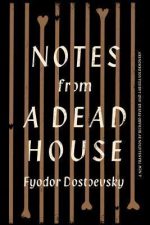
Notes from a Dead House PDF - Fyodor Dostoevsky
Fyodor Dostoevsky • literature • 359 Pages
(0)
Quate
Review
Save
Share
Book Description
Notes from a Dead House by Fyodor Dostoevsky
Notes from a Dead House by Fyodor Dostoevsky is one of the most powerful works in Russian literature, a haunting semi-autobiographical novel that transforms the experience of imprisonment into a profound meditation on freedom, suffering, human dignity, and moral endurance. Also known in English as The House of the Dead or Notes from the House of the Dead, the book draws on Dostoevsky’s own years of penal servitude in Siberia and presents prison not merely as a place of punishment, but as a complete world with its own customs, hierarchies, cruelties, humor, and unexpected moments of grace.
A Landmark Work of Prison Literature
First published in the early 1860s, Notes from a Dead House occupies a crucial place in Dostoevsky’s development as a writer. It stands between his early fiction and the great psychological novels that would later define his reputation, including Crime and Punishment, The Idiot, Demons, and The Brothers Karamazov. In this book, readers can already see the central concerns that would shape Dostoevsky’s mature work: guilt, punishment, spiritual crisis, moral freedom, social injustice, and the mystery of the human soul.
The narrative is framed through the recollections of Alexander Petrovich Goryanchikov, a nobleman sentenced to hard labor in a Siberian prison camp. Through his eyes, the reader enters a harsh and unfamiliar environment where convicts live under constant surveillance, brutal discipline, physical hardship, and psychological pressure. Yet the book is not built around a conventional plot. Instead, Dostoevsky creates a series of vivid scenes, portraits, conversations, rituals, punishments, festivals, quarrels, and moments of reflection that gradually reveal the inner life of the prison community.
The Human Soul Under Extreme Pressure
What makes Notes from a Dead House unforgettable is not only its depiction of hardship, but its refusal to reduce prisoners to their crimes. Dostoevsky writes about men who have committed violence, theft, betrayal, and other serious acts, yet he observes them with extraordinary attention and moral seriousness. The prison camp becomes a place where human beings are stripped of comfort and status, but not of personality, memory, imagination, pride, shame, humor, or longing.
The result is one of the most searching portrayals of punishment in world literature. Dostoevsky asks what happens to a person when freedom is taken away, when identity is reduced to a sentence, and when daily life is governed by fear, boredom, humiliation, and routine. At the same time, he shows that even in a world designed to crush individuality, people continue to create meaning. They tell stories, form alliances, resent insults, cherish small possessions, prepare for holidays, dream of release, and reveal flashes of generosity in the most unlikely circumstances.
A Reading Experience of Realism, Reflection, and Compassion
Readers coming to Notes from a Dead House after Dostoevsky’s famous novels may notice a different rhythm. This is not a fast-moving crime story or a dramatic philosophical confrontation in the style of Crime and Punishment. It is slower, more observational, and almost documentary in its attention to prison life. The power of the book lies in accumulation: the repeated routines, the crowded barracks, the labor, the guards, the punishments, the sickness, the tense relations between convicts, and the narrator’s gradual transformation from disgust and alienation toward deeper understanding.
Dostoevsky’s realism is intense but never merely descriptive. Every detail carries moral weight. A bathhouse scene, a holiday celebration, a theatrical performance among prisoners, or a simple exchange between inmates becomes a way of examining how people preserve dignity under degrading conditions. The book shows cruelty without sensationalism and sympathy without sentimentality. It is both a record of suffering and a study of resilience.
Themes of Freedom, Punishment, and Moral Awakening
At the heart of Notes from a Dead House is the question of freedom. Dostoevsky does not treat freedom only as a legal condition; he explores it as a spiritual and psychological need. The convicts may be physically confined, but each man continues to struggle for some inward space that cannot be fully controlled by the prison system. This tension gives the book its lasting philosophical force.
The novel also examines punishment from several angles. It portrays official punishment, including hard labor and corporal discipline, but it also reveals informal punishments created by social class, resentment, isolation, memory, and conscience. Goryanchikov, as a nobleman among mostly peasant prisoners, experiences suspicion and hostility, forcing him to confront his own assumptions about class and human worth. His gradual moral awakening is one of the book’s quietest but most important movements.
This makes Notes from a Dead House essential for readers interested in classic prison literature, Russian realism, philosophical fiction, and books about exile and suffering. It is also a key text for understanding Dostoevsky’s later exploration of redemption, guilt, faith, and the hidden depths of ordinary and outcast lives.
Why Notes from a Dead House Still Matters
More than a historical portrait of a Siberian prison camp, Notes from a Dead House remains relevant because it asks questions that continue to matter: What does punishment do to the punished? Can a person be judged only by the worst act of his life? How does a society reveal itself through the way it treats its prisoners? What remains of human dignity when almost everything else has been taken away?
Dostoevsky offers no easy answers. Instead, he gives readers a world filled with contradictions. The prison is brutal, yet it contains moments of tenderness. The convicts can be violent and cruel, yet they can also be intelligent, funny, loyal, artistic, and deeply human. The narrator is often horrified by what he sees, yet he slowly learns to perceive individuality where he had first seen only a mass of criminals. This moral complexity is one reason the book continues to speak to modern readers.
For Readers of Dostoevsky and Classic Literature
Notes from a Dead House is an important choice for anyone who wants to understand Fyodor Dostoevsky’s literary world more deeply. It offers a bridge between biography and fiction, between social observation and spiritual inquiry, between historical testimony and artistic creation. Readers interested in Dostoevsky’s psychology, his religious and moral concerns, and his fascination with suffering will find here many of the seeds of his later masterpieces.
It is especially rewarding for readers who appreciate serious literature that does not rush its effects. The book invites slow attention. Its emotional force comes from watching the narrator learn how to see others more fully, even in a setting designed to erase humanity. In that sense, Notes from a Dead House is not only a book about imprisonment; it is a book about perception, compassion, endurance, and the difficult work of recognizing the human soul in places where society least expects to find it.
A Profound Classic of Exile, Suffering, and Human Dignity
Notes from a Dead House by Fyodor Dostoevsky remains one of the defining works of nineteenth-century Russian literature and one of the earliest great achievements of modern prison writing. Its world is severe, crowded, and often painful, but it is also alive with unforgettable characters and moral insight. Through its portrait of Siberian penal servitude, Dostoevsky creates a lasting reflection on freedom, punishment, class, cruelty, faith, and the stubborn persistence of human dignity.
For readers searching for a deeply serious classic by Dostoevsky, a powerful book about imprisonment, or a work that reveals how suffering can transform vision, Notes from a Dead House offers an unforgettable reading experience. It is a sobering, humane, and quietly profound work that shows Dostoevsky’s genius not through dramatic excess, but through patient observation, psychological depth, and an unflinching belief that even in the darkest places, human beings remain worthy of attention.
Fyodor Dostoevsky
Fyodor Dostoevsky was a Russian novelist, philosopher, and essayist, widely considered to be one of the greatest writers in Western literature. He was born in Moscow in 1821 and raised in a middle-class family. His father was a doctor who treated the poor for free, which instilled in Dostoevsky a deep sense of social justice and compassion for the downtrodden.
Dostoevsky began his writing career in the 1840s, with a series of novellas and short stories that explored the complexities of human nature and the dark side of Russian society. His first major novel, "Poor Folk," was published in 1846 and won critical acclaim. However, it was his later works, such as "Crime and Punishment," "The Idiot," and "The Brothers Karamazov," that established him as a literary master.
Dostoevsky's writing is known for its psychological depth, philosophical themes, and exploration of the human condition. His characters often struggle with moral dilemmas and existential questions, grappling with issues of faith, morality, and the meaning of life. His works also explore the political and social issues of his time, including poverty, crime, and political oppression.
Dostoevsky's life was marked by personal tragedy and political turmoil. He was arrested in 1849 for his involvement with a group of liberal intellectuals and sentenced to death, only to have the sentence commuted to hard labor in Siberia. He returned to Russia after serving his sentence, but continued to struggle with poverty and illness throughout his life. He died in 1881 at the age of 59.
Despite his tumultuous life, Dostoevsky's legacy as a writer and thinker endures. His works continue to be widely read and studied today, and his ideas about the human condition and the role of faith in society continue to resonate with readers around the world.
Earn Rewards While Reading!
Every 10 pages you read and spent 30 seconds on every page, earns you 5 reward points! Keep reading to unlock achievements and exclusive benefits.
Read
Rate Now
5 Stars
4 Stars
3 Stars
2 Stars
1 Stars
Notes from a Dead House Quotes
Top Rated
Latest
Quate
Be the first to leave a quote and earn 10 points
instead of 3
Other books by Fyodor Dostoevsky
Other books like Notes from a Dead House
'%20/%3e%3c/svg%3e "The Missionary Position: Mother Teresa in Theory and Practice")
3635
English
Comments
Be the first to leave a comment and earn 5 points
instead of 3