

The source of the book
This book is published for the public benefit under a Creative Commons license, or with the permission of the author or publisher. If you have any objections to its publication, please contact us.
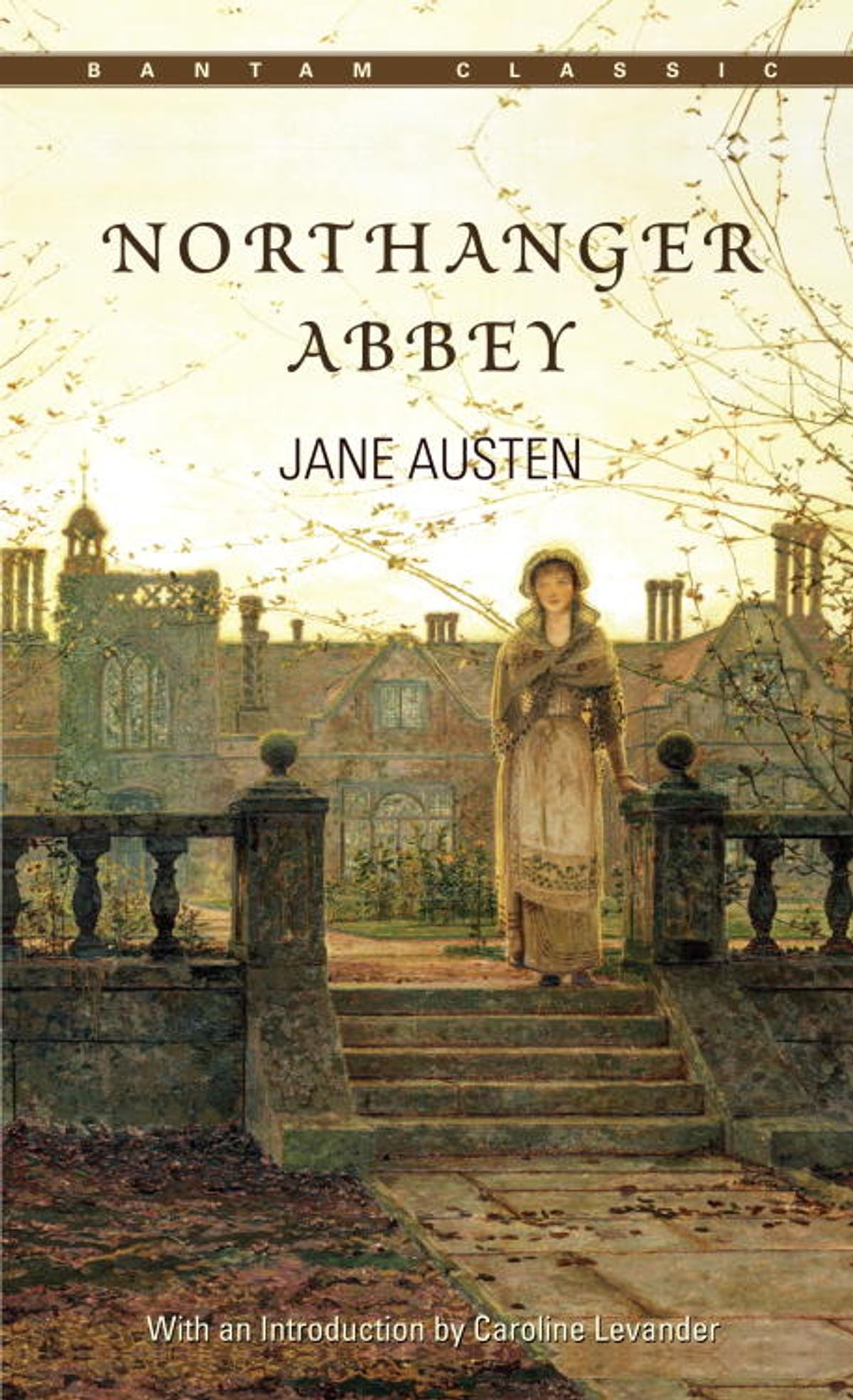
Northanger Abbey PDF - Jane Austen
Jane Austen • satirical novels • 223 Pages
(0)
Author
Jane AustenCategory
literatureSection
Number Of Downloads
126
Number Of Reads
331
File Size
0.39 MB
Views
3,076
Quate
Review
Save
Share
Book Description
"Northanger Abbey" by Jane Austen is a witty and satirical novel that parodies the popular gothic fiction of its time while also offering a commentary on the social norms and expectations of early 19th-century England.
The novel follows the adventures of Catherine Morland, a young and naive heroine with a penchant for reading sensational gothic novels. Catherine is invited to stay with the wealthy Tilney family at their estate, Northanger Abbey. The novel chronicles her experiences and interactions with various characters, including the Tilneys and the manipulative John Thorpe. As Catherine's imagination runs wild with gothic fantasies inspired by her reading, she navigates the complexities of love, friendship, and social decorum.
"Northanger Abbey" is often regarded as one of Austen's more light-hearted works, filled with humor and irony. Through Catherine's character, Austen gently mocks the excessive romanticism and melodrama found in gothic novels, highlighting the dangers of allowing fiction to distort reality. Catherine's expectations of discovering dark secrets and mysteries at Northanger Abbey are repeatedly debunked, serving as a commentary on the contrast between fiction and real life.
At the same time, the novel provides astute observations on the social hierarchy and expectations of the time. The Tilney family's interactions with Catherine reveal the superficiality and hypocrisy of certain societal norms, while Catherine's own growth and self-discovery emphasize the importance of integrity and genuine connections.
Austen's writing shines in "Northanger Abbey," with her trademark wit and keen observations on human behavior. The characters are well-drawn, each with their own quirks and motivations. Catherine's journey from a sheltered and imaginative young woman to a more discerning and self-aware individual forms the heart of the narrative.
One of the unique aspects of "Northanger Abbey" is its metafictional nature, where Austen directly addresses the reader and offers commentary on her own writing and the conventions of the novel. This self-awareness adds an extra layer of complexity to the narrative and allows Austen to play with the reader's expectations.
While "Northanger Abbey" may not be as widely read as Austen's more famous works like "Pride and Prejudice" or "Sense and Sensibility," it remains a delightful and thought-provoking novel that showcases Austen's mastery of both storytelling and social satire. The novel's exploration of the interplay between fiction and reality, along with its examination of societal norms, makes it a valuable and enjoyable addition to Austen's literary canon.
In conclusion, "Northanger Abbey" is a charming and clever novel that offers a satirical take on gothic fiction and a keen insight into the societal norms of Austen's time. Through the journey of its endearing heroine, Catherine Morland, the novel navigates themes of imagination, love, and social expectations. Austen's wit, humor, and astute observations make "Northanger Abbey" a timeless work that continues to captivate readers with its unique blend of romance and satire.
Jane Austen
Jane Austen is one of the most important novelists in English literature and one of the most enduring voices in world fiction. Her work is admired for its elegance, wit, psychological insight, social intelligence, and extraordinary ability to transform ordinary domestic life into a rich field of moral and emotional discovery. She wrote in a society where marriage, inheritance, income, family reputation, education, manners, and class position shaped the opportunities available to both women and men, but especially to women, whose security often depended on social approval and economic arrangement. Austen’s fictional world may appear outwardly quiet, centered on country houses, drawing rooms, visits, letters, walks, dances, family conversations, and neighborhood gossip, yet within these spaces she creates intense drama. A single misunderstanding, a delayed letter, a careless remark, a proud silence, or a mistaken first impression can alter the entire direction of a character’s life. Jane Austen’s best-known novels include Sense and Sensibility, Pride and Prejudice, Mansfield Park, Emma, Northanger Abbey, and Persuasion. These works are often associated with romance and marriage, but their literary value extends far beyond love stories. They explore judgment, self-knowledge, pride, prejudice, imagination, duty, moral growth, social pressure, and the difficult balance between feeling and reason. Austen’s heroines remain memorable because they are not passive figures waiting for happiness to arrive. Elizabeth Bennet, Elinor Dashwood, Marianne Dashwood, Emma Woodhouse, Fanny Price, Catherine Morland, and Anne Elliot think, observe, misjudge, suffer, learn, and change. Through them, Austen examines how a person matures by discovering the limits of personal certainty and by learning to read others with greater fairness. Her art depends greatly on irony. She exposes vanity, selfishness, false refinement, social ambition, hypocrisy, and emotional foolishness without relying on loud condemnation. Instead, she allows character to emerge through dialogue, behavior, silence, and the subtle gap between what people say and what they truly mean. Her satire is sharp but controlled, humorous but serious, and always connected to a deeper understanding of human weakness. Austen’s treatment of marriage is especially significant. In her novels, marriage is never merely a romantic conclusion; it is also a question of money, social survival, moral compatibility, mutual respect, and personal freedom. This makes her fiction important for readers interested in women’s history, social class, family structures, and the development of the modern novel. Stylistically, Jane Austen helped refine narrative technique by bringing readers close to a character’s thoughts while maintaining a clear critical distance. This allows readers to sympathize with a character and, at the same time, recognize that character’s errors. Her prose is precise, balanced, graceful, and deeply economical; every conversation, visit, proposal, refusal, and revelation serves the structure of the whole. Although her full reputation grew after her death, Austen is now regarded as a central figure in the literary canon. Her novels have been translated into many languages, studied in schools and universities, adapted for stage, film, and television, and reimagined in modern forms. Her lasting appeal comes from the freshness of her intelligence and the universality of her questions. Jane Austen understood that ordinary life contains profound drama, that social politeness can hide cruelty or kindness, and that love becomes meaningful only when joined with judgment, humility, respect, and self-knowledge.
Earn Rewards While Reading!
Every 10 pages you read and spent 30 seconds on every page, earns you 5 reward points! Keep reading to unlock achievements and exclusive benefits.
Read
Rate Now
5 Stars
4 Stars
3 Stars
2 Stars
1 Stars
Northanger Abbey Quotes
Top Rated
Latest
Quate
Be the first to leave a quote and earn 10 points
instead of 3
'%20/%3e%3c/svg%3e "Persuasion")
Comments
Be the first to leave a comment and earn 5 points
instead of 3