

The source of the book
This book is published for the public benefit under a Creative Commons license, or with the permission of the author or publisher. If you have any objections to its publication, please contact us.
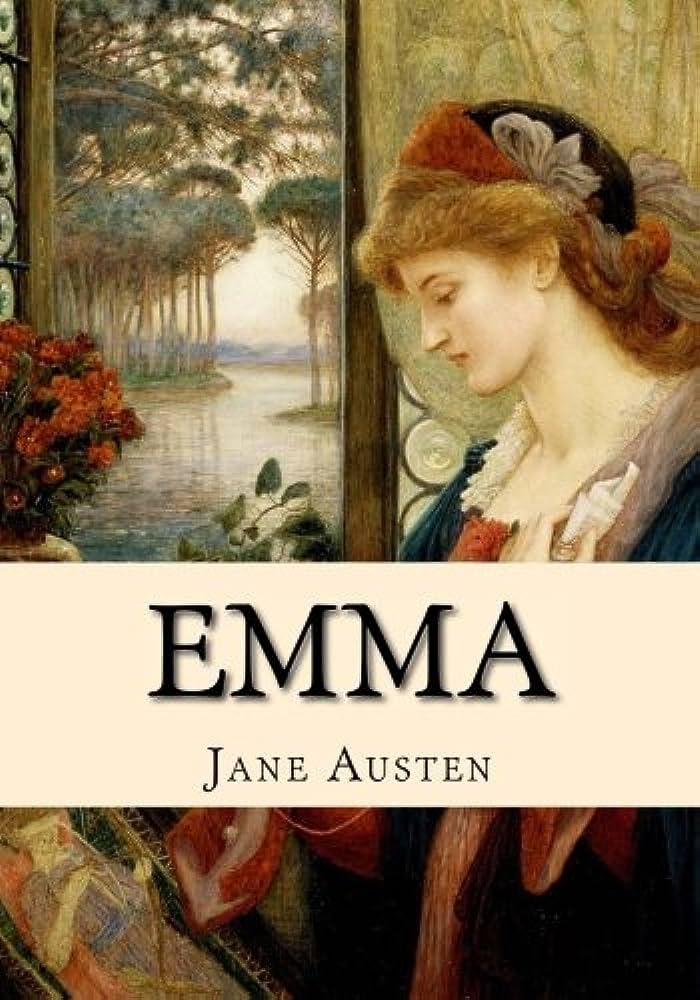
Emma PDF - Jane Austen
Jane Austen • Literary novels • 345 Pages
(0)
Author
Jane AustenCategory
literatureSection
Number Of Downloads
91
Number Of Reads
382
File Size
1.69 MB
Views
2,686
Quate
Review
Save
Share
Book Description
Emma by Jane Austen: A Brilliant Classic of Wit, Romance, and Social Self-Discovery
Emma by Jane Austen is one of the most beloved and finely crafted novels in classic English literature, a sparkling story of intelligence, misunderstanding, pride, friendship, and emotional growth. First published in 1815, the novel centers on Emma Woodhouse, a young woman of wealth, beauty, and confidence who lives in the village of Highbury and believes she understands the hearts and futures of everyone around her. Clever, privileged, and charming, Emma takes pleasure in arranging the lives of others, especially when it comes to romance, but her certainty often leads her into mistakes that reveal how little she truly understands about love, class, and human feeling.
Unlike many heroines in classic romance novels, Emma does not begin the story searching for marriage. She is financially secure, socially respected, and comfortable in her position as mistress of Hartfield, the home she shares with her anxious and affectionate father. Her independence gives the novel a distinctive shape: instead of following a heroine who must find security through marriage, Emma follows a heroine who must learn humility, emotional honesty, and moral awareness. Through this elegant and often humorous journey, Jane Austen creates a novel that remains deeply readable, psychologically rich, and full of social insight.
A Jane Austen Novel About Matchmaking, Mistakes, and Maturity
At the heart of Emma is the heroine’s belief that she is unusually skilled at matchmaking. After taking credit for what she sees as a successful marriage between her former governess and Mr. Weston, Emma turns her attention to Harriet Smith, a sweet and impressionable young woman whose uncertain social background makes her future a subject of speculation. Emma believes she can guide Harriet toward a more suitable and elevated match, but her interference sets off a chain of confusion, disappointment, and misjudgment.
This focus on matchmaking gives the novel much of its comedy, but Austen’s purpose is never merely playful. Emma’s errors reveal the dangers of vanity disguised as kindness and imagination mistaken for insight. She wants to help, yet she often sees people not as they are, but as she wishes them to be. Her story becomes a subtle exploration of how good intentions can become selfish when they are shaped by pride, class assumptions, and a desire for control.
The World of Highbury and the Art of Social Observation
One of the great pleasures of Emma by Jane Austen is its richly detailed social world. The village of Highbury may seem quiet, but Austen turns it into a complete human landscape filled with gossip, visits, dinners, letters, misunderstandings, and shifting relationships. Within this small community, every invitation matters, every conversation can be misread, and every social gesture carries meaning. Austen’s genius lies in showing that the drama of ordinary life can be as powerful as any grand adventure.
The novel’s characters are memorable because they are drawn with precision, humor, and humanity. Mr. Knightley stands out as one of Austen’s most respected male characters: thoughtful, principled, observant, and unafraid to challenge Emma when she behaves badly. Harriet Smith brings innocence and vulnerability to the story, while figures such as Miss Bates, Frank Churchill, Jane Fairfax, Mr. Elton, and Mrs. Elton create a lively social circle full of contrast and comic energy. Each character helps reveal another side of Emma’s world, and each contributes to the novel’s larger study of manners, morality, and perception.
Love, Class, and Self-Knowledge
Emma is often read as a romance, but it is equally a novel about self-knowledge. Austen explores love not as sudden passion alone, but as something that requires judgment, respect, patience, and truthfulness. Emma must learn to recognize the difference between fantasy and genuine attachment, between social ambition and emotional sincerity, and between the pleasure of influence and the responsibility of care.
Class is also central to the novel. Emma’s mistakes are often connected to her assumptions about rank, suitability, and social value. She believes she understands who belongs with whom, yet the novel repeatedly exposes the limits of this confidence. Austen does not simply reject social structure; instead, she examines how it shapes behavior, desire, and opportunity. Through Emma’s education, readers are invited to think about privilege, kindness, and the moral responsibility that comes with influence.
A Masterpiece of Irony and Character Development
Jane Austen’s style in Emma is graceful, witty, and remarkably controlled. The novel is famous for its irony, especially because readers often see more than Emma herself sees. Austen allows us to enjoy Emma’s charm while also recognizing her blindness. This creates a reading experience that is both entertaining and intellectually satisfying: we laugh at Emma, sympathize with her, and gradually watch her become more aware of herself and others.
The brilliance of the novel lies in the way Austen builds meaning through small details. A casual remark, a social call, a dance, or a misunderstood conversation can change the emotional direction of the story. Nothing feels accidental. The structure of Emma rewards careful reading, because early moments often gain new significance later in the novel. This makes it one of Austen’s richest books for students, book clubs, and readers who enjoy returning to classics again and again.
Why Emma Still Appeals to Modern Readers
More than two centuries after its publication, Emma continues to feel fresh because its central concerns remain deeply human. Many readers recognize Emma’s confidence, her desire to be useful, her tendency to misread situations, and her painful realization that intelligence does not always prevent error. Her flaws make her interesting, and her growth makes the novel emotionally rewarding.
For readers searching for classic romance, English literature, Jane Austen novels, or books about personal growth and social manners, Emma offers a perfect blend of comedy, elegance, and insight. It is a novel about love, but also about becoming worthy of love through honesty and humility. It is a story about society, but also about the private work of understanding oneself. Its humor is gentle yet sharp, its romance is slow and satisfying, and its portrait of human behavior remains wonderfully precise.
A Timeless Classic of English Literature
Emma by Jane Austen is a beautifully balanced novel that combines wit, romance, satire, and moral growth in a way few books have matched. Through the unforgettable figure of Emma Woodhouse, Austen presents a heroine who is clever but mistaken, generous but proud, charming but imperfect. Her journey from self-confidence to self-awareness gives the novel its lasting power and emotional depth.
Elegant, intelligent, and full of memorable characters, Emma remains an essential work for anyone interested in classic novels, literary fiction, Regency-era society, and the enduring brilliance of Jane Austen. It is a book that captures the comedy of social life, the complexity of human motives, and the quiet transformation that comes when a person finally learns to see clearly.
Jane Austen
Jane Austen is one of the most important novelists in English literature and one of the most enduring voices in world fiction. Her work is admired for its elegance, wit, psychological insight, social intelligence, and extraordinary ability to transform ordinary domestic life into a rich field of moral and emotional discovery. She wrote in a society where marriage, inheritance, income, family reputation, education, manners, and class position shaped the opportunities available to both women and men, but especially to women, whose security often depended on social approval and economic arrangement. Austen’s fictional world may appear outwardly quiet, centered on country houses, drawing rooms, visits, letters, walks, dances, family conversations, and neighborhood gossip, yet within these spaces she creates intense drama. A single misunderstanding, a delayed letter, a careless remark, a proud silence, or a mistaken first impression can alter the entire direction of a character’s life. Jane Austen’s best-known novels include Sense and Sensibility, Pride and Prejudice, Mansfield Park, Emma, Northanger Abbey, and Persuasion. These works are often associated with romance and marriage, but their literary value extends far beyond love stories. They explore judgment, self-knowledge, pride, prejudice, imagination, duty, moral growth, social pressure, and the difficult balance between feeling and reason. Austen’s heroines remain memorable because they are not passive figures waiting for happiness to arrive. Elizabeth Bennet, Elinor Dashwood, Marianne Dashwood, Emma Woodhouse, Fanny Price, Catherine Morland, and Anne Elliot think, observe, misjudge, suffer, learn, and change. Through them, Austen examines how a person matures by discovering the limits of personal certainty and by learning to read others with greater fairness. Her art depends greatly on irony. She exposes vanity, selfishness, false refinement, social ambition, hypocrisy, and emotional foolishness without relying on loud condemnation. Instead, she allows character to emerge through dialogue, behavior, silence, and the subtle gap between what people say and what they truly mean. Her satire is sharp but controlled, humorous but serious, and always connected to a deeper understanding of human weakness. Austen’s treatment of marriage is especially significant. In her novels, marriage is never merely a romantic conclusion; it is also a question of money, social survival, moral compatibility, mutual respect, and personal freedom. This makes her fiction important for readers interested in women’s history, social class, family structures, and the development of the modern novel. Stylistically, Jane Austen helped refine narrative technique by bringing readers close to a character’s thoughts while maintaining a clear critical distance. This allows readers to sympathize with a character and, at the same time, recognize that character’s errors. Her prose is precise, balanced, graceful, and deeply economical; every conversation, visit, proposal, refusal, and revelation serves the structure of the whole. Although her full reputation grew after her death, Austen is now regarded as a central figure in the literary canon. Her novels have been translated into many languages, studied in schools and universities, adapted for stage, film, and television, and reimagined in modern forms. Her lasting appeal comes from the freshness of her intelligence and the universality of her questions. Jane Austen understood that ordinary life contains profound drama, that social politeness can hide cruelty or kindness, and that love becomes meaningful only when joined with judgment, humility, respect, and self-knowledge.
Earn Rewards While Reading!
Every 10 pages you read and spent 30 seconds on every page, earns you 5 reward points! Keep reading to unlock achievements and exclusive benefits.
Read
Rate Now
5 Stars
4 Stars
3 Stars
2 Stars
1 Stars
Emma Quotes
Top Rated
Latest
Quate
Be the first to leave a quote and earn 10 points
instead of 3
'%20/%3e%3c/svg%3e "Persuasion")
Comments
Be the first to leave a comment and earn 5 points
instead of 3