

The source of the book
This book is published for the public benefit under a Creative Commons license, or with the permission of the author or publisher. If you have any objections to its publication, please contact us.
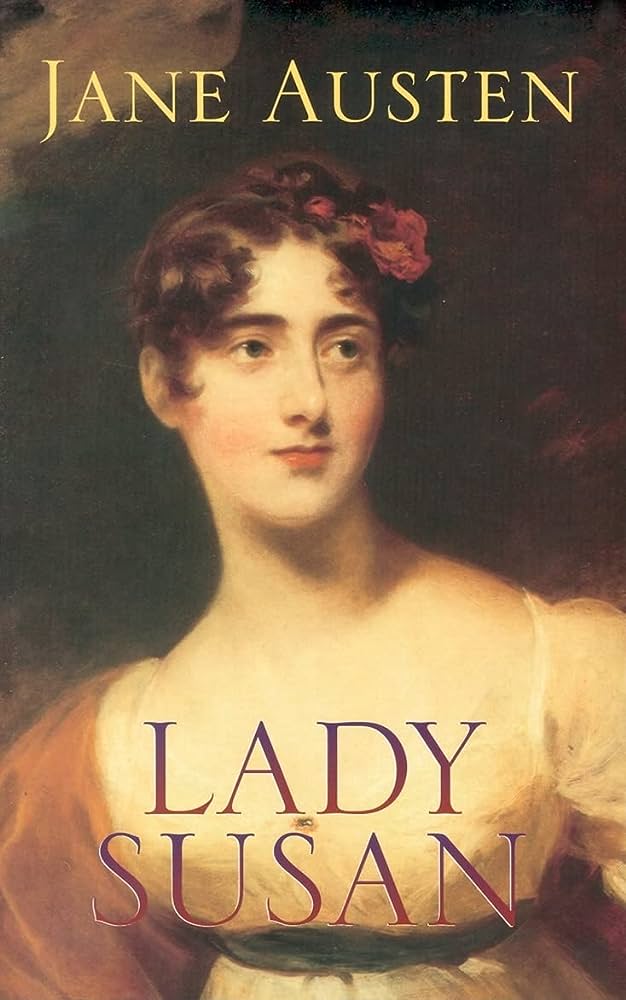
Lady Susan PDF - Jane Austen
Jane Austen • Literary novels • 145 Pages
(0)
Author
Jane AustenCategory
literatureSection
Number Of Downloads
90
Number Of Reads
342
File Size
0.97 MB
Views
2,493
Quate
Review
Save
Share
Book Description
Lady Susan by Jane Austen: A Sharp and Elegant Classic of Wit, Charm, and Social Intrigue
Lady Susan by Jane Austen is a brilliant short work of classic English literature, offering readers a darker, sharper, and more openly mischievous side of Austen’s genius. Written in the form of letters, this epistolary novella follows the captivating and calculating Lady Susan Vernon, a beautiful widow whose intelligence, confidence, and social skill allow her to influence nearly everyone around her. Often identified as one of Austen’s early works, Lady Susan was written around 1793–1794 and published posthumously in 1871.
Unlike the more morally balanced heroines of Pride and Prejudice, Emma, or Sense and Sensibility, Lady Susan is not presented as a model of virtue or romantic sincerity. She is clever, persuasive, self-interested, and fully aware of the power she holds over others. Through her letters and the letters of those affected by her schemes, Jane Austen creates a compact but remarkably vivid story about reputation, marriage, family pressure, manipulation, and the performance of respectability in polite society.
A Different Kind of Jane Austen Heroine
At the center of Lady Susan is one of Austen’s most memorable and unconventional female characters. Lady Susan Vernon is recently widowed, socially polished, and determined to secure her own comfort while arranging a suitable match for her daughter, Frederica. Yet her methods are far from gentle. She uses beauty, charm, intelligence, and emotional control as tools, moving through drawing rooms and family circles with a confidence that unsettles those who see through her.
This makes Lady Susan especially fascinating for readers who enjoy Jane Austen’s social satire, but want to encounter it in a more concentrated and morally daring form. The book explores many familiar Austen themes—courtship, marriage, class, family duty, inheritance, and social appearance—but it does so through a heroine who is closer to an anti-hero than to the beloved romantic leads of Austen’s later novels. Her brilliance is uncomfortable, but it is also impossible to ignore.
An Epistolary Novella Full of Voice and Strategy
Because Lady Susan is told through letters, the reading experience is intimate, fast-moving, and full of hidden motives. The epistolary form allows Austen to reveal different versions of the same social situation, showing how characters present themselves privately and publicly. A polite letter may conceal resentment, a friendly phrase may carry suspicion, and a confident confession may expose more than the writer intends.
This structure gives the novella its distinctive energy. Rather than relying on long scenes or direct narration, Austen builds tension through correspondence, gossip, judgment, and self-revelation. Readers gradually understand Lady Susan not only through what she does, but through how she explains herself, how others describe her, and how quickly her influence spreads. For anyone interested in epistolary fiction, classic novellas, or the development of Austen’s narrative style, this book offers a rewarding and revealing reading experience.
Themes of Marriage, Reputation, and Social Power
Lady Susan is a story about the social rules that govern private life. Marriage is not treated only as romance; it is also a matter of security, status, strategy, and survival. Austen shows how women in her fictional world are judged by reputation, limited by financial realities, and often forced to navigate social expectations with great care. Lady Susan understands these rules deeply, and her boldness comes from her ability to use them to her advantage.
The novella also examines the gap between appearance and character. Lady Susan’s elegance and charm make her socially powerful, even when her intentions are questionable. Around her, other characters must decide whether they are seeing genuine feeling or performance, kindness or calculation, vulnerability or manipulation. This tension gives the book its lasting appeal, especially for readers who enjoy stories about psychological insight, social masks, and the quiet drama of manners.
A Concise Classic with Lasting Literary Value
Although Lady Susan is shorter than Jane Austen’s major novels, it is rich in style, irony, and character observation. The book shows Austen experimenting with voice, structure, and moral complexity at an early stage in her writing life. It may be brief, but it contains the wit, precision, and social intelligence that make Austen one of the most enduring authors in English literature.
Readers who already admire Austen will find Lady Susan valuable because it reveals a bold and unusually satirical side of her work. Readers new to Austen may enjoy it as an accessible introduction to her sharp dialogue, controlled irony, and interest in the relationship between personal desire and social convention. Its short length also makes it an excellent choice for students, book clubs, and anyone looking for a classic that can be read quickly while still offering depth for discussion.
Who Should Read Lady Susan?
Lady Susan by Jane Austen is ideal for readers who enjoy classic literature, English novels, social satire, and stories centered on intelligent, complicated women. It is especially appealing to those interested in Austen’s early writing, the history of the novel, or the way literature portrays courtship and power. The book also suits readers who appreciate morally ambiguous characters and narratives where much of the drama lies beneath the surface of polite conversation.
This is not a simple romantic comedy, nor is it a conventional tale of virtue rewarded. Instead, it is a lively, elegant, and sometimes wickedly funny portrait of a woman who refuses to be passive in a world that expects women to remain carefully controlled. Lady Susan’s choices may disturb, amuse, or impress, but they always invite attention.
A Brilliant Short Work from One of Literature’s Greatest Writers
Lady Susan remains a distinctive and rewarding part of Jane Austen’s literary legacy. With its letter-based structure, sharp social observation, and unforgettable central character, it offers a compact but powerful reading experience. The novella captures Austen’s ability to turn everyday social life into a field of strategy, wit, and moral tension, while presenting one of her most daring portraits of charm used as power.
For readers searching for Jane Austen books, classic English literature, epistolary novellas, or a short classic filled with intelligence and irony, Lady Susan is an essential read. It is elegant, clever, and surprisingly bold—a work that shows how much drama can exist within a letter, a visit, a rumor, or a carefully chosen word.
Jane Austen
Jane Austen is one of the most important novelists in English literature and one of the most enduring voices in world fiction. Her work is admired for its elegance, wit, psychological insight, social intelligence, and extraordinary ability to transform ordinary domestic life into a rich field of moral and emotional discovery. She wrote in a society where marriage, inheritance, income, family reputation, education, manners, and class position shaped the opportunities available to both women and men, but especially to women, whose security often depended on social approval and economic arrangement. Austen’s fictional world may appear outwardly quiet, centered on country houses, drawing rooms, visits, letters, walks, dances, family conversations, and neighborhood gossip, yet within these spaces she creates intense drama. A single misunderstanding, a delayed letter, a careless remark, a proud silence, or a mistaken first impression can alter the entire direction of a character’s life. Jane Austen’s best-known novels include Sense and Sensibility, Pride and Prejudice, Mansfield Park, Emma, Northanger Abbey, and Persuasion. These works are often associated with romance and marriage, but their literary value extends far beyond love stories. They explore judgment, self-knowledge, pride, prejudice, imagination, duty, moral growth, social pressure, and the difficult balance between feeling and reason. Austen’s heroines remain memorable because they are not passive figures waiting for happiness to arrive. Elizabeth Bennet, Elinor Dashwood, Marianne Dashwood, Emma Woodhouse, Fanny Price, Catherine Morland, and Anne Elliot think, observe, misjudge, suffer, learn, and change. Through them, Austen examines how a person matures by discovering the limits of personal certainty and by learning to read others with greater fairness. Her art depends greatly on irony. She exposes vanity, selfishness, false refinement, social ambition, hypocrisy, and emotional foolishness without relying on loud condemnation. Instead, she allows character to emerge through dialogue, behavior, silence, and the subtle gap between what people say and what they truly mean. Her satire is sharp but controlled, humorous but serious, and always connected to a deeper understanding of human weakness. Austen’s treatment of marriage is especially significant. In her novels, marriage is never merely a romantic conclusion; it is also a question of money, social survival, moral compatibility, mutual respect, and personal freedom. This makes her fiction important for readers interested in women’s history, social class, family structures, and the development of the modern novel. Stylistically, Jane Austen helped refine narrative technique by bringing readers close to a character’s thoughts while maintaining a clear critical distance. This allows readers to sympathize with a character and, at the same time, recognize that character’s errors. Her prose is precise, balanced, graceful, and deeply economical; every conversation, visit, proposal, refusal, and revelation serves the structure of the whole. Although her full reputation grew after her death, Austen is now regarded as a central figure in the literary canon. Her novels have been translated into many languages, studied in schools and universities, adapted for stage, film, and television, and reimagined in modern forms. Her lasting appeal comes from the freshness of her intelligence and the universality of her questions. Jane Austen understood that ordinary life contains profound drama, that social politeness can hide cruelty or kindness, and that love becomes meaningful only when joined with judgment, humility, respect, and self-knowledge.
Earn Rewards While Reading!
Every 10 pages you read and spent 30 seconds on every page, earns you 5 reward points! Keep reading to unlock achievements and exclusive benefits.
Read
Rate Now
5 Stars
4 Stars
3 Stars
2 Stars
1 Stars
Lady Susan Quotes
Top Rated
Latest
Quate
Be the first to leave a quote and earn 10 points
instead of 3
'%20/%3e%3c/svg%3e "Persuasion")
Comments
Be the first to leave a comment and earn 5 points
instead of 3