

The source of the book
This book is published for the public benefit under a Creative Commons license, or with the permission of the author or publisher. If you have any objections to its publication, please contact us.
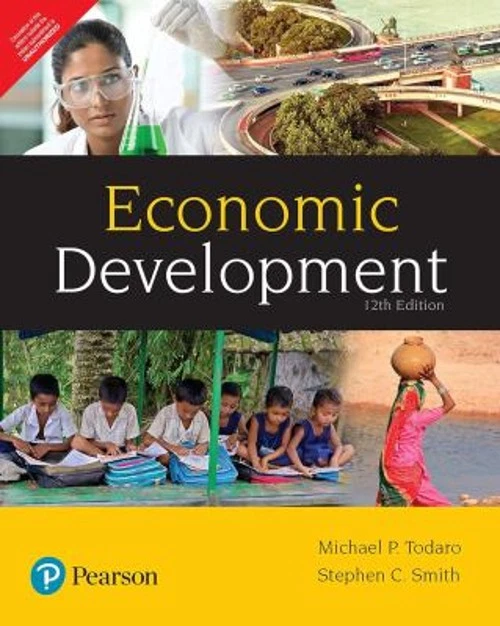
Economic Development, 12th edition PDF - Michael P. Todaro
Michael P. Todaro • Economy • 891 Pages
(0)
Quate
Review
Save
Share
Book Description
Economic Development, 12th Edition by Michael P. Todaro and Stephen C. Smith is a comprehensive and widely respected textbook for anyone seeking a clear, structured, and policy-focused introduction to development economics. Designed for students, instructors, researchers, and readers interested in the economic transformation of developing countries, the book explores how nations grow, why poverty persists, how inequality shapes opportunity, and what policies can support sustainable and inclusive progress. Rather than treating economic development as a narrow matter of income growth, Todaro and Smith present it as a multidimensional process involving human welfare, institutions, markets, governance, education, health, environment, technology, and global economic relations.
This edition offers a balanced approach to both theory and real-world application, making it especially valuable for readers who want to understand not only the models of economic growth but also the practical challenges faced by countries in Africa, Asia, Latin America, and other developing regions. The book explains major concepts in a clear academic style while connecting them to policy debates, country examples, and development problems that continue to shape the global economy. For anyone searching for a reliable economic development textbook, a reference on developing countries, or a foundation in international development, this work provides a detailed and accessible framework.
Understanding Economic Development Beyond Growth
One of the central strengths of Economic Development is its broad view of what development means. The book does not reduce development to GDP, industrial output, or rising national income alone. Instead, it examines how economic progress is connected to poverty reduction, improved living standards, expanded capabilities, better education, stronger health systems, employment opportunities, gender inclusion, rural transformation, and institutional quality. This makes the text particularly useful for readers who want to understand development as a human and social process as well as an economic one.
Todaro and Smith guide readers through the essential questions of the field: Why do some countries remain poor while others experience rapid transformation? What role do markets, governments, and civil society play in development? How do population growth, migration, inequality, agricultural productivity, environmental pressure, and international trade affect long-term progress? By addressing these questions together, the book helps readers see development economics as an interconnected discipline where policy choices often involve trade-offs, uncertainty, and complex local conditions.
Core Themes: Poverty, Inequality, Population, and Human Capital
The textbook gives careful attention to poverty and inequality, two of the most important topics in economic development. It explains how poverty is measured, why income distribution matters, and how inequality can influence social welfare, political stability, access to education, health outcomes, and economic opportunity. Readers are introduced to tools and concepts that help them analyze poverty not only as a lack of income but also as a wider condition shaped by vulnerability, exclusion, and limited access to basic services.
Another major area of focus is population growth and development. The book explores the causes and consequences of demographic change, including fertility, mortality, age structure, and the relationship between population pressure and quality of life. It also examines urbanization and rural-urban migration, helping readers understand why people move to cities, how informal sectors develop, and what policy challenges emerge when urban growth outpaces employment, housing, and infrastructure. These chapters are especially relevant for students studying modern development issues in rapidly changing economies.
The discussion of human capital is equally important. Todaro and Smith show how education and health are central to economic progress, productivity, social mobility, and long-term development. By connecting human development with economic performance, the book helps readers understand why investments in schools, public health, nutrition, and skills are not simply social goals but also essential components of sustainable economic transformation.
Agriculture, Environment, and Sustainable Development
A major feature of Economic Development, 12th Edition is its attention to the realities of rural economies and agricultural transformation. Many developing countries continue to rely heavily on agriculture for employment, food security, and household income, and the book explains why rural development remains a critical part of any serious development strategy. Topics such as land use, agricultural productivity, rural institutions, technology, incentives, and smallholder farming are treated as central to the broader development process.
The book also places strong emphasis on environment and development, making it relevant for readers interested in sustainable development and the long-term relationship between economic growth and natural resources. It examines how poverty, population growth, industrialization, and environmental degradation can interact, while also highlighting the importance of policies that balance growth with ecological responsibility. For students and researchers interested in climate pressure, resource use, environmental accounting, and sustainability, this section provides a useful bridge between development economics and contemporary global challenges.
Markets, Government, Institutions, and Development Policy
Todaro and Smith present development policy as a field shaped by the interaction of markets, states, and institutions. The book explains why markets can support efficiency, innovation, and growth, but also why market failures, inequality, weak institutions, corruption, missing infrastructure, and limited access to finance can prevent development from reaching broad populations. At the same time, it treats government policy with balance, recognizing both the importance of public action and the risks of poor planning, political capture, and ineffective implementation.
This policy-oriented approach makes the textbook especially helpful for readers who want to connect economic theory with real development decisions. It encourages students to think critically about strategies for poverty reduction, industrialization, trade, education, health, rural development, fiscal policy, foreign aid, and financial stability. Rather than offering simple formulas, the book shows that successful development depends on context, institutional capacity, historical conditions, and the ability to design policies that respond to local needs.
International Trade, Finance, Aid, and the Global Economy
The book also examines how developing countries interact with the wider global economy. It covers topics related to international trade and development strategy, balance of payments, debt, financial crises, foreign finance, investment, and aid. These discussions are valuable for understanding how global markets can create opportunities for growth while also exposing countries to external shocks, dependency, volatility, and policy constraints.
For readers studying international economics and development, this part of the book provides a strong foundation in the external dimensions of development. It helps explain why trade policy, exchange rates, capital flows, debt management, and development assistance are not isolated technical issues but part of the broader challenge of building stable, inclusive, and resilient economies. The text is particularly useful for students who need to understand how domestic development strategies are shaped by global institutions, international competition, and changing patterns of finance and investment.
A Valuable Textbook for Students and Policy-Minded Readers
Economic Development by Todaro and Smith is especially suitable for undergraduate and graduate courses in development economics, international development, comparative economic development, and global economic policy. Its structure allows readers to move from foundational theories and concepts to specific problems and policy areas, making it useful both as a course textbook and as a long-term reference. The writing is academic yet readable, with explanations that support students who are new to the field while still offering enough depth for advanced study.
Readers who benefit most from this book include economics students, public policy students, development studies majors, researchers, NGO professionals, and anyone interested in understanding the economic challenges of developing nations. It is also valuable for readers who want a serious introduction to questions of poverty, inequality, education, health, migration, agriculture, environment, and international finance from a development perspective.
Why This Book Remains Important
The lasting value of Economic Development, 12th Edition lies in its ability to combine theory, evidence, and policy in one coherent framework. Todaro and Smith help readers understand that development is not a single path followed by all countries in the same way. It is a complex process shaped by institutions, history, culture, resources, population dynamics, global relationships, political choices, and human capabilities. This makes the book more than a technical economics text; it is a guide to understanding some of the most urgent social and economic questions facing the modern world.
For anyone looking for a thorough and trusted resource on economic development, development economics, and the challenges facing developing countries, this book offers a rich introduction to the field. It provides the concepts, analytical tools, and policy perspective needed to think seriously about how societies move from poverty toward greater opportunity, stability, sustainability, and human well-being.
Michael P. Todaro
Michael P. Todaro is an influential American economist, academic author, and one of the best-known names in the teaching and study of development economics, especially for readers interested in poverty, inequality, rural-urban migration, unemployment, population growth, and the policy choices facing developing countries. His reputation rests not only on technical research but also on a rare ability to make development economics readable, structured, and relevant to students, researchers, public officials, and general readers who want to understand why some societies remain poor while others move toward sustained improvements in living standards. Todaro served for many years as Professor of Economics at New York University and was also associated with the Population Council, experiences that helped connect his scholarship to both academic debate and real-world policy concerns. His years living and teaching in Africa further shaped his understanding of development as a lived social reality rather than a purely abstract economic subject. He is most widely recognized as the author and co-author of Economic Development, a major textbook that, in later editions with Stephen C. Smith, has become a standard reference for courses in development economics. The book is valued because it presents economic theory alongside critical policy debates and country-specific examples, guiding readers through central themes such as poverty and inequality, human capital, health, education, agricultural transformation, environmental challenges, international trade, debt, foreign aid, finance, institutions, markets, and the role of civil society. Todaro’s work is especially important because it treats development as more than income growth. In his approach, development involves expanding human opportunity, reducing deprivation, improving social institutions, and examining whether economic change actually improves the lives of people in low- and middle-income countries. A central part of his intellectual legacy is the Harris-Todaro model, developed with John R. Harris, which explains why rural workers may continue to migrate to urban areas even when cities have visible unemployment. The model argues that migrants often respond to expected income rather than simply to current wage differences, making apparently puzzling migration patterns economically understandable. This insight became foundational for discussions of labor markets, urbanization, job creation, and public policy in developing economies. As an author, Todaro writes in a style that combines analytical precision with accessible explanation. His books and articles do not merely describe economic problems; they organize them into questions that matter for policy: how can poverty be reduced without ignoring inequality, how should education and health be understood as development investments, what are the risks of unbalanced urban growth, and how can governments design policies that support both efficiency and social progress? His influence is also linked to the breadth of his work. Rather than focusing only on one narrow technical issue, he helped define development economics as an integrated field that connects population, employment, rural transformation, institutions, global markets, and human welfare. For book readers and students, Michael P. Todaro remains an essential author because his work offers a clear pathway into one of the most important areas of modern economics: the study of how societies confront poverty, manage structural change, and pursue more inclusive forms of economic progress.
Earn Rewards While Reading!
Every 10 pages you read and spent 30 seconds on every page, earns you 5 reward points! Keep reading to unlock achievements and exclusive benefits.
Read
Rate Now
5 Stars
4 Stars
3 Stars
2 Stars
1 Stars
Economic Development, 12th edition Quotes
Top Rated
Latest
Quate
Be the first to leave a quote and earn 10 points
instead of 3
Other books by Michael P. Todaro
Other books like Economic Development, 12th edition
'%20/%3e%3c/svg%3e "Advances in Time Series Data Methods in Applied Economic Research")
1975
English
Comments
Be the first to leave a comment and earn 5 points
instead of 3