

The source of the book
This book is published for the public benefit under a Creative Commons license, or with the permission of the author or publisher. If you have any objections to its publication, please contact us.
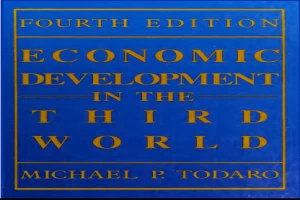
Economic Development in the Third World PDF - Michael P. Todaro
Michael P. Todaro • Economy • 22 Pages
(0)
Author
Michael P. TodaroCategory
Social sciencesSection
Number Of Downloads
75
Number Of Reads
278
File Size
0.24 MB
Views
2,397
Quate
Review
Save
Share
Book Description
Economic Development in the Third World by Michael P. Todaro is a major work in development economics, written for readers who want to understand why some nations remain poor, how economic transformation takes place, and what policy choices shape the future of developing countries. First associated with the subtitle “An introduction to problems and policies in a global perspective,” the book approaches development not as a narrow matter of income growth alone, but as a broad social, political, institutional, and human process involving poverty, inequality, employment, migration, education, agriculture, trade, planning, and the international economic order.
At its core, the book asks one of the most important questions in modern economics: what does it really mean for a country to develop? Todaro moves beyond a simple focus on gross national product or national income and encourages readers to examine the deeper conditions that affect people’s lives in the developing world. Economic development, in this perspective, is connected with better living standards, wider opportunities, reduced poverty, improved education, productive employment, fairer income distribution, and the ability of societies to participate more effectively in the global economy. This makes the book especially valuable for students, researchers, policy readers, and anyone looking for a structured introduction to the economic problems of developing nations.
A Clear Introduction to Development Economics
Todaro’s book is known for presenting economic development as a practical and analytical field. It introduces the reader to the major theories, debates, and policy questions that have shaped the study of developing countries. Rather than treating poor nations as a single uniform group, the book pays attention to the diversity of their economic structures, historical experiences, population patterns, political institutions, and social challenges. This helps readers understand why development strategies that succeed in one country may fail in another, and why economic policy must be studied in relation to local conditions.
The book also explains the common characteristics often associated with developing economies, including low per capita income, poverty, unemployment, underemployment, high population growth, rural dependence, limited industrial capacity, unequal income distribution, and vulnerability to external shocks. These issues are not presented as isolated problems, but as connected parts of a larger development process. By linking theory with real-world policy concerns, Economic Development in the Third World gives readers a framework for understanding both the promise and the difficulty of economic transformation.
Poverty, Inequality, and the Meaning of Progress
One of the strongest features of the book is its attention to the relationship between economic growth, poverty, and income distribution. Todaro emphasizes that growth alone does not automatically guarantee development if the benefits of growth are concentrated among a small segment of society. For readers interested in poverty reduction, social justice, and inclusive growth, this theme remains central to the book’s relevance. It encourages a broader understanding of progress, one that asks whether economic expansion improves the lives of ordinary people and whether national development creates meaningful opportunities across regions and social groups.
The discussion of poverty and inequality also helps readers see why development economics differs from conventional macroeconomic analysis. In many developing countries, economic policy must address structural problems such as limited access to land, weak educational systems, informal labor markets, poor health conditions, and unequal access to capital. Todaro’s approach makes these issues visible and shows how they influence productivity, employment, and long-term national growth. For this reason, the book is useful not only as an economics textbook but also as a guide to the social realities behind development statistics.
Population, Employment, Migration, and Urban Growth
A central part of Economic Development in the Third World examines the relationship between population growth, labor markets, unemployment, and migration. Todaro is especially associated with the study of rural–urban migration and development, and the book’s treatment of employment and urbanization reflects his wider contribution to the field. Library records for later editions show chapters on population, unemployment, urbanization, and internal and international migration, making these themes a major part of the book’s structure.
These sections are valuable because they explain why migration from rural areas to cities can continue even when urban unemployment is high. The reader is introduced to the economic logic behind migration decisions, the pressure placed on urban labor markets, and the challenges faced by governments trying to create jobs, manage cities, and improve rural livelihoods at the same time. This makes the book especially relevant for understanding the development problems of countries experiencing rapid urban expansion, labor surplus, informal employment, and uneven regional growth.
Agriculture, Education, Trade, and Policy Choices
Todaro also gives substantial attention to the sectors and policies that influence long-term development. Topics such as agricultural transformation, rural development, education, trade theory, balance of payments, foreign investment, foreign aid, development planning, monetary policy, and fiscal policy appear in documented contents of the book’s editions. These areas help readers understand that development is not driven by one factor alone. It requires changes in production, institutions, skills, infrastructure, incentives, and the relationship between domestic policy and the global economy.
The treatment of agriculture and rural development is particularly important because many developing countries depend heavily on rural populations and primary production. By examining agriculture alongside industrialization, trade, and education, the book shows how development requires coordination across sectors. Investment in human capital, improvements in farming productivity, better access to markets, and sound public policy all contribute to the broader development process. For students searching for a comprehensive development economics book, this wide coverage makes Todaro’s work a strong foundation.
A Global Perspective on Developing Countries
The phrase “Third World” in the title reflects the historical language used during the period in which the book was written and revised. Contemporary readers often use terms such as developing countries, low- and middle-income countries, or the Global South, but the core issues addressed by Todaro remain highly relevant. The book examines how developing nations interact with the international economy through trade, foreign aid, debt, commodity markets, foreign investment, and global financial pressures. This global perspective is essential for understanding why domestic development cannot be separated from international conditions.
By placing national development problems within a wider world economy, Todaro helps readers see how external forces can support or constrain growth. Export dependence, balance-of-payments pressures, changing energy and food prices, debt burdens, and unequal trade relationships can all affect the policy options available to developing countries. This makes the book useful for readers interested in international development, economic policy, political economy, global inequality, and the historical challenges faced by postcolonial and newly industrializing economies.
Who Should Read Economic Development in the Third World?
Economic Development in the Third World is well suited for university students studying economics, development studies, international relations, public policy, political economy, and social sciences. It is also useful for researchers, policy professionals, NGO workers, and general readers who want a serious introduction to the economic problems of developing nations. The book’s strength lies in its combination of theory, evidence, policy discussion, and broad thematic coverage, making it accessible to readers who need both conceptual clarity and practical understanding.
Readers looking for a simple popular economics book may find the work more academic than casual, but those who want a structured and thoughtful explanation of development issues will benefit from its depth. The book is especially valuable for anyone trying to understand the connections between poverty, population, labor markets, education, agriculture, trade, and government policy. It gives readers the tools to think critically about development strategies rather than accepting easy answers or one-size-fits-all solutions.
Why This Book Remains Important
The continuing value of Economic Development in the Third World lies in its broad and integrated view of development. Todaro treats development as a human and institutional challenge, not merely as a technical exercise in increasing output. By combining economic theory with the realities of poverty, inequality, migration, rural change, international trade, and policy planning, the book offers a durable framework for understanding the struggles and possibilities of developing economies.
For readers searching for a substantial book on economic development, developing countries, poverty, inequality, employment, population, migration, agriculture, trade, foreign aid, and development policy, Michael P. Todaro’s work remains a meaningful and informative choice. It introduces the major questions that continue to shape development debates and encourages a careful, humane, and analytical view of how nations seek to improve living standards and expand opportunities for their people.
Michael P. Todaro
Michael P. Todaro is an influential American economist, academic author, and one of the best-known names in the teaching and study of development economics, especially for readers interested in poverty, inequality, rural-urban migration, unemployment, population growth, and the policy choices facing developing countries. His reputation rests not only on technical research but also on a rare ability to make development economics readable, structured, and relevant to students, researchers, public officials, and general readers who want to understand why some societies remain poor while others move toward sustained improvements in living standards. Todaro served for many years as Professor of Economics at New York University and was also associated with the Population Council, experiences that helped connect his scholarship to both academic debate and real-world policy concerns. His years living and teaching in Africa further shaped his understanding of development as a lived social reality rather than a purely abstract economic subject. He is most widely recognized as the author and co-author of Economic Development, a major textbook that, in later editions with Stephen C. Smith, has become a standard reference for courses in development economics. The book is valued because it presents economic theory alongside critical policy debates and country-specific examples, guiding readers through central themes such as poverty and inequality, human capital, health, education, agricultural transformation, environmental challenges, international trade, debt, foreign aid, finance, institutions, markets, and the role of civil society. Todaro’s work is especially important because it treats development as more than income growth. In his approach, development involves expanding human opportunity, reducing deprivation, improving social institutions, and examining whether economic change actually improves the lives of people in low- and middle-income countries. A central part of his intellectual legacy is the Harris-Todaro model, developed with John R. Harris, which explains why rural workers may continue to migrate to urban areas even when cities have visible unemployment. The model argues that migrants often respond to expected income rather than simply to current wage differences, making apparently puzzling migration patterns economically understandable. This insight became foundational for discussions of labor markets, urbanization, job creation, and public policy in developing economies. As an author, Todaro writes in a style that combines analytical precision with accessible explanation. His books and articles do not merely describe economic problems; they organize them into questions that matter for policy: how can poverty be reduced without ignoring inequality, how should education and health be understood as development investments, what are the risks of unbalanced urban growth, and how can governments design policies that support both efficiency and social progress? His influence is also linked to the breadth of his work. Rather than focusing only on one narrow technical issue, he helped define development economics as an integrated field that connects population, employment, rural transformation, institutions, global markets, and human welfare. For book readers and students, Michael P. Todaro remains an essential author because his work offers a clear pathway into one of the most important areas of modern economics: the study of how societies confront poverty, manage structural change, and pursue more inclusive forms of economic progress.
Earn Rewards While Reading!
Every 10 pages you read and spent 30 seconds on every page, earns you 5 reward points! Keep reading to unlock achievements and exclusive benefits.
Read
Rate Now
5 Stars
4 Stars
3 Stars
2 Stars
1 Stars
Economic Development in the Third World Quotes
Top Rated
Latest
Quate
Be the first to leave a quote and earn 10 points
instead of 3
Other books by Michael P. Todaro
Other books like Economic Development in the Third World
'%20/%3e%3c/svg%3e "Advances in Time Series Data Methods in Applied Economic Research")
1975
English
Comments
Be the first to leave a comment and earn 5 points
instead of 3