

The source of the book
This book is published for the public benefit under a Creative Commons license, or with the permission of the author or publisher. If you have any objections to its publication, please contact us.
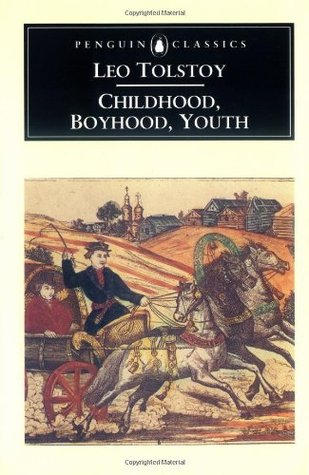
Childhood, Boyhood, Youth PDF - Leo Tolstoy
Leo Tolstoy • Literary novels • 320 Pages
(0)
Quate
Review
Save
Share
Book Description
Childhood, Boyhood, Youth by Leo Tolstoy
Childhood, Boyhood, Youth by Leo Tolstoy is a profound and beautifully observed coming-of-age work that traces the emotional, moral, and intellectual growth of a young Russian aristocrat as he moves from the protected world of childhood into the uncertainty of adolescence and the self-conscious awakening of youth. Long before Tolstoy became internationally known for War and Peace and Anna Karenina, this early autobiographical trilogy revealed many of the qualities that would define his genius: psychological depth, moral honesty, sensitivity to family life, and an extraordinary ability to capture the smallest movements of thought and feeling.
At the center of the book is Nikolai “Nikolenka” Irtenev, a young boy whose memories, impressions, doubts, affections, embarrassments, and ambitions form the heart of the narrative. Rather than relying on dramatic twists or external adventure, Tolstoy creates a rich inner portrait of development. The result is a classic work of Russian literature that explores how a person begins to understand love, class, pride, guilt, faith, education, family, and the painful distance between how one sees oneself and how one appears to others.
A Classic Coming-of-Age Trilogy
The structure of Childhood, Boyhood, Youth follows three important stages in the formation of character. In Childhood, Tolstoy presents the tenderness, innocence, and emotional intensity of early life. The young narrator experiences the world through family relationships, household routines, servants, tutors, siblings, and the atmosphere of the estate. Ordinary moments become deeply meaningful because they are filtered through the fresh and vulnerable consciousness of a child discovering affection, fear, shame, admiration, and loss.
In Boyhood, that innocence begins to shift. The narrator becomes more aware of social differences, personal faults, awkwardness, vanity, loneliness, and the complicated rules of adult behavior. Tolstoy is especially powerful in portraying adolescence not as a simple passage toward maturity, but as a period filled with contradiction. Nikolenka can be sincere and self-absorbed, tender and proud, thoughtful and foolish, all within the same emotional movement. This honesty gives the book its lasting psychological realism.
In Youth, the perspective widens again as the narrator enters a stage of ambition, moral questioning, and self-examination. He begins to imagine the kind of person he might become, while also confronting the gap between ideal intentions and actual conduct. Tolstoy captures the restless energy of youth: the desire to be noble, intelligent, admired, disciplined, and original, combined with the insecurity and confusion that often make those desires difficult to live out. For readers interested in classic coming-of-age novels, this trilogy offers one of the most thoughtful literary studies of personal formation.
Themes of Memory, Identity, and Moral Growth
One of the great strengths of Childhood, Boyhood, Youth is its treatment of memory. Tolstoy does not present growing up as a clean sequence of events, but as a living pattern of impressions. A look, a room, a conversation, a feeling of shame, or a moment of affection can remain powerful long after the event itself has passed. Through this method, the book becomes not only a story about a young person’s life, but also an exploration of how identity is shaped by what we remember and how we interpret those memories.
The trilogy is also deeply concerned with moral growth. Nikolenka repeatedly judges himself, makes resolutions, fails to keep them, feels ashamed, and tries again. These moments are not treated with melodrama; instead, Tolstoy observes them with compassion and precision. The book recognizes that becoming a better person is rarely straightforward. It involves self-deception, pride, imitation, confusion, and the painful discovery that noble ideas do not automatically lead to noble actions.
Another important theme is the tension between inner life and social expectation. Nikolenka often feels intensely, yet struggles to express himself honestly. He wants to be loved and respected, but he also wants to appear strong, clever, and superior. Tolstoy uses these conflicts to examine the formation of ego and conscience. Readers who appreciate psychological fiction, literary classics, and reflective novels about human development will find this aspect of the book especially rewarding.
Russian Society, Family Life, and Class Awareness
Although Childhood, Boyhood, Youth is intimate in focus, it also opens a window onto nineteenth-century Russian society. The world of the book includes family estates, domestic servants, tutors, formal education, social visits, religious habits, and the expectations placed upon young members of the upper classes. Tolstoy does not turn these elements into a historical lecture; instead, he allows them to appear naturally through the narrator’s experience.
This social background gives the trilogy much of its depth. Nikolenka gradually becomes aware that his own comfort exists within a larger structure of privilege and inequality. His relationships with servants, family members, teachers, and acquaintances reveal the emotional complexity of class. Tolstoy’s attention to these details anticipates the broader social vision that would later become central to his major novels. Even in this early work, he shows a remarkable interest in how private feelings are shaped by family position, education, wealth, and social rank.
The family scenes are among the most memorable parts of the book. Tolstoy writes about affection without making it sentimental, and about loss without making it exaggerated. He understands how childhood love can attach itself to voices, gestures, routines, and rooms. He also understands how quickly a young person’s sense of security can be disturbed by change. This makes the trilogy both historically specific and emotionally universal.
The Reading Experience
Reading Childhood, Boyhood, Youth is a quieter experience than reading Tolstoy’s great panoramic novels, but it is no less revealing. The book invites the reader to slow down and enter the mind of a developing consciousness. Its power lies in observation: the embarrassment of being misunderstood, the sweetness of being loved, the sting of comparison, the longing to be morally pure, and the strange mixture of arrogance and vulnerability that belongs to youth.
The prose has a reflective and intimate quality. Tolstoy is not simply telling readers what happened to his young protagonist; he is examining how experience feels from within. This makes the trilogy especially valuable for readers who enjoy character-driven fiction, autobiographical novels, philosophical literature, and classics that explore the inner life. The book rewards attention because many of its most important insights appear in small emotional details rather than in large dramatic events.
For modern readers, the trilogy remains accessible because its central questions are still familiar. How does a child become self-aware? Why do young people imitate others while trying to discover themselves? How do pride, shame, love, faith, and ambition shape a personality? Why do memories from early life remain so powerful? Tolstoy approaches these questions through fiction, but the emotional truth of the work often feels immediate and personal.
Why Childhood, Boyhood, Youth Still Matters
Childhood, Boyhood, Youth is essential reading for anyone who wants to understand the early development of Leo Tolstoy as a writer. In this trilogy, readers can already see his fascination with conscience, truth, self-scrutiny, family bonds, social life, and the moral contradictions of human behavior. The book may be smaller in scale than his later masterpieces, but it contains the seeds of the artistic vision that made him one of the central figures of world literature.
It is also a valuable book in its own right. As a semi-autobiographical coming-of-age novel, it offers a rare combination of tenderness and severity. Tolstoy looks back at youth with sympathy, but he does not idealize it. He shows childhood as beautiful and fragile, adolescence as awkward and searching, and youth as full of possibility yet clouded by illusion. This balance gives the trilogy its emotional maturity.
For readers discovering Tolstoy for the first time, Childhood, Boyhood, Youth provides an intimate entrance into his world. For readers already familiar with War and Peace or Anna Karenina, it offers a fascinating look at the beginnings of his literary method. It is a book about growing up, but also about remembering, judging, longing, and learning to see oneself truthfully. Thoughtful, elegant, and psychologically rich, Childhood, Boyhood, Youth by Leo Tolstoy remains a deeply rewarding classic for readers interested in the formation of character and the quiet drama of inner life.
Leo Tolstoy
Leo Tolstoy is one of the most influential writers in world literature, a Russian novelist, moral thinker, and social critic whose work helped define the possibilities of the modern novel. Born into an aristocratic family in Russia, he grew up close to the rural estate life that later became central to his imagination, his ethical concerns, and his understanding of class, labor, family, faith, and personal responsibility. Tolstoy is best known for the monumental novels War and Peace and Anna Karenina, two works that continue to stand among the highest achievements of literary realism. His fiction is celebrated not merely for its scale, but for its extraordinary ability to portray human consciousness, social pressure, moral confusion, and the hidden movement of history through the lives of individuals. In War and Peace, Tolstoy transforms the historical novel into a vast meditation on war, fate, leadership, memory, and ordinary human experience. He portrays the Napoleonic era not as a simple sequence of heroic decisions, but as a complex web of personal choices, accidents, social customs, emotions, and forces beyond the control of any single ruler or general. In Anna Karenina, he offers one of literature’s most penetrating studies of love, marriage, desire, jealousy, social judgment, and spiritual hunger, creating characters whose inner lives feel immediate, contradictory, and painfully human. Tolstoy’s narrative style combines simplicity with depth: he can describe a ballroom, a battlefield, a family quarrel, a harvest, or a moment of private doubt with such precision that each scene becomes a window into moral and psychological truth. His characters are memorable because they are never reduced to symbols; they change, hesitate, deceive themselves, seek forgiveness, suffer, and grow. Beyond his novels, Tolstoy wrote short fiction, essays, autobiographical works, religious reflections, and educational writings that reveal a lifelong struggle to reconcile art, conscience, and everyday life. In his later years, he became increasingly concerned with questions of nonviolence, poverty, property, organized religion, and the ethical meaning of Christianity. His critique of violence and his insistence on moral self-examination influenced readers far beyond Russia and helped shape later discussions of peaceful resistance, social reform, and spiritual simplicity. As an author for book lovers, Tolstoy remains essential because his works speak to both private feeling and public history. He examines the intimate life of families while also asking how nations move toward war, how societies punish those who break their rules, and how individuals can live truthfully in a world built on pride, ambition, and illusion. His influence can be felt in modern realism, psychological fiction, historical narrative, philosophical literature, and moral essays. Readers return to Tolstoy because his books do not offer easy answers; they invite deep attention to life itself. He writes about birth, death, love, work, faith, conflict, and forgiveness with a seriousness that makes ordinary experience feel immense. Leo Tolstoy’s legacy endures because he created literature that is both artistically powerful and ethically demanding, literature that asks every generation to reconsider what it means to live honestly, love responsibly, and search for meaning in a complicated world.
Earn Rewards While Reading!
Every 10 pages you read and spent 30 seconds on every page, earns you 5 reward points! Keep reading to unlock achievements and exclusive benefits.
Read
Rate Now
5 Stars
4 Stars
3 Stars
2 Stars
1 Stars
Childhood, Boyhood, Youth Quotes
Top Rated
Latest
Quate
Be the first to leave a quote and earn 10 points
instead of 3
'%20/%3e%3c/svg%3e "War and Peace")
Comments
Be the first to leave a comment and earn 5 points
instead of 3