

The source of the book
This book is published for the public benefit under a Creative Commons license, or with the permission of the author or publisher. If you have any objections to its publication, please contact us.
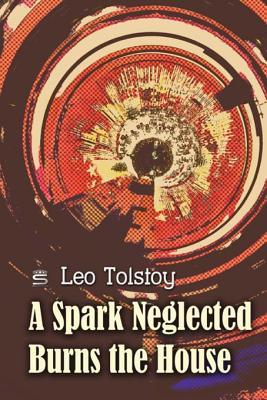
A Spark Neglected Burns the House PDF - Leo Tolstoy
Leo Tolstoy • short stories • 21 Pages
(0)
Quate
Review
Save
Share
Book Description
A Spark Neglected Burns the House by Leo Tolstoy
A Spark Neglected Burns the House by Leo Tolstoy is a powerful moral short story about anger, pride, forgiveness, and the destructive force of small conflicts left unresolved. Also known in some translations as Quench the Spark or A Lost Opportunity, this classic tale reflects Tolstoy’s deep interest in everyday ethics, Christian compassion, and the spiritual consequences of human stubbornness. First published in 1885, the story uses a simple village quarrel to explore a universal truth: when resentment is allowed to grow, even the smallest dispute can become a disaster.
At the center of the story is a conflict between neighboring families whose relationship begins in ordinary peace but slowly deteriorates after a trivial misunderstanding. Tolstoy does not build the narrative around grand historical events or heroic adventures; instead, he focuses on familiar domestic life, village customs, family pride, and the human tendency to defend one’s own position even when reconciliation is still possible. This makes A Spark Neglected Burns the House both accessible and deeply memorable, because the situation feels recognizable in any age: a careless word, a wounded ego, a refusal to apologize, and a disagreement that grows far beyond its original cause.
A Moral Story About Conflict, Pride, and Forgiveness
Tolstoy’s story shows how quickly a minor offense can expand when people choose accusation over understanding. The “spark” in the title is not only a literal image but also a symbol of anger, gossip, suspicion, and revenge. A problem that could have been solved with patience and humility becomes larger because each side insists on being right. Through this simple but meaningful structure, Tolstoy presents one of the central themes of the story: small wrongs become dangerous when they are fed by pride.
The lesson is delivered through character and action rather than abstract preaching. Tolstoy carefully shows how resentment passes from one person to another, how adults set examples for children, and how a whole household can become trapped in hostility. The quarrel becomes more than a disagreement between neighbors; it becomes a pattern of living. In this way, A Spark Neglected Burns the House is not only a story about one family or one village, but a broader reflection on human behavior, community life, and the cost of refusing peace.
The Reading Experience: Simple, Direct, and Deeply Human
Readers familiar with Leo Tolstoy’s short stories will recognize his clear narrative style and moral seriousness. The language is direct, the setting is humble, and the characters are ordinary people facing choices that reveal their inner lives. Tolstoy’s strength lies in making a small incident feel spiritually important. He reminds readers that moral failure often begins not with dramatic evil, but with everyday impatience, harsh speech, and the inability to admit fault.
The story’s simplicity is one of its greatest strengths. It can be read as a classic moral tale, a religious parable, a study of rural life, or a lesson in conflict resolution. Students may approach it for its message and structure, while general readers may value it for its timeless wisdom. The plot is easy to follow, but the meaning continues to grow after reading, especially for anyone interested in forgiveness, family relationships, neighborly duty, and the consequences of unchecked anger.
Why This Tolstoy Story Still Matters
Although A Spark Neglected Burns the House belongs to the world of nineteenth-century Russian literature, its message remains strikingly modern. People still damage relationships through pride, still allow misunderstandings to become long-term hostility, and still discover too late that peace would have cost far less than revenge. Tolstoy’s story speaks to families, communities, workplaces, and societies because it captures a pattern that repeats wherever people value winning an argument more than preserving human connection.
The story also invites reflection on justice and mercy. Tolstoy does not ignore wrongdoing, but he questions whether punishment, legal complaint, and public blame can truly heal a broken relationship. His emphasis falls on repentance, reconciliation, and the moral courage required to stop a quarrel before it consumes more than anyone intended. For readers searching for short stories about forgiveness, moral stories about anger, or classic literature with life lessons, this work offers a concise but lasting example.
A Valuable Choice for Students and Classic Literature Readers
A Spark Neglected Burns the House by Leo Tolstoy is especially useful for readers studying themes such as conflict, humility, forgiveness, revenge, family influence, and moral responsibility. Its clear structure makes it suitable for classroom discussion, literary analysis, and personal reflection. The title itself provides a strong entry point for interpretation, since the image of the neglected spark perfectly captures the story’s central warning: danger often begins in something small that people fail to control in time.
For students, the story offers many points of analysis, including symbolism, character development, moral conflict, biblical influence, and Tolstoy’s use of realism. For general readers, it offers a brief but meaningful encounter with one of the world’s most important literary voices. Unlike Tolstoy’s great novels, this short story can be read quickly, yet it carries the same concern with conscience, compassion, and the search for a better way to live.
A Timeless Lesson from Leo Tolstoy
In A Spark Neglected Burns the House, Leo Tolstoy transforms a village quarrel into a lasting meditation on human pride and the urgent need for reconciliation. The story’s power comes from its honesty: it shows how easily people justify anger, how hard it can be to forgive, and how much can be lost when peace is delayed. Without relying on complexity or ornament, Tolstoy creates a work that remains meaningful for readers interested in classic short stories, Russian literature, moral fiction, and stories about forgiveness and conflict.
This is a story for anyone who has seen a small disagreement become larger than it should have been. It reminds readers that wisdom often lies not in proving oneself right, but in stopping harm before it spreads. Clear, memorable, and morally resonant, A Spark Neglected Burns the House continues to stand as one of Tolstoy’s enduring lessons on humility, mercy, and the responsibility each person has to prevent a spark from becoming a fire.
Leo Tolstoy
Leo Tolstoy is one of the most influential writers in world literature, a Russian novelist, moral thinker, and social critic whose work helped define the possibilities of the modern novel. Born into an aristocratic family in Russia, he grew up close to the rural estate life that later became central to his imagination, his ethical concerns, and his understanding of class, labor, family, faith, and personal responsibility. Tolstoy is best known for the monumental novels War and Peace and Anna Karenina, two works that continue to stand among the highest achievements of literary realism. His fiction is celebrated not merely for its scale, but for its extraordinary ability to portray human consciousness, social pressure, moral confusion, and the hidden movement of history through the lives of individuals. In War and Peace, Tolstoy transforms the historical novel into a vast meditation on war, fate, leadership, memory, and ordinary human experience. He portrays the Napoleonic era not as a simple sequence of heroic decisions, but as a complex web of personal choices, accidents, social customs, emotions, and forces beyond the control of any single ruler or general. In Anna Karenina, he offers one of literature’s most penetrating studies of love, marriage, desire, jealousy, social judgment, and spiritual hunger, creating characters whose inner lives feel immediate, contradictory, and painfully human. Tolstoy’s narrative style combines simplicity with depth: he can describe a ballroom, a battlefield, a family quarrel, a harvest, or a moment of private doubt with such precision that each scene becomes a window into moral and psychological truth. His characters are memorable because they are never reduced to symbols; they change, hesitate, deceive themselves, seek forgiveness, suffer, and grow. Beyond his novels, Tolstoy wrote short fiction, essays, autobiographical works, religious reflections, and educational writings that reveal a lifelong struggle to reconcile art, conscience, and everyday life. In his later years, he became increasingly concerned with questions of nonviolence, poverty, property, organized religion, and the ethical meaning of Christianity. His critique of violence and his insistence on moral self-examination influenced readers far beyond Russia and helped shape later discussions of peaceful resistance, social reform, and spiritual simplicity. As an author for book lovers, Tolstoy remains essential because his works speak to both private feeling and public history. He examines the intimate life of families while also asking how nations move toward war, how societies punish those who break their rules, and how individuals can live truthfully in a world built on pride, ambition, and illusion. His influence can be felt in modern realism, psychological fiction, historical narrative, philosophical literature, and moral essays. Readers return to Tolstoy because his books do not offer easy answers; they invite deep attention to life itself. He writes about birth, death, love, work, faith, conflict, and forgiveness with a seriousness that makes ordinary experience feel immense. Leo Tolstoy’s legacy endures because he created literature that is both artistically powerful and ethically demanding, literature that asks every generation to reconsider what it means to live honestly, love responsibly, and search for meaning in a complicated world.
Earn Rewards While Reading!
Every 10 pages you read and spent 30 seconds on every page, earns you 5 reward points! Keep reading to unlock achievements and exclusive benefits.
Read
Rate Now
5 Stars
4 Stars
3 Stars
2 Stars
1 Stars
A Spark Neglected Burns the House Quotes
Top Rated
Latest
Quate
Be the first to leave a quote and earn 10 points
instead of 3
'%20/%3e%3c/svg%3e "War and Peace")
Comments
Be the first to leave a comment and earn 5 points
instead of 3