

The source of the book
This book is published for the public benefit under a Creative Commons license, or with the permission of the author or publisher. If you have any objections to its publication, please contact us.
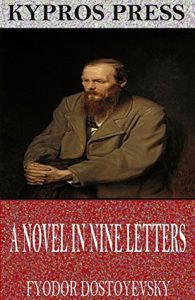
A Novel in Nine Letters PDF - Fyodor Dostoevsky
Fyodor Dostoevsky • literature • 14 Pages
(0)
Quate
Review
Save
Share
Book Description
A Novel in Nine Letters by Fyodor Dostoevsky: A Sharp and Witty Epistolary Classic
A Novel in Nine Letters by Fyodor Dostoevsky is a brief but highly memorable work of classic Russian literature, showing a lighter, more comic side of an author best known for psychological intensity, moral conflict, and profound philosophical fiction. First published in 1847, this early Dostoevsky short story is written in the form of exchanged letters, allowing the reader to follow a relationship as it becomes tangled in politeness, suspicion, excuses, and misunderstanding. Though compact in length, the story offers a clever glimpse into Dostoevsky’s early experiments with voice, social satire, and the hidden tensions that can exist beneath ordinary conversation.
A compact story told entirely through letters
The title itself points to the distinctive structure of the work: a “novel” compressed into nine letters. Instead of presenting events through a conventional narrator, Dostoevsky lets the correspondence between two men gradually reveal the situation, the mood, and the emotional pressure behind their words. The result is an engaging epistolary short story in which every letter feels both practical and performative. The characters are not simply exchanging information; they are defending themselves, accusing each other indirectly, protecting their pride, and trying to control how they appear in the eyes of the other.
At the center of the story are two acquaintances whose relationship becomes increasingly strained through missed meetings, financial obligations, social embarrassment, and the fragile etiquette of polite society. The letters begin with a recognizable tone of courtesy, but the surface civility soon grows unstable. Each man writes as though he is reasonable, injured, and misunderstood, while the reader gradually senses how much is being hidden, exaggerated, or misread. This makes A Novel in Nine Letters especially enjoyable for readers who appreciate fiction built around irony, unreliable communication, and the comedy of human self-justification.
Dostoevsky’s humor, irony, and social observation
Many readers come to Fyodor Dostoevsky through major works such as Crime and Punishment, The Idiot, Notes from Underground, or The Brothers Karamazov, expecting darkness, guilt, suffering, and spiritual crisis. This short story offers a different but still recognizably Dostoevskian experience. Here, the drama is smaller in scale, yet the psychological precision is already visible. Dostoevsky turns a simple exchange of letters into a study of vanity, anxiety, evasion, and wounded self-importance.
The humor of the story comes from the gap between what the characters say and what their letters reveal. They try to appear dignified, composed, and morally justified, but their language exposes nervousness and resentment. Small matters become exaggerated; ordinary obligations turn into tests of honor; minor misunderstandings gather emotional force. Through this comic structure, Dostoevsky shows how quickly social relationships can become theatrical when pride and money are involved. The story is funny not because it is light in a shallow way, but because it observes how human beings often turn embarrassment into accusation and confusion into drama.
Themes of money, pride, and miscommunication
One of the strongest themes in A Novel in Nine Letters is the relationship between money and dignity. The story uses a financial dispute not merely as a plot device, but as a way to expose character. Debt, obligation, and repayment become emotionally charged because they touch questions of status, trust, and personal respect. No one wants to appear dishonest; no one wants to admit weakness; no one wants to lose control of the narrative. As a result, the letters become a battlefield of tone, implication, and carefully worded complaint.
Miscommunication is equally central. Because the reader receives the story through letters, every event is filtered through the limited perspective of the person writing. This makes the work a rewarding example of unreliable narration in epistolary fiction. The men attempt to explain themselves, but each explanation creates further uncertainty. Their words are meant to clarify, yet they deepen the confusion. Dostoevsky uses this structure to show that communication is not always a path toward truth; sometimes it is a way of hiding, redirecting blame, or preserving an image of oneself.
An early glimpse of Dostoevsky’s psychological art
Although A Novel in Nine Letters is much shorter and more comic than Dostoevsky’s great novels, it belongs meaningfully within his larger body of work. Dostoevsky is widely recognized for his psychological depth and for his ability to explore the contradictory motives of human beings, qualities that would become central to his later fiction. In this early story, those qualities appear in miniature. The stakes are social and personal rather than tragic, but the emotional mechanics are already sharp: pride disguises fear, politeness masks aggression, and language becomes a tool of both intimacy and manipulation.
This makes the story especially valuable for readers interested in the development of Dostoevsky’s literary style. It shows him working with compressed form, shifting perspective, and the tension between outer manners and inner disturbance. The reader does not need to know the author’s larger novels to enjoy the piece, but those who already admire Dostoevsky may find it fascinating as an early example of his gift for turning psychological discomfort into narrative energy.
Why readers of classic literature will enjoy this short story
A Novel in Nine Letters is an excellent choice for readers who want a concise introduction to Dostoevsky beyond his famous long novels. It is short enough to read in one sitting, yet layered enough to reward close attention. Fans of classic short stories, Russian satire, epistolary fiction, and nineteenth-century literature will find much to appreciate in its elegant structure and ironic tone. The story also works well for students and general readers looking for a manageable Dostoevsky text that still reflects his interest in character, conflict, and social performance.
The reading experience is brisk, witty, and quietly revealing. Rather than building a large fictional world, Dostoevsky creates a small social puzzle, inviting the reader to notice what is said, what is omitted, and what the characters unintentionally confess about themselves. This makes the story feel surprisingly modern: its comedy depends on delayed responses, evasive messages, offended pride, and the difficulty of knowing whether someone is being sincere. In that sense, the letter-based format remains immediately understandable to contemporary readers familiar with the emotional ambiguity of written communication.
A brief classic with lasting literary interest
A Novel in Nine Letters by Fyodor Dostoevsky may be small in size, but it offers a rich example of how much tension can be contained in a few carefully arranged documents. Through nine letters, Dostoevsky creates a comic drama of friendship, suspicion, obligation, and social discomfort. The story’s charm lies in its precision: every message adds another layer to the misunderstanding, and every attempt at politeness reveals something less polite beneath the surface.
For readers exploring Dostoevsky’s short fiction, this work provides a refreshing and accessible entry point. It captures the author’s early interest in voice, contradiction, and the hidden motives behind ordinary behavior, while also displaying a playful sense of structure and irony. A Novel in Nine Letters is a clever, compact, and rewarding piece of classic literature—ideal for anyone who wants to experience Dostoevsky’s psychological insight in a brief, humorous, and sharply constructed form.
Fyodor Dostoevsky
Fyodor Dostoevsky was a Russian novelist, philosopher, and essayist, widely considered to be one of the greatest writers in Western literature. He was born in Moscow in 1821 and raised in a middle-class family. His father was a doctor who treated the poor for free, which instilled in Dostoevsky a deep sense of social justice and compassion for the downtrodden.
Dostoevsky began his writing career in the 1840s, with a series of novellas and short stories that explored the complexities of human nature and the dark side of Russian society. His first major novel, "Poor Folk," was published in 1846 and won critical acclaim. However, it was his later works, such as "Crime and Punishment," "The Idiot," and "The Brothers Karamazov," that established him as a literary master.
Dostoevsky's writing is known for its psychological depth, philosophical themes, and exploration of the human condition. His characters often struggle with moral dilemmas and existential questions, grappling with issues of faith, morality, and the meaning of life. His works also explore the political and social issues of his time, including poverty, crime, and political oppression.
Dostoevsky's life was marked by personal tragedy and political turmoil. He was arrested in 1849 for his involvement with a group of liberal intellectuals and sentenced to death, only to have the sentence commuted to hard labor in Siberia. He returned to Russia after serving his sentence, but continued to struggle with poverty and illness throughout his life. He died in 1881 at the age of 59.
Despite his tumultuous life, Dostoevsky's legacy as a writer and thinker endures. His works continue to be widely read and studied today, and his ideas about the human condition and the role of faith in society continue to resonate with readers around the world.
Earn Rewards While Reading!
Every 10 pages you read and spent 30 seconds on every page, earns you 5 reward points! Keep reading to unlock achievements and exclusive benefits.
Read
Rate Now
5 Stars
4 Stars
3 Stars
2 Stars
1 Stars
A Novel in Nine Letters Quotes
Top Rated
Latest
Quate
Be the first to leave a quote and earn 10 points
instead of 3
Other books by Fyodor Dostoevsky
Other books like A Novel in Nine Letters
'%20/%3e%3c/svg%3e "The Missionary Position: Mother Teresa in Theory and Practice")
3635
English
Comments
Be the first to leave a comment and earn 5 points
instead of 3