

The source of the book
This book is published for the public benefit under a Creative Commons license, or with the permission of the author or publisher. If you have any objections to its publication, please contact us.
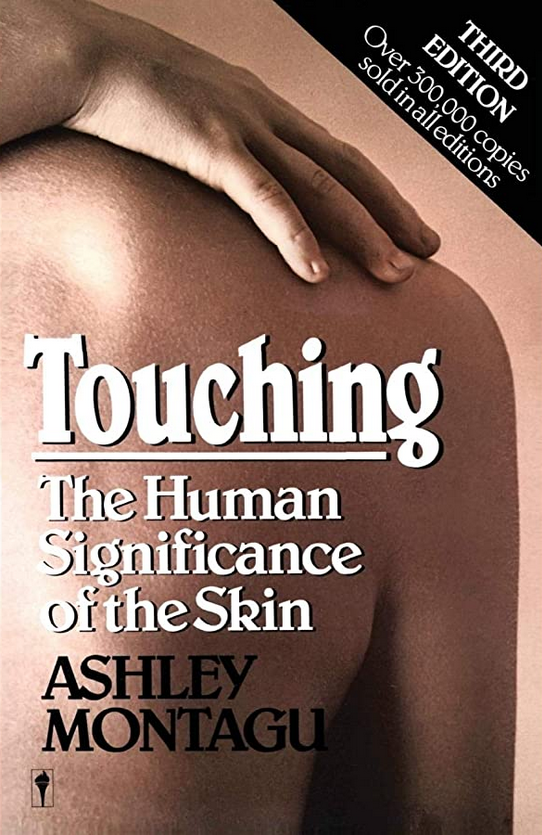
Touching: The Human Significance of the Skin PDF - Ashley Montagu
Ashley Montagu • Anthropology • 360 Pages
(0)
Author
Ashley MontaguCategory
Social sciencesSection
Number Of Downloads
61
Number Of Reads
196
File Size
15.75 MB
Views
1,423
Quate
Review
Save
Share
Book Description
Touching: The Human Significance of the Skin by Ashley Montagu
Touching: The Human Significance of the Skin by Ashley Montagu is a thoughtful and influential exploration of one of the most fundamental human experiences: the sense of touch. First published in 1971, this hardcover work examines the skin not simply as a biological covering, but as a deeply meaningful organ of communication, development, emotional connection, and human identity. Montagu, known for his work in anthropology and human behavior, brings together scientific observation, psychological insight, and humanistic reflection to show how touch shapes the way people grow, relate, and understand the world around them.
At the center of the book is a powerful idea: the skin is not merely a boundary between the body and the outside world, but a living medium through which human beings experience comfort, security, affection, and connection. Long before a child can speak, reason, or interpret complex social signals, touch is already present as a first language. Through holding, warmth, closeness, and physical care, the infant begins to learn whether the world is safe, responsive, and welcoming. Montagu treats this early tactile experience as essential to human development, making the book especially valuable for readers interested in developmental psychology, child care, parenting, anthropology, health, and human relationships.
A Human and Scientific Study of Touch
Unlike books that treat the skin only as a subject of anatomy or medicine, Touching: The Human Significance of the Skin approaches the skin as an organ of both body and mind. Montagu examines the ways in which touch contributes to emotional growth, social bonding, and psychological well-being. His discussion moves beyond the physical mechanics of sensation to consider what touch means in everyday life: the reassuring embrace, the comforting hand, the closeness between parent and child, and the quiet forms of care that words often cannot replace.
This makes the book a rich and layered study of the importance of touch in human life. Montagu’s writing helps the reader understand that touch is not a luxury or an optional form of affection, but a vital human need. In infancy, touch supports attachment and a sense of safety. In childhood, it can reinforce trust and belonging. In adulthood, it remains connected to intimacy, reassurance, empathy, and emotional support. In later life, touch may carry special significance as a sign of presence, dignity, and human recognition. Across all stages of life, Montagu presents touch as a central part of what it means to be human.
The Skin as the First Language of Human Connection
One of the most compelling aspects of Ashley Montagu’s Touching is its emphasis on the skin as the earliest channel of communication. Before speech develops, before a child understands facial expressions or social rules, the skin receives and interprets the world. Warmth, pressure, rhythm, closeness, and contact all communicate meaning. A baby held with tenderness experiences more than physical support; that contact can become part of the foundation for emotional security.
Montagu’s focus on the early relationship between caregiver and child makes the book especially relevant to readers searching for works about mother-infant bonding, early childhood development, tactile stimulation, emotional growth, and the psychology of affection. He argues that touch plays a formative role in shaping human behavior, not only because it stimulates the body, but because it helps create the emotional conditions in which healthy development can occur. The book invites readers to see ordinary acts of care—holding, carrying, soothing, and comforting—as deeply significant human practices.
Touch, Deprivation, and Emotional Development
A major theme in Touching: The Human Significance of the Skin is the effect of touch deprivation. Montagu explores what can happen when human beings, especially infants and children, are deprived of adequate physical contact and nurturing care. His discussion highlights the possible emotional and developmental consequences of insufficient tactile experience, connecting the subject of touch to broader questions of mental health, personality, trust, and social behavior.
The book’s treatment of deprivation gives it lasting relevance for readers interested in sensory deprivation, attachment, child psychology, emotional neglect, and the role of physical affection in development. Montagu does not reduce human life to simple biological mechanisms; instead, he shows how physical and emotional needs are intertwined. The body and the mind are not separate realms in his account. The need to be touched, held, and comforted belongs to the whole person.
This perspective makes the book useful not only for parents and caregivers, but also for educators, psychologists, nurses, physicians, social workers, therapists, and anyone concerned with human welfare. It encourages a more compassionate understanding of human behavior by reminding readers that emotional resilience often begins with experiences that are physical, relational, and deeply personal.
Why This Book Matters for Parents, Caregivers, and Students
For parents and caregivers, Touching offers a meaningful framework for understanding the value of affectionate care. It helps explain why physical closeness can matter so much in early life and why nurturing contact should not be dismissed as sentimental or secondary. Montagu’s work supports the idea that tenderness, holding, and responsive care are not signs of weakness or indulgence, but essential parts of human development.
For students of psychology, anthropology, nursing, medicine, or education, the book provides a broad and thought-provoking introduction to the human significance of the skin. It connects the biological sense of touch with culture, behavior, development, and emotional life. Readers interested in human biology, nonverbal communication, child development, caregiving practices, and the relationship between body and mind will find the book especially rewarding.
For general readers, the book offers a fresh way to think about something familiar. Everyone knows touch from daily life, yet few people stop to consider how deeply it affects identity, comfort, memory, and connection. Montagu’s writing encourages readers to pay attention to the quiet forms of contact that shape human experience: a hand placed gently on a shoulder, a child being carried, a patient being cared for, or an elderly person being treated with warmth and dignity.
A Classic Work on the Meaning of Human Contact
Part of the lasting appeal of Touching: The Human Significance of the Skin lies in its ability to cross disciplinary boundaries. It is a book about the skin, but also about affection. It is a book about biology, but also about society. It is a book about infancy, but also about the entire human lifespan. Montagu’s central insight remains powerful because it speaks to a universal reality: people are embodied beings, and their emotional lives are shaped through bodily experience.
The book also stands out because it treats touch with seriousness and respect. In many modern societies, touch can be misunderstood, restricted, neglected, or reduced to narrow meanings. Montagu restores its wider human importance. He reminds readers that touch can be protective, healing, communicative, and affirming. It can express care when language fails. It can create connection where isolation has taken hold. It can communicate belonging before a single word is spoken.
Reading Experience and Lasting Value
The reading experience of Touching is both informative and reflective. Montagu writes from a perspective that combines scientific curiosity with concern for human well-being. While some of the research context belongs to the period in which the book was written, the central subject remains deeply relevant. Questions about attachment, early development, loneliness, care, physical affection, and emotional health continue to matter today, perhaps even more in an age when many forms of human connection are increasingly mediated by screens and distance.
Readers should approach the book as a classic and historically significant work: one that helped draw attention to the importance of touch and the human meanings of the skin. Its value lies not only in the information it presents, but in the way it changes the reader’s perception of ordinary human contact. After reading Montagu, touch may no longer seem like a simple physical sensation. It becomes a form of communication, a foundation for trust, and a vital expression of human presence.
A Deep Exploration of the Body, Care, and Human Belonging
Touching: The Human Significance of the Skin by Ashley Montagu is an important book for anyone interested in the relationship between the body and the emotional life. It shows how the skin connects people to the world, to one another, and to their earliest experiences of safety and care. Through its exploration of touch, development, affection, and human contact, the book offers a rich understanding of why physical closeness has such lasting psychological and social meaning.
This is a valuable title for readers searching for books about touch, the human skin, developmental psychology, nonverbal communication, parenting, emotional bonding, anthropology, and the science of human connection. More than a study of a sense organ, it is a study of human need. Montagu’s book invites readers to recognize that to touch and to be touched are not minor details of life, but central experiences through which people learn comfort, trust, compassion, and belonging.
Ashley Montagu
Ashley Montagu was a British-born American anthropologist, author, educator, and public intellectual whose work helped shape twentieth-century conversations about race, human development, gender, touch, aggression, and the social foundations of personality. Born Israel Ehrenberg in London in 1905 and later known professionally as Ashley Montagu, he became widely recognized for bringing anthropology beyond the university and into public debate, using science as a tool to challenge prejudice and defend human dignity. His career was rooted in physical anthropology, but his writing consistently moved across disciplinary boundaries, drawing on biology, psychology, sociology, education, medicine, philosophy, and cultural history. Montagu’s most influential book, Man’s Most Dangerous Myth: The Fallacy of Race, remains closely associated with his lifelong opposition to racism and racial determinism. In that work, and in many essays and lectures, he argued that “race” as commonly used in politics and popular culture was a misleading and harmful category, one that had been used to rationalize inequality rather than to explain human diversity accurately. His approach reflected a broader humanist conviction: human beings are not reducible to inherited labels, and scientific language must not be allowed to disguise social injustice as natural fact. Montagu also attracted wide attention for The Natural Superiority of Women, a provocative book that questioned entrenched assumptions about sex, gender, strength, intelligence, and social roles. Whether readers agreed with every argument or not, the book demonstrated his willingness to confront inherited beliefs and to use accessible prose to push public conversation in new directions. Among his other notable works are Touching: The Human Significance of the Skin, The Elephant Man: A Study in Human Dignity, The Direction of Human Development, and writings on childhood, love, aging, aggression, and cooperation. A recurring theme across these books is the idea that human beings are profoundly shaped by care, affection, social learning, and cultural environment. For Montagu, the infant’s need for touch, the child’s need for nurture, and the adult’s need for meaningful connection were not sentimental topics; they were central facts about human biology and civilization. His prose combined scholarly range with direct moral urgency, making his books useful for students, researchers, teachers, and general readers interested in anthropology, social justice, psychology, and the history of ideas. Montagu studied in Britain and the United States and engaged with major currents in modern anthropology, especially those that resisted simplistic biological explanations of human difference. He taught, lectured, wrote prolifically, and became a familiar public voice in mid-century intellectual life, appearing in media discussions and contributing to debates on education, family life, race relations, and human nature. His reputation rests not only on his academic knowledge but also on his ability to translate that knowledge into arguments that mattered outside the academy. He wrote at a time when the misuse of science had helped justify colonialism, segregation, eugenics, and fascism, and he insisted that responsible science must expose rather than reinforce such myths. Ashley Montagu’s legacy is therefore both scholarly and ethical. He remains an important author for readers seeking clear, humane, and historically significant writing about what it means to be human, how societies create difference, and why compassion, learning, and cooperation are essential to any serious understanding of human life.
Earn Rewards While Reading!
Every 10 pages you read and spent 30 seconds on every page, earns you 5 reward points! Keep reading to unlock achievements and exclusive benefits.
Read
Rate Now
5 Stars
4 Stars
3 Stars
2 Stars
1 Stars
Touching: The Human Significance of the Skin Quotes
Top Rated
Latest
Quate
Be the first to leave a quote and earn 10 points
instead of 3
Other books by Ashley Montagu
Other books like Touching: The Human Significance of the Skin
'%20/%3e%3c/svg%3e "Cultural Anthropology: Global Forces, Local Lives, 3rd ed.")
2214
English
Comments
Be the first to leave a comment and earn 5 points
instead of 3