

The source of the book
This book is published for the public benefit under a Creative Commons license, or with the permission of the author or publisher. If you have any objections to its publication, please contact us.
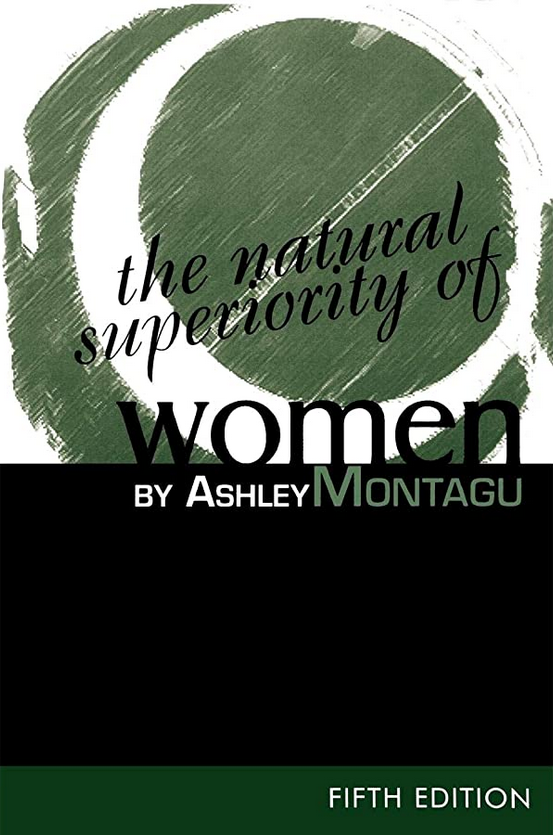
The Natural Superiority of Women PDF - Ashley Montagu
Ashley Montagu • Anthropology • 601 Pages
(0)
Author
Ashley MontaguCategory
Social sciencesSection
Number Of Downloads
52
Number Of Reads
247
File Size
2.46 MB
Views
1,707
Quate
Review
Save
Share
Book Description
The Natural Superiority of Women by Ashley Montagu
The Natural Superiority of Women by Ashley Montagu is a bold, provocative, and historically significant work of feminist social thought, anthropology, and gender studies. First published in 1953, the book became known as one of the early arguments against biological determinism, challenging the long-standing assumption that women were naturally inferior to men. Rather than accepting inherited cultural myths about the “weaker sex,” Montagu uses anthropology, biology, social criticism, and humanist reasoning to question how ideas about women’s roles have been shaped, repeated, and defended across societies.
A Classic Argument Against Female Inferiority
At the heart of The Natural Superiority of Women is Montagu’s rejection of the belief that women’s social position is the result of natural weakness or biological limitation. The book argues that many claims about women’s inferiority are not neutral scientific truths, but social ideas supported by custom, prejudice, and selective interpretation. Montagu examines the relationship between sex and gender, biology and culture, genetics and social roles, showing how deeply gender expectations can influence what a society calls “natural.”
This makes the book especially important for readers interested in feminist theory, women’s studies, anthropology, sociology, gender roles, and the history of ideas about women. Montagu does not write only as a critic of inequality; he writes as a scholar attempting to turn a common argument on its head. If biology had often been used to justify women’s exclusion, Montagu asks whether the same biological and social evidence might instead reveal women’s strength, resilience, adaptability, and central importance to human survival.
Biology, Culture, and the Debate Over Gender
One of the main strengths of the book is the way it places biology and culture in conversation. Montagu was trained in physical anthropology, and he uses that background to challenge simplistic ideas about male superiority. The book discusses women’s biological, genetic, physical, emotional, and social qualities in order to question the inherited belief that men are naturally better suited for intelligence, creativity, leadership, or social authority. Bloomsbury’s description of the fifth edition notes that Montagu critiques the idea of women as the “weaker sex” and presents women’s biological, genetic, and physical makeup as evidence not only of equality, but of superiority.
Modern readers may approach the title with curiosity, agreement, skepticism, or even discomfort, because the phrase natural superiority can sound essentialist by contemporary standards. Yet the book is best understood within its historical purpose: Montagu was writing against a powerful tradition that used biology to diminish women. His argument works as a reversal of that tradition, exposing the weakness of male-centered assumptions and opening a wider debate about how societies define value, ability, intelligence, emotion, and strength.
A Book About Women, Power, and Social Myths
The Natural Superiority of Women is not only about biological difference. It is also about the cultural myths that have shaped women’s lives. Montagu examines how social institutions, traditions, and inherited beliefs have contributed to the subjection of women. The book’s chapter topics include themes such as The Subjection of Women, The Social Determinants of Biological “Facts” and Social Consequences, The Intelligence of the Sexes, Women and Creativity, Mutual Aid, and Changing Traditions, showing the wide scope of its argument.
Through these themes, Montagu invites readers to reconsider what societies reward and what they devalue. Qualities often associated with women—cooperation, emotional intelligence, nurturance, patience, social sensitivity, and mutual aid—are frequently treated as secondary to competition, domination, or physical power. Montagu challenges that hierarchy. He suggests that the traits often dismissed as “feminine” may be among the most essential qualities for healthy human relationships and just social life.
A Humanist View of Feminism and Equality
Although the book’s title emphasizes superiority, its deeper concern is human equality, dignity, and social justice. Montagu’s argument does not simply replace one form of prejudice with another; it pushes readers to examine why certain traits have been valued over others and why women’s contributions have so often been minimized. His humanist perspective gives the book a broader ethical dimension, making it relevant not only as a work about women, but as a work about the kind of society human beings should build.
This is why The Natural Superiority of Women continues to attract readers interested in women’s rights, feminist history, gender equality, social anthropology, and critiques of sexism. It speaks to questions that remain important today: How much of what we call “natural” is shaped by culture? Who benefits when gender roles are treated as fixed? How do scientific claims become entangled with social power? And how can a society recognize women’s intelligence, creativity, labor, and emotional strength without forcing them into narrow stereotypes?
Historical Importance and Later Editions
The book has appeared in several editions, reflecting its continuing relevance in debates about feminism and gender. A 1974 Collier Books edition is listed as a work in social science and includes subjects such as women, feminism, and sex role. A later fifth edition, published by AltaMira Press in 1999, contains 336 pages and includes additional contextual material, including a foreword by Susan Sperling and Montagu’s preface to the fifth edition.
These later editions matter because the book’s arguments were not static. As feminist theory, anthropology, and social science changed over the second half of the twentieth century, the conversation around Montagu’s claims also changed. Readers today may not accept every argument in the same way earlier audiences did, especially where scientific language or gender categories reflect the assumptions of their time. Still, the book remains valuable as a pioneering intervention in the history of feminist thought and as a challenge to the intellectual habits that have long justified women’s inequality.
Who Should Read The Natural Superiority of Women?
The Natural Superiority of Women is a strong choice for readers who want a thoughtful and historically grounded book about gender, feminism, biology, social roles, and women’s intellectual history. It will appeal to students of anthropology, sociology, psychology, history, gender studies, and feminist theory, as well as general readers interested in how scientific and cultural arguments have been used to define women’s place in society.
The book is also useful for readers who enjoy works that challenge inherited assumptions. Montagu’s style is argumentative, confident, and wide-ranging. He writes from the perspective of a scholar who wants to confront prejudice directly, but also from the perspective of a humanist concerned with the emotional and social conditions necessary for a better world. Readers looking for a neutral textbook may find the book more polemical than detached, but those interested in a classic feminist argument against sexism will find it rich, memorable, and intellectually stimulating.
A Thought-Provoking Work on Gender, Science, and Society
The Natural Superiority of Women by Ashley Montagu remains an important work because it asks readers to reconsider the foundations of gender belief. Its central challenge is not merely that women have been underestimated, but that the very standards used to judge strength, intelligence, creativity, and social value have often been shaped by male-centered assumptions. By turning the language of biological superiority against the traditions that claimed women were inferior, Montagu opens a powerful debate about science, culture, justice, and human possibility.
For anyone searching for a classic book on women’s studies, feminist anthropology, gender roles, biological determinism, sexism, and the social construction of female inferiority, this title offers a distinctive and historically meaningful reading experience. It is a book that encourages reflection, disagreement, discussion, and re-evaluation. More than a simple claim about women and men, it is a challenge to the myths that societies inherit—and to the ways those myths can be questioned, revised, and transformed.
Ashley Montagu
Ashley Montagu was a British-born American anthropologist, author, educator, and public intellectual whose work helped shape twentieth-century conversations about race, human development, gender, touch, aggression, and the social foundations of personality. Born Israel Ehrenberg in London in 1905 and later known professionally as Ashley Montagu, he became widely recognized for bringing anthropology beyond the university and into public debate, using science as a tool to challenge prejudice and defend human dignity. His career was rooted in physical anthropology, but his writing consistently moved across disciplinary boundaries, drawing on biology, psychology, sociology, education, medicine, philosophy, and cultural history. Montagu’s most influential book, Man’s Most Dangerous Myth: The Fallacy of Race, remains closely associated with his lifelong opposition to racism and racial determinism. In that work, and in many essays and lectures, he argued that “race” as commonly used in politics and popular culture was a misleading and harmful category, one that had been used to rationalize inequality rather than to explain human diversity accurately. His approach reflected a broader humanist conviction: human beings are not reducible to inherited labels, and scientific language must not be allowed to disguise social injustice as natural fact. Montagu also attracted wide attention for The Natural Superiority of Women, a provocative book that questioned entrenched assumptions about sex, gender, strength, intelligence, and social roles. Whether readers agreed with every argument or not, the book demonstrated his willingness to confront inherited beliefs and to use accessible prose to push public conversation in new directions. Among his other notable works are Touching: The Human Significance of the Skin, The Elephant Man: A Study in Human Dignity, The Direction of Human Development, and writings on childhood, love, aging, aggression, and cooperation. A recurring theme across these books is the idea that human beings are profoundly shaped by care, affection, social learning, and cultural environment. For Montagu, the infant’s need for touch, the child’s need for nurture, and the adult’s need for meaningful connection were not sentimental topics; they were central facts about human biology and civilization. His prose combined scholarly range with direct moral urgency, making his books useful for students, researchers, teachers, and general readers interested in anthropology, social justice, psychology, and the history of ideas. Montagu studied in Britain and the United States and engaged with major currents in modern anthropology, especially those that resisted simplistic biological explanations of human difference. He taught, lectured, wrote prolifically, and became a familiar public voice in mid-century intellectual life, appearing in media discussions and contributing to debates on education, family life, race relations, and human nature. His reputation rests not only on his academic knowledge but also on his ability to translate that knowledge into arguments that mattered outside the academy. He wrote at a time when the misuse of science had helped justify colonialism, segregation, eugenics, and fascism, and he insisted that responsible science must expose rather than reinforce such myths. Ashley Montagu’s legacy is therefore both scholarly and ethical. He remains an important author for readers seeking clear, humane, and historically significant writing about what it means to be human, how societies create difference, and why compassion, learning, and cooperation are essential to any serious understanding of human life.
Earn Rewards While Reading!
Every 10 pages you read and spent 30 seconds on every page, earns you 5 reward points! Keep reading to unlock achievements and exclusive benefits.
Read
Rate Now
5 Stars
4 Stars
3 Stars
2 Stars
1 Stars
The Natural Superiority of Women Quotes
Top Rated
Latest
Quate
Be the first to leave a quote and earn 10 points
instead of 3
Other books by Ashley Montagu
Other books like The Natural Superiority of Women
'%20/%3e%3c/svg%3e "Cultural Anthropology: Global Forces, Local Lives, 3rd ed.")
2214
English
Comments
Be the first to leave a comment and earn 5 points
instead of 3