

The source of the book
This book is published for the public benefit under a Creative Commons license, or with the permission of the author or publisher. If you have any objections to its publication, please contact us.
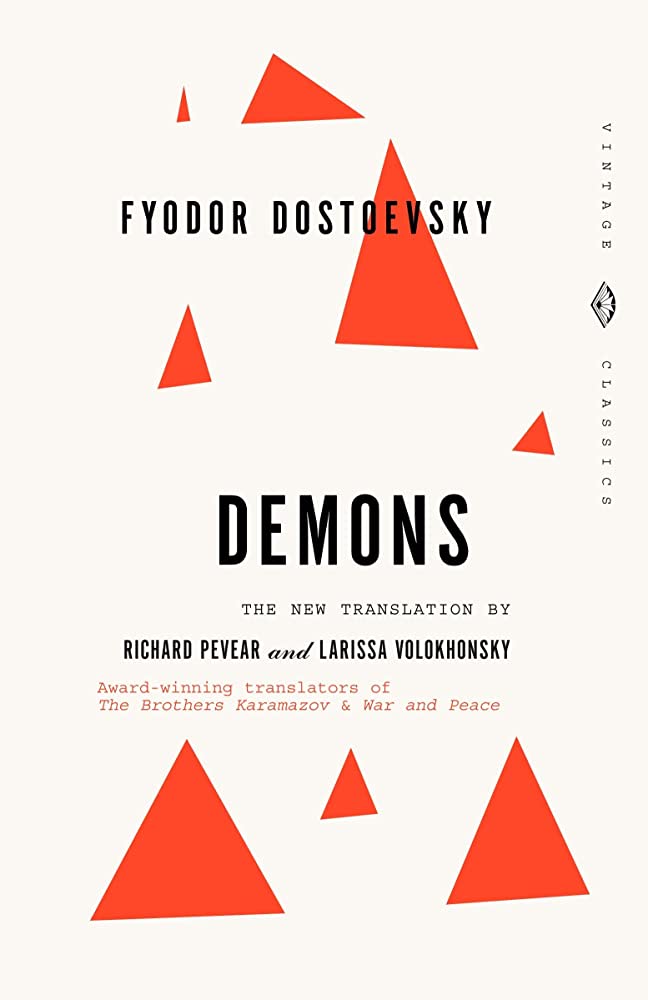
Demons PDF - Fyodor Dostoevsky
Fyodor Dostoevsky • Literary novels • 856 Pages
(0)
Author
Fyodor DostoevskyCategory
literatureSection
Number Of Downloads
26
Number Of Reads
187
File Size
2.11 MB
Views
748
Quate
Review
Save
Share
Book Description
Demons by Fyodor Dostoevsky: A Dark Psychological and Political Masterpiece
Demons by Fyodor Dostoevsky is one of the most intense, provocative, and unsettling novels in Russian literature, a work that brings together psychological fiction, political satire, philosophical drama, and moral tragedy in a single unforgettable narrative. Also known in some English editions as The Devils or The Possessed, the novel explores a provincial Russian town gradually drawn into ideological chaos, personal manipulation, spiritual emptiness, and destructive ambition. Through a large cast of unforgettable characters, Dostoevsky examines what happens when ideas lose their connection to conscience, faith, responsibility, and human compassion.
At the center of the novel is a society that appears respectable on the surface but is already filled with vanity, resentment, confusion, and hidden weakness. Into this atmosphere come figures whose intellectual theories and personal obsessions ignite forces they cannot fully control. Dostoevsky does not present politics as an abstract debate; he turns it into a living psychological crisis, showing how radical ideas, wounded pride, social performance, and moral emptiness can spread through families, friendships, and public life. The result is a novel that feels both historically rooted and disturbingly modern.
A Novel of Ideas, Power, and Moral Disorder
Demons is often described as one of Dostoevsky’s great political novels, but its power goes far beyond political commentary. The book investigates the inner life of people who are attracted to rebellion, domination, scandal, and self-destruction. Dostoevsky is interested not only in what his characters believe, but in why they need to believe it. Behind public speeches and intellectual slogans, he reveals loneliness, vanity, envy, spiritual hunger, and the desire to escape moral accountability.
The novel’s world is filled with competing voices. Some characters speak in the language of progress, freedom, reform, and revolution; others cling to social status, tradition, religious feeling, or personal loyalty. Yet Dostoevsky refuses to make the conflict simple. His characters are rarely only symbols. They are contradictory, unstable, comic, tragic, intelligent, foolish, tender, cruel, and deeply human. This complexity gives Demons by Fyodor Dostoevsky its lasting force as a philosophical novel and a psychological study of extremism.
The Reading Experience: Intense, Layered, and Unforgettable
Reading Demons is not a passive experience. The novel draws the reader into a world of rumors, conversations, confessions, schemes, public gatherings, private humiliations, and sudden emotional reversals. Dostoevsky builds tension through dialogue and character interaction rather than simple action. His scenes often begin as social comedy or intellectual argument, then gradually darken into something more dangerous. The result is a reading experience that can feel theatrical, feverish, and deeply immersive.
The novel’s structure reflects the disorder it portrays. A provincial town becomes a stage on which hidden motives are exposed, alliances shift, and ideas take on destructive life. Dostoevsky’s narrative moves between irony and tragedy, satire and spiritual seriousness, intimate psychology and broad social critique. Readers who appreciate complex classic novels, Russian literature, and dark philosophical fiction will find in this book a demanding but richly rewarding work that continues to reveal new meanings with each reading.
Key Themes in Demons
One of the major themes of Demons is the danger of ideas separated from moral responsibility. Dostoevsky shows how language can become a weapon when people use theories to avoid compassion, justify cruelty, or turn human beings into instruments. The novel is deeply concerned with nihilism, ideological possession, and the collapse of shared ethical life. Its title suggests not merely supernatural evil, but the invisible forces that can take hold of individuals and communities when pride, resentment, and abstraction replace humility and truth.
Another central theme is spiritual emptiness. Many characters in the novel seek meaning through politics, social admiration, sensuality, intellectual superiority, or personal power, yet remain inwardly restless. Dostoevsky portrays this emptiness not as a private weakness alone, but as something that can become socially contagious. When people lose a living sense of responsibility to others, private disorder can become public catastrophe.
The novel also explores generational conflict. Older liberal idealism, youthful radicalism, aristocratic decadence, and provincial vanity all collide in a society uncertain of its future. Dostoevsky presents a world in transition, where inherited beliefs are weakening and new doctrines rush in to fill the void. This gives Demons its remarkable relevance for readers interested in the psychology of social crisis, political fanaticism, and cultural fragmentation.
Characters Driven by Contradiction
The characters in Demons are among Dostoevsky’s most memorable creations because they are driven by contradictions they barely understand. Nikolai Stavrogin stands at the center of much of the novel’s fascination: mysterious, charismatic, emotionally distant, and morally disturbing. Around him gather people who project onto him their hopes, fears, desires, and ideological fantasies. He becomes less a conventional hero than a dark center of gravity, revealing the weakness and obsession of those drawn to him.
Pyotr Verkhovensky is one of Dostoevsky’s most chilling figures of manipulation and revolutionary ambition. Energetic, calculating, and theatrical, he understands how to exploit insecurity, vanity, and confusion. Through him, Dostoevsky examines the psychology of conspiracy and the frightening ease with which moral boundaries can be dissolved in the name of a cause. Stepan Verkhovensky, by contrast, brings another kind of tragic irony: he represents a generation of elegant talk, liberal poses, and emotional self-deception that may not intend destruction but helps prepare the ground for it.
These characters are not presented in simple moral categories. Dostoevsky gives them depth, speech, contradiction, and inner struggle. Even at their most troubling, they remain psychologically alive. This is one reason Demons remains essential for readers who want literature that does more than tell a story; it investigates the hidden movements of the soul.
Why Demons Still Matters Today
Although Demons is rooted in nineteenth-century Russia, its questions remain urgent. How do destructive ideas spread? Why are some people attracted to extremism? What happens when public ideals become masks for private resentment? Can a society survive when words lose their moral meaning? These questions make the novel feel strikingly contemporary, especially for readers interested in political psychology, social unrest, ideology, and the moral dangers of fanaticism.
Dostoevsky understood that history is not shaped only by systems and institutions, but also by pride, humiliation, longing, fear, and the human need to belong. In Demons, he turns these forces into drama. The novel shows how a community can be destabilized not only by powerful leaders, but by gossip, vanity, intellectual fashion, emotional weakness, and the refusal to tell the truth. Its darkness comes from its insight into how ordinary human flaws can become catastrophic when joined to ideology and ambition.
For Readers of Russian Classics and Philosophical Fiction
Demons by Fyodor Dostoevsky is an ideal choice for readers who value classic Russian literature, philosophical novels, psychological depth, and morally challenging fiction. It will especially appeal to those who have read Crime and Punishment, The Brothers Karamazov, or The Idiot and want to explore another major work from Dostoevsky’s mature period. While the novel is demanding, it rewards patient reading with extraordinary insight into character, society, and the conflict between belief and chaos.
This is not a light or simple novel. Its cast is large, its conversations are dense, and its atmosphere grows increasingly tense. Yet these qualities are part of its greatness. Dostoevsky creates a world that feels unstable because instability is the subject of the book. The reader is placed inside a society losing its balance, where comedy becomes menace and ideas become action. For those willing to enter its difficult world, Demons offers one of the most powerful literary explorations of moral disorder ever written.
A Dark Classic of Ideology, Conscience, and the Human Soul
Demons remains one of Fyodor Dostoevsky’s most ambitious and unsettling achievements. It is a novel about politics, but also about pride, guilt, faith, despair, manipulation, and the hunger for meaning. Its greatness lies in the way Dostoevsky connects public crisis with private conscience, showing that the deepest battles of society begin within the human soul.
For readers seeking a serious, complex, and unforgettable classic, Demons by Fyodor Dostoevsky offers a profound encounter with the dangers of spiritual emptiness and ideological possession. It is a book that challenges, disturbs, and compels reflection, standing as one of the essential works of world literature and one of the most penetrating studies of human and social breakdown.
Fyodor Dostoevsky
Fyodor Dostoevsky was a Russian novelist, philosopher, and essayist, widely considered to be one of the greatest writers in Western literature. He was born in Moscow in 1821 and raised in a middle-class family. His father was a doctor who treated the poor for free, which instilled in Dostoevsky a deep sense of social justice and compassion for the downtrodden.
Dostoevsky began his writing career in the 1840s, with a series of novellas and short stories that explored the complexities of human nature and the dark side of Russian society. His first major novel, "Poor Folk," was published in 1846 and won critical acclaim. However, it was his later works, such as "Crime and Punishment," "The Idiot," and "The Brothers Karamazov," that established him as a literary master.
Dostoevsky's writing is known for its psychological depth, philosophical themes, and exploration of the human condition. His characters often struggle with moral dilemmas and existential questions, grappling with issues of faith, morality, and the meaning of life. His works also explore the political and social issues of his time, including poverty, crime, and political oppression.
Dostoevsky's life was marked by personal tragedy and political turmoil. He was arrested in 1849 for his involvement with a group of liberal intellectuals and sentenced to death, only to have the sentence commuted to hard labor in Siberia. He returned to Russia after serving his sentence, but continued to struggle with poverty and illness throughout his life. He died in 1881 at the age of 59.
Despite his tumultuous life, Dostoevsky's legacy as a writer and thinker endures. His works continue to be widely read and studied today, and his ideas about the human condition and the role of faith in society continue to resonate with readers around the world.
Earn Rewards While Reading!
Every 10 pages you read and spent 30 seconds on every page, earns you 5 reward points! Keep reading to unlock achievements and exclusive benefits.
Read
Rate Now
5 Stars
4 Stars
3 Stars
2 Stars
1 Stars
Demons Quotes
Top Rated
Latest
Quate
Be the first to leave a quote and earn 10 points
instead of 3
'%20/%3e%3c/svg%3e "The Brothers Karamazov")
Comments
Be the first to leave a comment and earn 5 points
instead of 3