

The source of the book
This book is published for the public benefit under a Creative Commons license, or with the permission of the author or publisher. If you have any objections to its publication, please contact us.
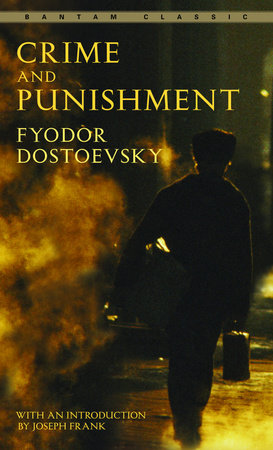
Crime and Punishment PDF - Fyodor Dostoevsky
Fyodor Dostoevsky • Literary novels • 558 Pages
(0)
Author
Fyodor DostoevskyCategory
literatureSection
Number Of Downloads
37
Number Of Reads
183
File Size
2.92 MB
Views
1,082
Quate
Review
Save
Share
Book Description
Crime and Punishment by Fyodor Dostoevsky
Crime and Punishment by Fyodor Dostoevsky is one of the most powerful psychological novels ever written, a classic work of Russian literature that continues to challenge readers with its intense exploration of guilt, morality, conscience, suffering, and redemption. First published in 1866, the novel follows Rodion Raskolnikov, an impoverished former student in Saint Petersburg whose dangerous ideas about human superiority lead him toward a crime that becomes the beginning of a profound inner collapse.
A Psychological Novel About Guilt, Conscience, and Moral Conflict
At the center of Crime and Punishment is not only the act of crime itself, but the unbearable psychological weight that follows it. Dostoevsky turns what could have been a simple crime story into a deep study of the human soul, examining how pride, poverty, isolation, fear, and intellectual arrogance can push a person toward moral ruin. Raskolnikov believes he can step beyond ordinary moral law, but the novel slowly reveals that no theory can silence the voice of conscience.
This makes Crime and Punishment a compelling choice for readers interested in psychological fiction, philosophical novels, and classic literature that examines the darkest and most complex areas of human nature. Dostoevsky does not present morality as a simple question of right and wrong; instead, he shows how people justify their actions, suffer under the consequences, and search for meaning even after crossing terrible boundaries.
The Reading Experience
Reading Crime and Punishment is an intense and immersive experience. The novel moves through crowded streets, cramped rooms, feverish thoughts, tense conversations, and moments of startling emotional clarity. Dostoevsky creates an atmosphere of pressure and unease, allowing the reader to feel Raskolnikov’s mental torment as his ideas clash with fear, compassion, shame, and spiritual hunger.
The book is especially memorable because of its psychological depth. Every major character reflects a different moral possibility, from sacrifice and loyalty to manipulation, despair, and hope. Through these characters, Dostoevsky builds a world where suffering is never merely decorative; it becomes a way of revealing truth. This is one reason Crime and Punishment remains a landmark of Russian classic novels and a central work for readers who want literature that is emotionally powerful and intellectually demanding.
Themes That Make the Novel Timeless
The enduring power of Crime and Punishment lies in its themes. The novel asks whether a person can commit evil for a supposedly greater good, whether intellectual theories can excuse human suffering, and whether redemption is possible after moral failure. These questions give the book its lasting relevance for readers across generations.
Themes of guilt and punishment, sin and redemption, poverty and social injustice, alienation, faith, and free will are woven throughout the novel. Dostoevsky’s genius lies in the way he connects these large philosophical questions to intimate human experience. Raskolnikov’s punishment is not only legal or social; it begins inside his own mind. His suffering becomes a confrontation with the truth about himself, and the reader is drawn into that confrontation with remarkable force.
For Readers of Classic and Philosophical Literature
Crime and Punishment is ideal for readers who appreciate serious fiction with emotional intensity, moral complexity, and unforgettable characterization. It appeals to those searching for classic books to read, Russian literature in English, philosophical fiction, or a psychological novel about guilt and redemption. The book is also valuable for students and general readers interested in nineteenth-century literature, existential questions, moral philosophy, and the development of the modern novel.
Although the novel is profound, it remains deeply human. Dostoevsky’s characters are not abstract symbols; they are desperate, proud, loving, frightened, contradictory, and alive. This human realism gives the book its emotional force. Readers may come to Crime and Punishment for its reputation as a masterpiece, but they often remember it for its atmosphere, its moral urgency, and the unforgettable struggle of a man trying to understand what he has done and what kind of person he can still become.
Why Crime and Punishment Still Matters
More than a century and a half after its publication, Crime and Punishment by Fyodor Dostoevsky remains essential because it speaks to questions that never disappear. What happens when a person believes they are above others? Can suffering lead to transformation? Is justice only external, or does true punishment begin within the conscience? Can a broken life still move toward redemption?
These questions make the novel far more than a historical classic. Crime and Punishment continues to feel urgent because it examines the conflict between ideas and humanity, between pride and compassion, between despair and the possibility of renewal. For readers seeking a book that combines suspense, philosophy, emotional drama, and spiritual depth, Dostoevsky’s masterpiece offers one of the richest and most unforgettable reading experiences in world literature.
Fyodor Dostoevsky
Fyodor Dostoevsky was a Russian novelist, philosopher, and essayist, widely considered to be one of the greatest writers in Western literature. He was born in Moscow in 1821 and raised in a middle-class family. His father was a doctor who treated the poor for free, which instilled in Dostoevsky a deep sense of social justice and compassion for the downtrodden.
Dostoevsky began his writing career in the 1840s, with a series of novellas and short stories that explored the complexities of human nature and the dark side of Russian society. His first major novel, "Poor Folk," was published in 1846 and won critical acclaim. However, it was his later works, such as "Crime and Punishment," "The Idiot," and "The Brothers Karamazov," that established him as a literary master.
Dostoevsky's writing is known for its psychological depth, philosophical themes, and exploration of the human condition. His characters often struggle with moral dilemmas and existential questions, grappling with issues of faith, morality, and the meaning of life. His works also explore the political and social issues of his time, including poverty, crime, and political oppression.
Dostoevsky's life was marked by personal tragedy and political turmoil. He was arrested in 1849 for his involvement with a group of liberal intellectuals and sentenced to death, only to have the sentence commuted to hard labor in Siberia. He returned to Russia after serving his sentence, but continued to struggle with poverty and illness throughout his life. He died in 1881 at the age of 59.
Despite his tumultuous life, Dostoevsky's legacy as a writer and thinker endures. His works continue to be widely read and studied today, and his ideas about the human condition and the role of faith in society continue to resonate with readers around the world.
Earn Rewards While Reading!
Every 10 pages you read and spent 30 seconds on every page, earns you 5 reward points! Keep reading to unlock achievements and exclusive benefits.
Read
Rate Now
5 Stars
4 Stars
3 Stars
2 Stars
1 Stars
Crime and Punishment Quotes
Top Rated
Latest
Quate
Be the first to leave a quote and earn 10 points
instead of 3
'%20/%3e%3c/svg%3e "The Brothers Karamazov")
Comments
Be the first to leave a comment and earn 5 points
instead of 3