
The source of the book
This book is not currently available for publication. We obtained it from under a Creative Commons license, but the author or publishing house has not granted permission for its publication.
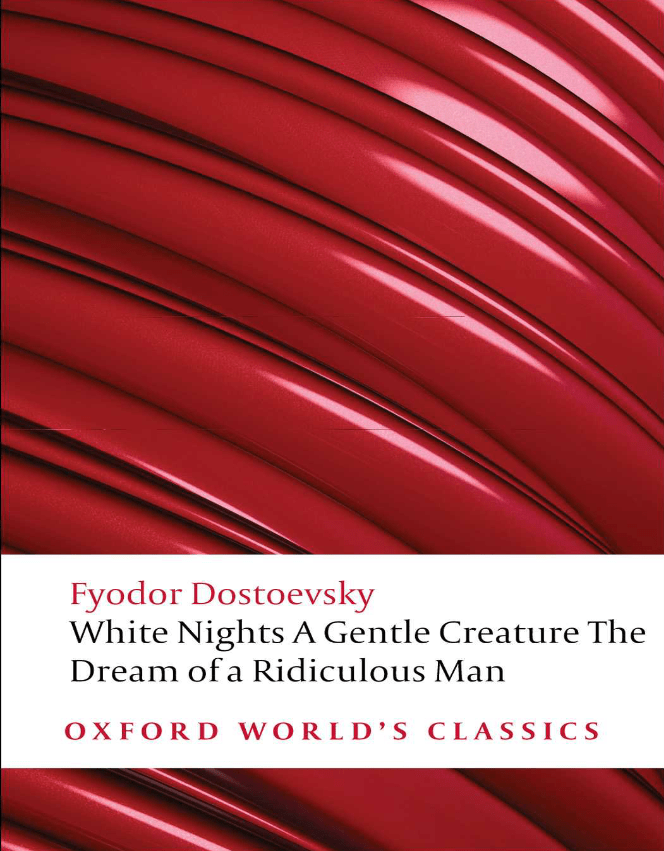
A Gentle Creature and Other Stories PDF - Fyodor Dostoevsky
Fyodor Dostoevsky • short stories • 2,468 Pages
(0)
Quate
Review
Save
Share
Book Description
A Gentle Creature and Other Stories by Fyodor Dostoevsky
A Gentle Creature and Other Stories by Fyodor Dostoevsky brings together three powerful short works that reveal the emotional intensity, psychological depth, and moral seriousness that made Dostoevsky one of the central voices of Russian literature. This collection includes “White Nights,” “A Gentle Creature,” and “The Dream of a Ridiculous Man,” stories that explore loneliness, fantasy, alienation, spiritual crisis, and the difficult search for human connection. In a compact form, the book offers many of the themes that readers associate with Dostoevsky’s major novels: the divided self, the burden of conscience, the hunger for love, and the possibility of moral awakening.
A Classic Collection of Dostoevsky’s Short Fiction
For readers discovering Dostoevsky beyond Crime and Punishment, The Idiot, Demons, or The Brothers Karamazov, this volume is an ideal introduction to his shorter fiction. The stories are brief enough to be approachable, yet they carry the emotional and philosophical weight of much larger works. Dostoevsky’s characters are often isolated figures: dreamers, outsiders, wounded idealists, and troubled narrators who struggle to understand themselves and the people around them. Through their voices, the collection examines the inner life with unusual force, turning ordinary encounters into searching studies of desire, pride, guilt, and compassion.
The title story, “A Gentle Creature,” is one of Dostoevsky’s most haunting psychological narratives. It is built around a narrator trying to make sense of a broken relationship and a devastating personal crisis. Rather than presenting a simple moral lesson, Dostoevsky creates a tense interior monologue in which memory, self-justification, remorse, and confusion overlap. The result is a story that feels intimate and unsettling, drawing the reader into the narrator’s mind while also encouraging careful judgment of what he says and what he refuses to understand.
Dreamers, Loneliness, and the Need for Human Connection
One of the strongest threads in A Gentle Creature and Other Stories is the figure of the dreamer: a person who lives partly in imagination, separated from the fullness of real life. In “White Nights,” Dostoevsky presents this figure with tenderness and melancholy. The story follows a lonely narrator whose romantic imagination gives beauty to his world but also reveals his deep estrangement from ordinary human intimacy. It is one of Dostoevsky’s most lyrical works, loved by readers for its atmosphere, emotional directness, and bittersweet portrait of hope.
Yet Dostoevsky’s dreamers are never merely sentimental. Their fantasies can protect them from pain, but they can also distance them from responsibility, action, and genuine love. Across the collection, imagination becomes both a refuge and a danger. The characters want to be seen and understood, but they often struggle to see others clearly. This tension gives the stories their lasting emotional power and makes the book especially meaningful for readers interested in classic literature about loneliness, alienation, romantic idealism, and self-deception.
Moral Crisis and Spiritual Awakening
In “The Dream of a Ridiculous Man,” Dostoevsky turns inward crisis into a visionary moral tale. The story begins with despair and moves toward a dreamlike encounter with questions of innocence, corruption, truth, and responsibility. Like much of Dostoevsky’s fiction, it refuses shallow optimism, but it does not settle for emptiness either. Instead, it asks whether a human being who has lost faith in life can rediscover the value of compassion, humility, and love.
This moral dimension is one of the reasons Dostoevsky’s short stories remain so compelling. He does not treat suffering as decoration or drama for its own sake. His characters suffer because they are divided against themselves, trapped between pride and tenderness, cynicism and longing, isolation and the need for others. A Gentle Creature and Other Stories invites the reader to consider how easily people can misunderstand one another, and how difficult yet necessary it is to move beyond ego toward responsibility.
The Reading Experience
The reading experience of A Gentle Creature and Other Stories is intense, reflective, and emotionally layered. Dostoevsky’s prose often feels urgent because his narrators are not simply telling events; they are arguing with themselves, confessing, remembering, resisting, and searching for meaning. This gives the stories a dramatic quality, as though the real action is happening inside the mind. Readers who appreciate psychological fiction will find here a masterclass in interior tension and unreliable self-examination.
At the same time, the collection offers variety. “White Nights” is tender and atmospheric, filled with the mood of youthful longing and urban solitude. “A Gentle Creature” is darker, more claustrophobic, and more morally troubling. “The Dream of a Ridiculous Man” is philosophical and visionary, moving from despair toward a broader meditation on humanity. Together, the stories create a balanced portrait of Dostoevsky’s artistic range, from romantic melancholy to psychological tragedy and spiritual parable.
Why This Book Matters
A Gentle Creature and Other Stories matters because it shows Dostoevsky working with great concentration. In these shorter works, there is little room for the sprawling plots and large casts of his major novels, so the focus falls sharply on voice, mood, and moral conflict. Every story asks what happens when a person becomes cut off from living connection with others. Every story also suggests that the inner life, however private it may seem, has ethical consequences.
For students, this collection offers an accessible way to study Dostoevsky’s themes, including alienation, utopian thought, confession, guilt, fantasy, and redemption. For general readers, it provides a moving encounter with characters who feel painfully human in their contradictions. For admirers of Russian literature, it reveals how Dostoevsky could compress the concerns of his larger fiction into shorter narratives without losing depth or intensity.
Who Should Read A Gentle Creature and Other Stories?
This book is an excellent choice for readers who enjoy Russian classics, psychological fiction, philosophical literature, and short stories with emotional depth. It will appeal to those interested in characters who struggle with loneliness, moral failure, romantic longing, and the possibility of change. Readers who are drawn to intense first-person narration, complex inner lives, and literature that asks difficult questions about the human soul will find this collection especially rewarding.
It is also a strong choice for anyone beginning with Dostoevsky. Because the stories are shorter than his major novels, they offer a manageable entrance into his world while still presenting the qualities that define his writing: emotional urgency, moral seriousness, spiritual searching, and unforgettable psychological insight. A Gentle Creature and Other Stories is not simply a supplement to Dostoevsky’s famous novels; it is a rich and memorable collection in its own right.
A Thoughtful and Haunting Dostoevsky Collection
A Gentle Creature and Other Stories by Fyodor Dostoevsky is a compact but profound collection about dreamers, wounded hearts, spiritual desolation, and the fragile hope of compassion. Through stories of loneliness, fantasy, despair, and moral awakening, Dostoevsky examines the hidden dramas of the human mind with extraordinary power. For readers seeking a meaningful work of classic Russian literature, this book offers an unforgettable journey into the conflicts between imagination and reality, pride and love, isolation and responsibility.
Fyodor Dostoevsky
Fyodor Dostoevsky was a Russian novelist, philosopher, and essayist, widely considered to be one of the greatest writers in Western literature. He was born in Moscow in 1821 and raised in a middle-class family. His father was a doctor who treated the poor for free, which instilled in Dostoevsky a deep sense of social justice and compassion for the downtrodden.
Dostoevsky began his writing career in the 1840s, with a series of novellas and short stories that explored the complexities of human nature and the dark side of Russian society. His first major novel, "Poor Folk," was published in 1846 and won critical acclaim. However, it was his later works, such as "Crime and Punishment," "The Idiot," and "The Brothers Karamazov," that established him as a literary master.
Dostoevsky's writing is known for its psychological depth, philosophical themes, and exploration of the human condition. His characters often struggle with moral dilemmas and existential questions, grappling with issues of faith, morality, and the meaning of life. His works also explore the political and social issues of his time, including poverty, crime, and political oppression.
Dostoevsky's life was marked by personal tragedy and political turmoil. He was arrested in 1849 for his involvement with a group of liberal intellectuals and sentenced to death, only to have the sentence commuted to hard labor in Siberia. He returned to Russia after serving his sentence, but continued to struggle with poverty and illness throughout his life. He died in 1881 at the age of 59.
Despite his tumultuous life, Dostoevsky's legacy as a writer and thinker endures. His works continue to be widely read and studied today, and his ideas about the human condition and the role of faith in society continue to resonate with readers around the world.
Book Currently Unavailable
This book is currently unavailable for publication. We obtained it under a Creative Commons license, but the author or publisher has not granted permission to publish it.
Rate Now
5 Stars
4 Stars
3 Stars
2 Stars
1 Stars
A Gentle Creature and Other Stories Quotes
Top Rated
Latest
Quate
Be the first to leave a quote and earn 10 points
instead of 3
'%20/%3e%3c/svg%3e "The Brothers Karamazov")
Comments
Be the first to leave a comment and earn 5 points
instead of 3