
Fantasy novels
Books number: 1820
Fantasy novels have been a staple of literature for centuries, capturing the imaginations of readers young and old. These novels transport us to magical worlds full of mythical creatures, epic battles, and awe-inspiring landscapes. From J.R.R. Tolkien's "The Lord of the Rings" to George R.R. Martin's "A Song of Ice and Fire," fantasy novels have a timeless appeal that continues to captivate readers.
One of the key elements of fantasy novels is their ability to transport readers to entirely new worlds. These worlds are often vastly different from our own, featuring unique cultures, languages, and histories. In these worlds, readers can escape from the mundane and experience something truly extraordinary. Whether it's exploring the magical forests of Middle-earth or navigating the intricate politics of Westeros, fantasy novels offer a sense of adventure and wonder that is unmatched by any other genre.
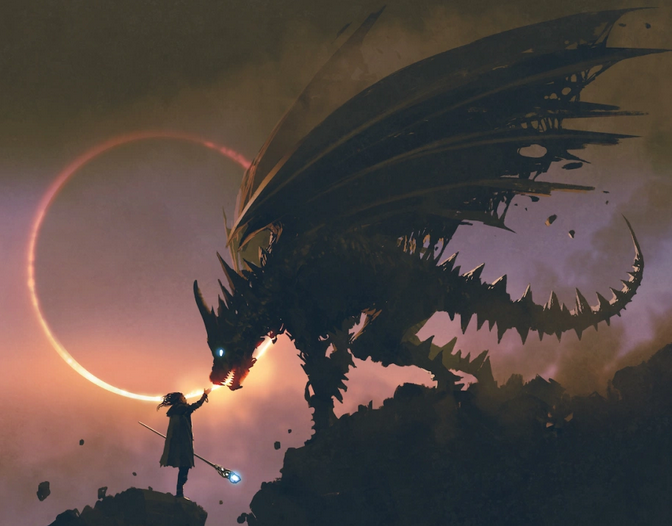
Another hallmark of fantasy novels is the use of mythical creatures. From dragons and unicorns to elves and dwarves, these creatures help to create a sense of wonder and magic in the worlds of fantasy novels. They also serve as powerful symbols, representing different aspects of the human experience. For example, dragons may symbolize greed or power, while unicorns may symbolize purity or innocence.
Fantasy novels also often feature epic battles between forces of good and evil. These battles are often fought on a grand scale, with armies clashing and magic flying through the air. They provide a sense of excitement and danger that can be both thrilling and terrifying. These battles often have important themes and messages, such as the struggle between freedom and tyranny or the importance of sacrifice for a greater cause.
While fantasy novels may seem like pure escapism, they often deal with important themes and issues. For example, "The Lord of the Rings" explores themes of power, temptation, and the corrupting influence of evil. "A Song of Ice and Fire" tackles issues of politics, power, and the nature of war. Fantasy novels can offer powerful commentary on the human experience, using the metaphorical language of magic and mythical creatures to make their points.
In conclusion, fantasy novels are a beloved genre that has captured the imaginations of readers for centuries. They transport us to magical worlds full of wonder and adventure, featuring mythical creatures and epic battles. Despite their fantastical nature, these novels often deal with important themes and issues, making them both entertaining and thought-provoking. Whether you're a fan of Tolkien or Martin, there's a fantasy novel out there for everyone.
'%20/%3e%3c/svg%3e "Cover of Percy Jackson's Greek Heroes by Rick Riordan")
2088
English
Percy Jackson's Greek Heroes
Rick Riordan
Fantasy novels
(0)
2085
English
Furthermore
Tahereh Mafi
Fantasy novels
(0)
2072
English
The Name of the Wind
Patrick Rothfuss
Fantasy novels
(0)
2072
English
James and the Giant Peach
Roald Dahl
Fantasy novels
(0)
2067
English
Life and Death
Stephenie Meyer
Fantasy novels
(0)
2056
English
Stalking Jack the Ripper
Kerri Maniscalco
Fantasy novels
(0)
2050
English
The Lightning-Struck Heart
T.J. Klune
Fantasy novels
(0)
2048
English
The Demigod Diaries
Rick Riordan
Fantasy novels
(0)
2037
English
Rule of Wolves
Leigh Bardugo
Fantasy novels
(0)
2024
English
Origin : the Lux
Jennifer L. Armentrout
Fantasy novels
(0)
1977
English
Dead Until Dark
Charlaine Harris
Fantasy novels
(0)
1969
English
Infinity Reaper
Adam Silvera
Fantasy novels
(0)
1962
English
The Empire of Gold
Shannon Chakraborty
Fantasy novels
(0)
1956
English
Queen of Shadows
Sarah J. Maas
Fantasy novels
(0)
1945
English
Kingdom of Ash
Sarah J. Maas
Fantasy novels
(0)
1936
English
Court of the Vampire Queen
Katee Robert
Fantasy novels
(0)
1926
English
King of Scars
Leigh Bardugo
Fantasy novels
(0)