
Newly released
This book is new and will be uploaded as soon as it becomes available to us and if we secure the necessary publishing rights.
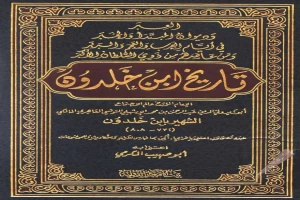
تاريخ ابن خلدون ج 6 PDF - abd elrahman Ibn Khaldun
abd elrahman Ibn Khaldun • Islamic history • 632 Pages
(0)
Quate
Review
Save
Share
Book Description
كتاب تاريخ ابن خلدون 6 تأليف ابن خلدون . لقد خضع هذا الكتاب لتدقيق ومراجعة قوية وموضوعية لمعلومات الطبعة الورقية أسفله. يتناول الكتاب عرض دراسات منهج ابن خلدون فى سلسلة من المراجع هذا الكتاب أحد أجزائها، لسلسة تتكون من 8 مجلدات لتاريخ ابن خلدون ومنهجه . ينقسم الكتاب إلى عدد من الفصول. هذا الكتاب من الكتب العربية التي إذا لم يقرأ أحد بعض فصوله يكون على الأقل قد سمع به. هذا كتاب أعتقد أن كل معني بالثقافة العربية من (قريب) أن يقرأه.
abd elrahman Ibn Khaldun
Ibn Khaldun (1332–1406 CE) is considered one of the most prominent thinkers in Islamic and world history, the undisputed pioneer of sociology, and the author of the theory of human civilization, which transformed scholars' understanding of the development of civilizations and the rise and fall of states. Born in Tunis to a distinguished Andalusian family renowned for its scholarship and political influence, Ibn Khaldun grew up in a rich cultural environment that enabled him to study jurisprudence, linguistics, logic, and philosophy from a young age. This early exposure later contributed to the development of his unique analytical and research methodology.
Ibn Khaldun is best known for his famous book, "The Muqaddimah" (Introduction), which later became the foundation of sociology and economic and political history. In this introduction, he presented a profound scientific analysis of human nature and the evolution of societies, addressing concepts such as social cohesion, the state, economics, education, and civilization. Thanks to his meticulous observation and comparison of historical events, many scholars consider him the first to establish a scientific methodology based on analysis rather than relying on tradition and undocumented accounts.
Ibn Khaldun held numerous political and administrative positions, moving between the Maghreb countries, from Tunis to Fez and then Granada, before settling in Egypt where he assumed important posts, including that of judge. His extensive political experience was a fundamental source of his understanding of the nature of power and the state, which is clearly reflected in his writings that linked history with social and economic realities.
Ibn Khaldun was distinguished by his remarkably advanced vision for his time. He established principles for understanding the rise and fall of states through the concept of "asabiyya" (group solidarity), which he considered the primary driving force behind the formation and continuity of states. He also pointed to the role of economics, resources, the environment, and education in shaping human life—ideas that have become essential components of modern social sciences.
Ibn Khaldun's ideas remain influential today. His writings are studied in the world's most prestigious universities, and his theories are cited in fields such as sociology, economics, politics, and history. "Muqaddimah" (The Introduction) is one of the most important classical texts, constantly read and analyzed for its comprehensive vision that resonates with reality across the centuries.
Book Currently Unavailable
This book is currently unavailable for publication. We obtained it under a Creative Commons license, but the author or publisher has not granted permission to publish it.
Rate Now
5 Stars
4 Stars
3 Stars
2 Stars
1 Stars
تاريخ ابن خلدون ج 6 Quotes
Top Rated
Latest
Quate
Be the first to leave a quote and earn 10 points
instead of 3
'%20/%3e%3c/svg%3e "تاريخ ابن خلدون ج 2")
Comments
Be the first to leave a comment and earn 5 points
instead of 3