

The source of the book
This book is published for the public benefit under a Creative Commons license, or with the permission of the author or publisher. If you have any objections to its publication, please contact us.
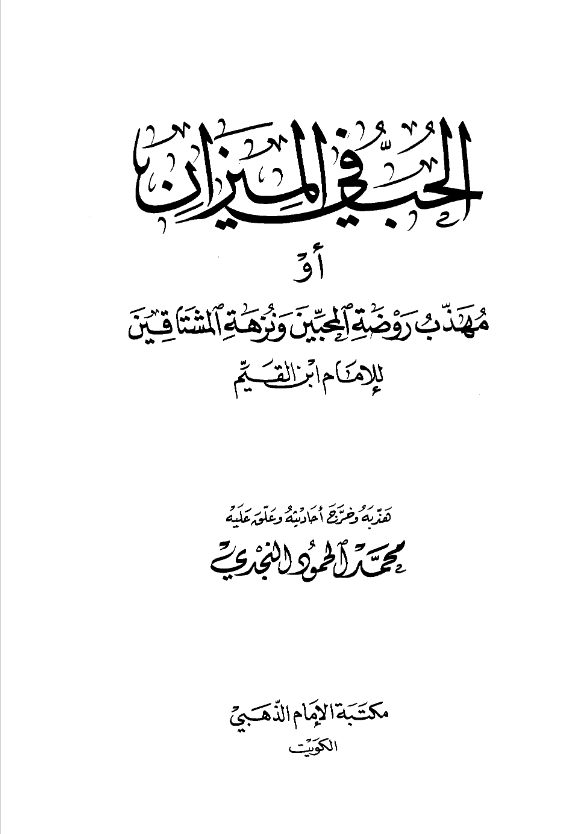
الحب في الميزان PDF - Ibn Qayyim Al-Jawzia
Ibn Qayyim Al-Jawzia • Islam • 380 Pages
(0)
Author
Ibn Qayyim Al-JawziaCategory
ReligionsSection
Number Of Downloads
73
Number Of Reads
71
File Size
5.25 MB
Views
1,278
Quate
Review
Save
Share
Book Description
كتاب «الحب في الميزان» لشمس الدين ابن قيم الجوزية كتاب عربي في الرقائق والتزكية، وليس رواية ذات حبكة وشخصيات، بل عمل تراثي يعالج موضوع المحبة من منظور شرعي ونفسي وأدبي. والكتاب متداول أيضًا بعنوان «الحب في الميزان أو مهذب روضة المحبين ونزهة المشتاقين»، وتذكر بطاقات ببليوغرافية أنه صدر عن مكتبة الإمام الذهبي في الكويت، سنة 1427هـ/2006م، في طبعة أولى، مع نسبة التهذيب إلى محمد حمد الحمود النجدي، بينما تعود مادته العلمية إلى الإمام ابن القيم، واسمه محمد بن أبي بكر بن أيوب، المعروف بشمس الدين ابن قيم الجوزية، المتوفى سنة 751هـ.
يتناول كتاب «الحب في الميزان» موضوع الحب بوصفه قوة مؤثرة في القلب والسلوك، لا مجرد عاطفة عابرة. يبدأ الكتاب ببيان أنواع المحبة وأسمائها كما وردت في لغة العرب وفي النصوص الشرعية، ثم ينتقل إلى أسباب الحب ودواعيه، وكيف تنشأ العلاقة بين القلب والمحبوب، وما الذي يجعل المحبة نافعة أو ضارة. ومن هنا يظهر منهج ابن القيم في ربط التجربة الإنسانية بالإيمان، فهو لا ينكر حضور الميل والجمال والشوق، لكنه يضع ذلك كله في ميزان يفرّق بين حب يرفع صاحبه ويقربه من الخير، وحب يوقعه في التعلق المفسد والهوى غير المنضبط.
ومحتوى الكتاب يدور حول تهذيب العاطفة لا قمعها. فهو يناقش النظر وآثاره، ويتوقف عند غض البصر وفوائده، ثم يرد على الشبه التي تبرر إطلاق النظر إلى ما لا يحل. كما يعرض مسألة العشق: هل هو أمر اضطراري يغلب الإنسان، أم اختيار يشارك المرء في مقدماته ونتائجه؟ ويقود هذا النقاش إلى فكرة مركزية في الكتاب، وهي أن القلب لا يترك بلا توجيه؛ فالمحبة إذا لم تُربَّ على التقوى والعقل تحولت إلى تعلق مؤذٍ، وإذا هُذبت صارت بابًا لمعرفة النفس وضبط الرغبة والارتقاء بالسلوك.
ولا يقدم «الحب في الميزان» ملخصًا عاطفيًا بسيطًا عن الحب، بل يجمع بين الوعظ، والتحليل النفسي، والاستشهاد بالقرآن والسنة، وأقوال السلف، والشواهد اللغوية والأدبية. لذلك يناسب القارئ الذي يبحث عن كتاب إسلامي عن الحب، أو عن معالجة تراثية لموضوع العشق والهوى، أو عن فهم أعمق لعلاقة القلب بالإرادة. كما يضم الكتاب أبوابًا في علامات المحبة وشواهدها، وفي آثارها على اللسان والجوارح والتفكير، مما يجعله قريبًا من كتب تهذيب النفس أكثر من كونه كتابًا فقهيًا خالصًا.
وخلاصة كتاب «الحب في الميزان» أن المحبة في تصور ابن قيم الجوزية ليست شعورًا محايدًا دائمًا، بل امتحان للقلب ومرآة لما يعظمه الإنسان ويطلبه. فإذا اتجه الحب إلى ما يرضي الله، صار باعثًا على الطاعة والسكينة، وإذا صار أسير الهوى والنظر المحرم والتعلق المفرط، انقلب إلى مرض يحتاج إلى علاج. وبذلك يقدم الكتاب رؤية متوازنة للحب: تعترف بقوته في النفس، وتشرح أسبابه وعلاماته، لكنها تضعه في ميزان الشرع والحكمة حتى لا يتحول من نعمة إنسانية إلى فتنة تستهلك القلب والعقل.
Ibn Qayyim Al-Jawzia
Ibn Qayyim Al-Jawzia is one of the most influential Muslim scholars, authors, and spiritual thinkers of the fourteenth century, remembered for his exceptional contribution to Islamic jurisprudence, theology, Quranic reflection, prophetic biography, ethics, and the purification of the heart. Born in Damascus in 1292, he grew up in a city known for its libraries, teaching circles, legal schools, and vibrant scholarly life. His full name was Muhammad ibn Abi Bakr ibn Ayyub, but he became widely known as Ibn Qayyim Al-Jawzia because his father served as the caretaker and administrator of the Jawziyyah school. This connection gave him the title by which readers across many generations continue to recognize him. His intellectual formation took place in an environment shaped by memorization, debate, close study of religious texts, and deep reverence for learned teachers. Among those teachers, the most famous was Ibn Taymiyyah, whose influence on him was profound. Ibn Qayyim Al-Jawzia studied with him for many years, absorbed his concern for the Quran and the Sunnah, and shared his criticism of rigid imitation when it separated people from sound evidence and living moral purpose. Yet Ibn Qayyim Al-Jawzia was not merely a follower of another scholar. He developed a distinctive voice marked by emotional depth, precise argument, literary elegance, and a rare ability to connect law, worship, psychology, and spiritual transformation. His writings show a mind interested not only in legal rulings but also in the inner life of the believer: sincerity, repentance, patience, gratitude, love, fear, hope, trust, and the struggle against destructive habits. Among his best-known works is زاد المعاد في هدي خير العباد, a rich study of the guidance of the Prophet Muhammad that combines biography, law, medicine, worship, manners, and practical conduct. Another major work is مدارج السالكين, a profound exploration of the stations of spiritual wayfaring, where he explains how the seeker moves through repentance, awareness, devotion, reliance, contentment, and love. His book إعلام الموقعين عن رب العالمين remains especially important for readers of Islamic legal theory because it discusses the responsibility of scholars who issue religious judgments, the seriousness of speaking in the name of sacred law, and the need to understand both textual evidence and real human circumstances. In الداء والدواء, he writes with unusual insight about sin, desire, moral weakness, and healing through knowledge, devotion, remembrance, and discipline. In روضة المحبين ونزهة المشتاقين, he explores love with literary beauty and psychological subtlety, making the work valuable not only as religious literature but also as a study of human longing and attachment. Other important works, such as مفتاح دار السعادة, الفوائد, الوابل الصيب, تحفة المودود بأحكام المولود, and شفاء العليل, further reveal the breadth of his scholarship. His style often moves from textual proof to reflection, from argument to exhortation, and from structured classification to poetic description. This flexibility gives his books lasting appeal because they serve students of knowledge, preachers, researchers, and general readers seeking meaningful guidance. Ibn Qayyim Al-Jawzia wrote with a clear belief that knowledge should reform the heart and action, not remain confined to memorized information. His legacy is therefore both scholarly and devotional. He contributed to the Hanbali legal tradition, engaged central theological questions, preserved and interpreted prophetic guidance, and created a literature of the heart that continues to inspire readers in many languages. He died in Damascus in 1350, leaving behind a body of work that remains central to Islamic studies and to contemporary interest in Muslim spirituality, ethical self-development, and classical religious thought. For a book website or author biography section, Ibn Qayyim Al-Jawzia represents a major classical author whose writings combine intellectual discipline, spiritual intensity, moral seriousness, and literary power.
Earn Rewards While Reading!
Every 10 pages you read and spent 30 seconds on every page, earns you 5 reward points! Keep reading to unlock achievements and exclusive benefits.
Read
Rate Now
5 Stars
4 Stars
3 Stars
2 Stars
1 Stars
الحب في الميزان Quotes
Top Rated
Latest
Quate
Be the first to leave a quote and earn 10 points
instead of 3
'%20/%3e%3c/svg%3e "اجتماع الجيوش الإسلامية على حرب المعطلة والجهمية")
Comments
Be the first to leave a comment and earn 5 points
instead of 3