

The source of the book
This book is published for the public benefit under a Creative Commons license, or with the permission of the author or publisher. If you have any objections to its publication, please contact us.
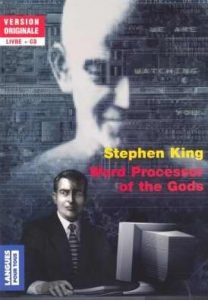
Word Processor of the Gods PDF - Stephen King
Stephen King • science fiction novels • 25 Pages
(0)
Quate
Review
Save
Share
Book Description
Stephen King’s “Word Processor of the Gods” is a fantasy-horror short story, not a full-length novel, first published in the January 1983 issue of Playboy under the original title “The Word Processor.” Its first publisher was Playboy Media Corp., and the story was later collected in King’s 1985 short story collection Skeleton Crew, published by Putnam. Stephen King, one of the most influential American horror writers, uses this compact story to explore wish fulfillment, moral compromise, family resentment, and the dangerous temptation to revise reality itself.
“Word Processor of the Gods” centers on Richard Hagstrom, a middle-aged writer and teacher whose life is marked by disappointment. He feels trapped in an unhappy marriage to his harsh, unpleasant wife, Lina, and alienated from his son, Seth, who treats him with contempt. Richard also carries emotional regret connected to Belinda, a woman he once loved but who married his brother Roger instead. King establishes Richard as a man who has spent years accepting a life that feels wrong, making the story’s supernatural premise both disturbing and psychologically understandable.
The story begins after a tragedy. Richard’s brother Roger, described as abusive and reckless, dies in a drunk-driving accident that also kills Belinda and their kind, intelligent son Jonathan. After Jonathan’s death, Richard receives a homemade word processor the boy had built for him as a birthday gift. The machine is strange, fragile, and assembled from mismatched parts, but it carries a message that reveals Jonathan’s affection for his uncle. This emotional connection gives the device a deeper meaning: it is not only a machine but also the last gift from the one family member Richard truly admired.
Richard soon discovers that the word processor has impossible power. What he types can alter the real world. When he deletes something from the screen, that thing can disappear from existence. When he adds or changes details, reality adjusts around him. At first, Richard tests the machine cautiously, but the discovery quickly becomes a moral crisis. The word processor gives him the ability to correct the parts of life that have caused him pain, but every correction requires him to decide who deserves to remain real and who can be erased.
The plot grows darker when Richard hears his son Seth insulting him. In anger and frustration, Richard deletes Seth from existence. The result is immediate and terrifying: Seth’s room changes, memories and evidence of his life vanish, and the world behaves as though he never existed. This moment is central to the story’s unsettling power. King does not present the machine as a simple magical gift; it exposes the violence hidden inside Richard’s resentment. The fantasy of starting over becomes morally disturbing because Richard’s new freedom depends on removing people from reality.
Richard then turns the same power against Lina. After she returns home and continues to belittle him, he deletes her too. The story pushes its wish-fulfillment premise to an extreme, forcing readers to question whether Richard is a victim escaping misery or a man abusing divine power. The title “Word Processor of the Gods” suggests godlike authority, but King’s treatment of that authority is uneasy. Richard can rewrite existence, yet he is still driven by ordinary human bitterness, loneliness, and regret.
As the machine begins to fail, Richard makes his final changes. He rewrites reality so that Jonathan becomes his son and Belinda becomes his wife. The broken family he lost, or believes he should have had, replaces the family he has erased. The story ends with Richard facing a new version of life in which Jonathan is alive and calls him “Dad.” The ending can be read as comforting, sinister, or both. Richard receives the family he wanted, but the cost is the erasure of his original wife and son.
Stephen King’s “Word Processor of the Gods” is memorable because it turns a simple technological object into a supernatural instrument of desire. Written during the early personal-computer era, the story uses the word processor as a symbol of revision: writers change sentences, but Richard changes lives. Its plot is brief and direct, yet it raises lasting questions about regret, responsibility, and the fantasy of deleting one’s mistakes. As part of Skeleton Crew, it stands among King’s shorter works as a sharp example of how everyday dissatisfaction can become horror when ordinary wishes are granted too completely.
Stephen King
Stephen King is an American author best known for his contributions to the horror, supernatural fiction, and suspense genres. He was born in Portland, Maine in 1947 and began his writing career as a teenager, submitting short stories to various magazines. After graduating from college, King worked as a teacher while continuing to write in his spare time. His breakthrough novel, "Carrie," was published in 1974 and became a bestseller, launching his career as a full-time writer.
King is known for his prolific output, having written over 60 novels and 200 short stories throughout his career. Many of his books have been adapted into successful films and TV series, such as "The Shining," "It," and "The Stand." He has also won numerous awards for his work, including the Bram Stoker Award, the World Fantasy Award, and the National Medal of Arts.
King's writing style is characterized by his ability to create vivid and often terrifying imagery, as well as his focus on exploring the darkest aspects of the human psyche. He has tackled a wide range of subjects in his work, from the supernatural and the paranormal to more grounded themes such as addiction, family dynamics, and the struggles of everyday life.
Despite his success, King has also faced criticism for the often graphic and violent content of his work. Nevertheless, he remains one of the most popular and influential writers of his generation, with legions of fans around the world eagerly awaiting his next release.
In addition to his writing, King has also been an advocate for various causes, including freedom of expression and gun control. He has been active on social media, often sharing his thoughts on current events and engaging with his fans.
Earn Rewards While Reading!
Every 10 pages you read and spent 30 seconds on every page, earns you 5 reward points! Keep reading to unlock achievements and exclusive benefits.
Read
Rate Now
5 Stars
4 Stars
3 Stars
2 Stars
1 Stars
Word Processor of the Gods Quotes
Top Rated
Latest
Quate
Be the first to leave a quote and earn 10 points
instead of 3
Other books by Stephen King
Other books like Word Processor of the Gods
'%20/%3e%3c/svg%3e "Imprisoned with the Pharaohs")
3045
English
Comments
Be the first to leave a comment and earn 5 points
instead of 3