

The source of the book
This book is published for the public benefit under a Creative Commons license, or with the permission of the author or publisher. If you have any objections to its publication, please contact us.
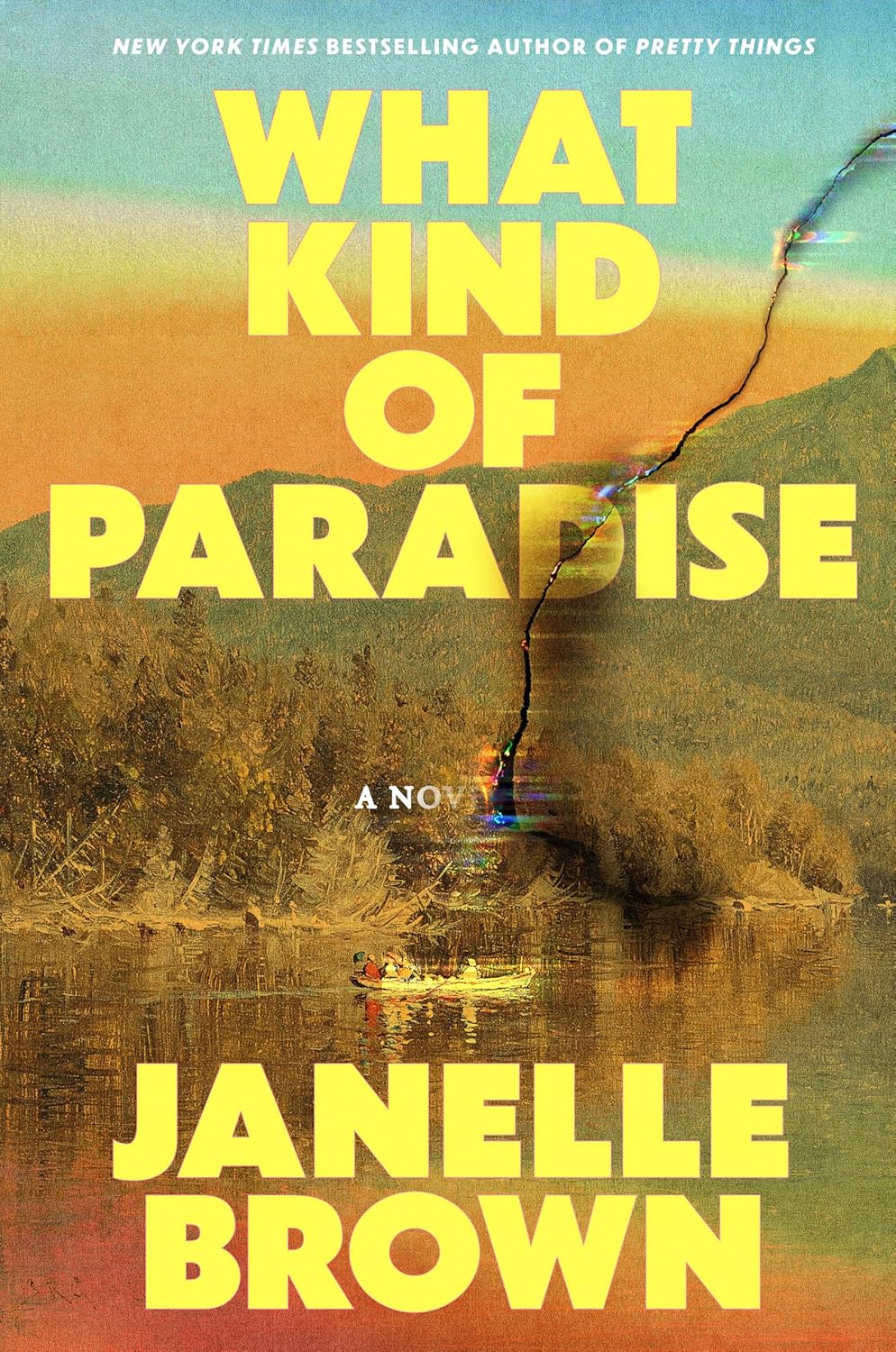
What Kind of Paradise PDF - Janelle Brown
Janelle Brown • Drama novels • 366 Pages
(0)
Quate
Review
Save
Share
Book Description
Discover What Kind of Paradise by Janelle Brown
What Kind of Paradise by Janelle Brown is a compelling work of literary suspense that blends a coming-of-age story, psychological tension, family mystery, and a sharp meditation on the promises and dangers of technology. From the New York Times bestselling author of Pretty Things and Watch Me Disappear, this novel follows Jane, a teenage girl raised in near-total isolation by her father in a remote Montana cabin during the mid-1990s. Her world is small, deliberate, and carefully controlled: a woodstove, a garden, old books, and the powerful influence of a father who has taught her to distrust the society beyond the wilderness. The novel was published by Random House in hardcover on June 3, 2025, and its publisher describes it as a story about parents and children, nature and technology, innocence and knowledge, and the search for self-understanding. (PenguinRandomhouse.com)
A Suspenseful Coming-of-Age Story Set at the Edge of the Internet Age
At the heart of What Kind of Paradise is Jane’s gradual awakening to the possibility that everything she has been told about her life may be incomplete, distorted, or dangerously false. Her father has raised her outside ordinary institutions, replacing school with books of nineteenth-century philosophy and presenting their secluded life as a kind of moral refuge from modern corruption. To Jane, this isolation is not initially strange; it is simply home. Yet as she grows older, curiosity begins to press against obedience, and the outside world becomes more than an abstract threat. It becomes a question, a temptation, and eventually a path toward answers she cannot find in the cabin.
Janelle Brown uses Jane’s journey to explore the fragile line between protection and control. The novel asks what happens when a parent’s worldview becomes a child’s entire reality, and how difficult it can be to separate love from manipulation when the person who has shaped your life is also the person who may have hidden the truth from you. As Jane begins to understand the consequences of her father’s choices, the story moves from the wilderness of Montana toward San Francisco, a city caught in the excitement and uncertainty of the early digital revolution. That shift gives the novel a distinctive atmosphere: part survival story, part family secret mystery, and part portrait of a young woman discovering a world that is both liberating and dangerous.
Family Secrets, Identity, and the Search for Truth
Readers looking for a novel about family secrets, hidden pasts, and emotional suspense will find What Kind of Paradise especially absorbing. Jane’s life is built on stories her father has told her: that they once lived in the Bay Area, that her mother died in a car accident, and that retreating from society was necessary for their survival. These facts form the foundation of Jane’s identity, but the novel gradually reveals how fragile any identity can become when it depends on another person’s version of history. Brown’s storytelling keeps the focus on Jane’s inner transformation, making the mystery not only about what happened in the past, but also about who Jane can become once she begins to question it.
The power of the novel lies in the way it treats discovery as both freedom and loss. Jane’s search for the truth does not simply open doors; it forces her to reconsider loyalty, guilt, memory, and belief. Her father is not presented as a simple figure of menace, and Jane is not written as someone who can instantly discard the world that made her. Instead, What Kind of Paradise creates tension through emotional complexity. It recognizes that love can exist alongside deception, that devotion can become complicity, and that growing up often means learning to live with questions that do not resolve cleanly.
Nature, Technology, and the Meaning of Paradise
One of the most distinctive elements of What Kind of Paradise is its contrast between the natural world and the emerging digital world of the 1990s. Jane’s childhood in Montana evokes a rough, self-sufficient life shaped by physical labor, silence, books, and the rhythms of the land. Her father imagines this life as a kind of paradise, a place outside surveillance, consumer culture, and technological dependence. But Brown complicates that idea by showing how isolation can also become a prison, especially when one person controls what another person is allowed to know.
When Jane reaches San Francisco, the novel enters a world of new possibility: the early internet, technological optimism, and the belief that connection might remake society. Yet What Kind of Paradise does not treat technology as a simple solution to isolation. Instead, it examines both the thrill and the danger of a world suddenly expanding through screens, networks, and information. This makes the book especially resonant for contemporary readers, because its 1990s setting reflects questions that feel even more urgent today: Who controls knowledge? What do we sacrifice in the name of progress? Can technology help us discover the truth, or does it create new ways to distort it?
Why Readers Are Drawn to What Kind of Paradise
This novel will appeal to readers who enjoy thoughtful psychological suspense, literary fiction with mystery elements, and emotionally layered stories about identity, memory, and family. It has the momentum of a page-turner, but its deeper appeal comes from the questions it leaves behind. Jane’s story is suspenseful because the reader wants to know what really happened, but it is memorable because the answers challenge easy assumptions about innocence, responsibility, and self-invention.
Fans of Janelle Brown’s previous novels will recognize her interest in deception, reinvention, privilege, and the stories people tell in order to survive. In What Kind of Paradise, those familiar themes are placed in a new and expansive setting, moving between an off-grid childhood and a society on the brink of digital transformation. Brown writes with sensitivity toward Jane’s limited understanding of the world, allowing the reader to experience both her vulnerability and her growing strength. The result is a novel that feels intimate and wide-ranging at once, anchored in one young woman’s life while asking larger questions about family, technology, and the future.
A Powerful Novel for Readers of Literary Suspense
What Kind of Paradise is more than a story about escaping an isolated cabin or uncovering a buried family secret. It is a novel about the worlds people build to protect themselves, the myths families create to explain pain, and the courage required to question the only truth you have ever known. Its blend of coming-of-age fiction, psychological suspense, and social reflection makes it a strong choice for readers who want a gripping story with emotional depth and contemporary relevance.
For anyone searching for a Janelle Brown novel, a suspenseful book about a young woman discovering her past, or a literary thriller that explores the relationship between nature, technology, and identity, What Kind of Paradise offers a rich and thought-provoking reading experience. Through Jane’s journey from isolation toward knowledge, Brown creates a story about the cost of hidden truths and the difficult freedom of choosing one’s own life.
Janelle Brown
Janelle Brown is an American novelist, essayist, and journalist whose work has become closely associated with literary suspense, psychological drama, and sharply observed stories about family, identity, privilege, deception, and reinvention. She is best known as the New York Times bestselling author of What Kind of Paradise, I’ll Be You, Pretty Things, Watch Me Disappear, All We Ever Wanted Was Everything, and This Is Where We Live, novels that combine page-turning plots with an unusually strong interest in social detail and emotional consequence. Her books have been translated into more than two dozen languages, and her readership extends well beyond the United States, in part because her themes are recognizable across cultures: the desire to belong, the danger of secrets, the instability of wealth, the performance of success, and the complicated loyalties that bind families even when trust has broken down. Brown’s fiction is often described as suspenseful, but her appeal is broader than the thriller label alone. She writes mysteries that are also character studies, domestic dramas that carry the energy of crime fiction, and social novels that understand how technology, celebrity, class, and ambition shape private life. In Pretty Things, she explores the world of influencers, inherited wealth, manipulation, and revenge, using a glamorous surface to reveal a darker story about envy, loss, and self-invention. In Watch Me Disappear, the disappearance of a mother in the wilderness becomes a meditation on grief, memory, marriage, and the stories families tell in order to survive. I’ll Be You turns toward twin sisters, former child performers, addiction, wellness culture, and the seductive danger of closed communities, while What Kind of Paradise follows a young woman emerging from isolation into a world shaped by the early internet, family secrecy, and the search for personal freedom. Brown’s earlier novels also show her interest in American aspiration and instability, especially the way success can expose rather than solve emotional problems. Before becoming widely known as a novelist, Janelle Brown built a substantial career in journalism and essays. Her writing has appeared in major publications including The New York Times, Vogue, Elle, Wired, Self, Real Simple, the Los Angeles Times, and Salon. She previously worked as a senior writer at Salon and began her career at Wired during the dot-com boom, an experience that helps explain her alertness to technology, media, and the cultural moods of a changing America. A native of San Francisco and a graduate of UC Berkeley, she later made Los Angeles her home, and the city’s atmosphere of performance, ambition, reinvention, and illusion often seems to inform the emotional landscape of her fiction. Brown has received the American Library Association’s Alex Award, and several of her novels have been developed or considered for television, a natural fit for stories built around vivid scenes, layered secrets, and dramatic reversals. For readers seeking contemporary fiction that is accessible without being shallow, suspenseful without relying only on shock, and socially aware without losing narrative pleasure, Janelle Brown offers a distinctive voice. Her novels invite readers to keep turning pages while also asking deeper questions about who people become when the identities they have constructed begin to collapse.
Earn Rewards While Reading!
Every 10 pages you read and spent 30 seconds on every page, earns you 5 reward points! Keep reading to unlock achievements and exclusive benefits.
Read
Rate Now
5 Stars
4 Stars
3 Stars
2 Stars
1 Stars
What Kind of Paradise Quotes
Top Rated
Latest
Quate
Be the first to leave a quote and earn 10 points
instead of 3
'%20/%3e%3c/svg%3e "Pretty Things")
Comments
Be the first to leave a comment and earn 5 points
instead of 3