

The source of the book
This book is published for the public benefit under a Creative Commons license, or with the permission of the author or publisher. If you have any objections to its publication, please contact us.
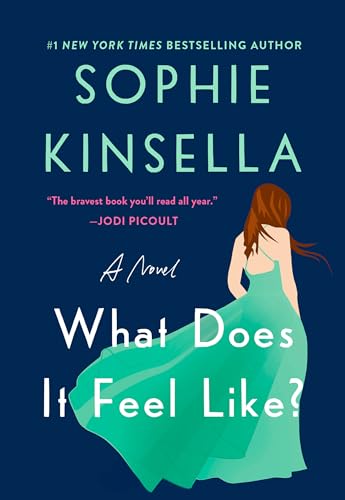
What Does It Feel Like? PDF - Sophie Kinsella
Sophie Kinsella • romantic novels • 92 Pages
(0)
Quate
Review
Save
Share
Book Description
What Does It Feel Like? by Sophie Kinsella is a deeply moving, intimate, and life-affirming novella from the beloved bestselling author best known for her warmth, wit, emotional honesty, and unforgettable contemporary fiction. Published as a short 144-page work, the book follows Eve, a successful novelist who wakes in a hospital bed with no memory of how she arrived there, only to learn that she has undergone surgery to remove a malignant brain tumour. Though written as fiction, Sophie Kinsella described the book as her most autobiographical work, giving this story a rare emotional closeness and sincerity.
At the heart of the novel is Eve’s attempt to understand a life suddenly changed by illness, uncertainty, memory, fear, love, and recovery. As she learns again how to walk, talk, and write, she must also face the harder questions that come with a devastating diagnosis: how to speak to the people she loves, how to hold on to ordinary moments, and how to make sense of a future that no longer feels predictable. The result is not a conventional medical drama, but a tender and beautifully controlled story about what remains meaningful when life is stripped back to its essentials.
A Personal and Unforgettable Story of Illness, Memory, and Love
In What Does It Feel Like?, Sophie Kinsella turns a frightening experience into a work of fiction that feels honest, compassionate, and quietly courageous. Eve’s journey begins with confusion and physical vulnerability, but the story soon becomes much more than a diagnosis. Through brief, carefully shaped scenes, the novella explores the emotional landscape of illness: the shock of waking into a changed reality, the effort of recovery, the strange gaps in memory, and the fragile courage required to ask difficult questions.
What makes this book especially affecting is the way it balances pain with tenderness. Eve’s illness is central to the story, yet the book never reduces her to that illness. She remains a wife, a mother, a writer, a woman with memories, longings, humour, fears, and flashes of delight. Kinsella’s writing pays attention to the small details that give life texture: a walk with a loved one, a family evening, a remembered conversation, a dress that catches the eye, the familiar gestures that become precious when everything else feels uncertain.
The Reading Experience: Brief, Honest, and Emotionally Powerful
Readers looking for a short emotional novel, a life-affirming novella, or a Sophie Kinsella book about illness and hope will find that this work offers a different but unmistakably authentic side of the author’s voice. It is concise, but not slight; simple in structure, but rich in feeling. The story is told through brief anecdotes and moments of reflection, giving the book an almost fragmentary rhythm that mirrors Eve’s experience of recovery, memory, and emotional processing.
This structure allows the novel to move quickly while still leaving a strong impression. Instead of overwhelming the reader with exposition, Kinsella builds meaning through selected moments, allowing love, grief, fear, humour, and gratitude to sit beside one another. The result is a book that can be read in a short time but remembered for much longer. It is emotionally direct without being sentimental, gentle without avoiding pain, and hopeful without pretending that everything is easy.
Sophie Kinsella’s Voice in a New Emotional Register
Sophie Kinsella is widely associated with romantic comedy, contemporary women’s fiction, and the internationally popular Shopaholic novels, but What Does It Feel Like? reveals the same gift for human observation in a more intimate and reflective form. The humour here is quieter, the stakes are more personal, and the emotional tone is more vulnerable, yet Kinsella’s familiar warmth remains present throughout. Her ability to notice the absurd, tender, and human details of difficult situations gives the book its special balance.
For long-time readers of Sophie Kinsella, this novella may feel both surprising and deeply recognizable. It does not rely on the sparkling comic momentum that made many of her earlier novels so popular, but it carries the same compassion for imperfect, frightened, loving people trying to find their way through life. For new readers, it offers a powerful introduction to her emotional range and to the clarity of her storytelling.
Themes of Recovery, Family, Grief, and Hope
One of the central themes of What Does It Feel Like? is the search for meaning after life has been interrupted. Eve’s diagnosis forces her to reconsider what matters most, not in abstract terms but through the concrete realities of family, memory, language, movement, and daily love. The novel asks what it feels like to lose control, to depend on others, to be afraid, and still to notice beauty. It asks how a person continues to live when certainty disappears, and how love can become both an anchor and a source of courage.
The book also speaks to readers interested in fiction about brain tumour diagnosis, serious illness, family resilience, grief, and healing. Yet it approaches these subjects with sensitivity rather than melodrama. Eve’s story is not presented as a lesson or a neat inspirational message. Instead, it becomes a meditation on endurance, honesty, and the emotional power of ordinary life. This makes the novella especially meaningful for readers who value reflective contemporary fiction with real emotional weight.
Who Should Read What Does It Feel Like?
What Does It Feel Like? by Sophie Kinsella is ideal for readers who appreciate moving literary fiction, contemporary women’s fiction, autobiographical fiction, and short novels that explore illness, love, and resilience with grace. It will appeal to fans of books that combine emotional honesty with accessible storytelling, as well as to readers looking for a heartfelt book about family, memory, and finding hope during a frightening time.
It is also a meaningful choice for book clubs, because its brevity makes it approachable while its themes open the door to rich discussion. Readers may find themselves reflecting on how people speak about illness, how families protect one another, how humour survives in dark moments, and how a writer can transform personal experience into fiction that reaches beyond the self. The book’s emotional clarity makes it suitable for anyone seeking a story that is tender, brave, and deeply human.
A Tender Celebration of Life in the Face of Uncertainty
More than a story about illness, What Does It Feel Like? is a celebration of love, memory, family, and the fragile beauty of being alive. Sophie Kinsella writes with restraint and compassion, shaping Eve’s experience into a novella that is painful, warm, funny in flashes, and profoundly moving. It is a book about fear, but also about connection; about grief, but also about gratitude; about vulnerability, but also about the quiet strength found in the people and moments we hold closest.
For readers searching for What Does It Feel Like? by Sophie Kinsella, this is a brief but unforgettable work that captures a deeply personal journey with honesty and tenderness. It stands as one of Kinsella’s most intimate books, offering a reflective reading experience that stays with the heart long after the final page.
Sophie Kinsella
Sophie Kinsella was the internationally bestselling pen name of British author Madeleine Wickham, a writer whose warm comic voice helped define contemporary romantic comedy fiction for a global readership. Best known for the Shopaholic series and its unforgettable heroine Becky Bloomwood, Kinsella built a literary world in which everyday anxieties about money, work, love, family, social image, and self-worth became the raw material for bright, fast-moving, emotionally generous novels. Becky Bloomwood, a financial journalist who is wonderfully bad at managing her own finances, remains one of modern commercial fiction’s most recognizable comic heroines: impulsive, imaginative, flawed, lovable, and resilient. Before adopting the name Sophie Kinsella, the author published fiction as Madeleine Wickham, including The Tennis Party, A Desirable Residence, Swimming Pool Sunday, The Gatecrasher, The Wedding Girl, Cocktails for Three, and Sleeping Arrangements. Those earlier novels often used ensemble casts and a slightly sharper social tone, while the Kinsella books became known for first-person immediacy, quick wit, romantic mishaps, and heroines who stumble into chaos while still searching honestly for happiness. Her first Shopaholic novel, The Secret Dreamworld of a Shopaholic, also known in some markets as Confessions of a Shopaholic, introduced the rhythm that would make her famous: comedy driven by embarrassment, letters, secrets, debt, denial, and the hopeful belief that life can always be repaired. The series grew into ten novels and became a major brand in women’s commercial fiction, with the early books adapted into the 2009 film Confessions of a Shopaholic, starring Isla Fisher as Becky. Beyond Shopaholic, Kinsella wrote many popular standalone novels, including Can You Keep a Secret?, The Undomestic Goddess, Remember Me?, Twenties Girl, I’ve Got Your Number, Wedding Night, My Not So Perfect Life, Surprise Me, I Owe You One, The Party Crasher, and The Burnout. She also wrote the young adult novel Finding Audrey, a sensitive and humorous story about social anxiety and recovery, and the children’s series Mummy Fairy and Me, showing her ability to adapt her playful imagination for younger readers. Kinsella’s fiction is often described as light, but its lasting appeal comes from something sturdier than lightness: a deep understanding of embarrassment, aspiration, insecurity, and the small private dramas that shape ordinary lives. Her books offer pace, charm, romance, and laughter, yet they also explore the pressure to appear successful, the fear of failure, the bonds between friends and sisters, the absurdity of consumer culture, and the complicated courage required to be oneself. Her prose is accessible without being careless, comic without being cruel, and optimistic without denying difficulty. In her later work, especially What Does It Feel Like?, written after her brain cancer diagnosis, Kinsella brought a more reflective tenderness to themes of illness, motherhood, memory, fear, and love, while retaining the humanity and hope that readers associated with her name. Sophie Kinsella died in 2025, leaving behind more than thirty books for adults, teenagers, and children, along with a devoted international readership. Her legacy lies in making popular fiction feel personal, intelligent, funny, and emotionally restorative, and in creating heroines whose imperfections made readers feel less alone.
Earn Rewards While Reading!
Every 10 pages you read and spent 30 seconds on every page, earns you 5 reward points! Keep reading to unlock achievements and exclusive benefits.
Read
Rate Now
5 Stars
4 Stars
3 Stars
2 Stars
1 Stars
What Does It Feel Like? Quotes
Top Rated
Latest
Quate
Be the first to leave a quote and earn 10 points
instead of 3
'%20/%3e%3c/svg%3e "Confessions of a Shopaholic")
Comments
Be the first to leave a comment and earn 5 points
instead of 3