

The source of the book
This book is published for the public benefit under a Creative Commons license, or with the permission of the author or publisher. If you have any objections to its publication, please contact us.
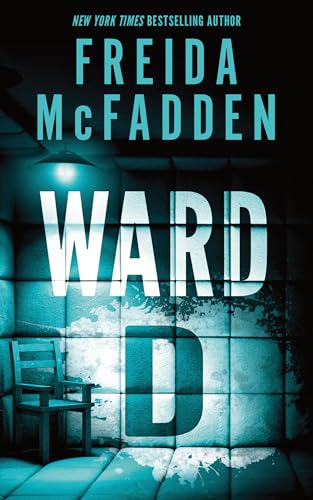
Ward D PDF - Freida McFadden
Freida McFadden • Drama novels • 320 Pages
(0)
Author
Freida McFaddenCategory
literatureSection
Number Of Downloads
8
Number Of Reads
109
File Size
1.33 MB
Views
143
Quate
Review
Save
Share
Book Description
Ward D by Freida McFadden is a tense, fast-moving psychological thriller that places the reader inside one of the most unsettling settings imaginable: a locked hospital psychiatric ward during an overnight shift. The novel follows Amy Brenner, a medical student who is required to spend the night on Ward D, the hospital’s inpatient mental health unit, even though she has deeply personal reasons for dreading this rotation. As the hours pass, the ward becomes more frightening, the atmosphere grows more claustrophobic, and Amy begins to suspect that something terrible is happening behind its tightly secured doors. When people inside the unit begin to vanish, the night turns into a fight for survival.
A gripping psychological thriller set over one terrifying night
The power of Ward D comes from its simple but highly effective premise: Amy only has to make it through one night. That single night, however, becomes a countdown filled with fear, suspicion, hidden motives, and unanswered questions. Freida McFadden uses the structure of an overnight hospital rotation to create immediate tension. The setting is limited, the doors are locked, and the sense of escape is almost completely removed. This gives the novel the sharp pressure of a locked-room thriller, where every sound, every missing person, and every strange interaction feels important.
Rather than relying only on external danger, the novel builds suspense through uncertainty. Amy is not simply afraid of the ward; she is also afraid of what the ward may force her to remember. The story suggests that her fear is connected to a past she has tried hard to bury, which gives the plot an emotional layer beneath the surface-level mystery. This makes Ward D more than a hospital thriller. It is also a story about memory, trauma, guilt, and the terrifying feeling of being trapped in a place where the past and present begin to collide.
Medical suspense with emotional and psychological pressure
As a medical suspense novel, Ward D benefits from Freida McFadden’s ability to make clinical spaces feel tense, unfamiliar, and unpredictable. Hospitals are usually associated with care, structure, and professional control, but in this story, the hospital becomes a place of confinement and fear. The locked ward creates a constant sense of vulnerability because Amy cannot simply walk away from what is happening. She must stay alert, follow the rules of her rotation, interact with patients and staff, and try to understand whether the danger comes from outside, inside, or somewhere much closer than she wants to believe.
The novel’s hospital setting also adds a distinctive edge to its suspense. Ward D is not just a background location; it shapes the entire reading experience. The corridors, secured doors, patient rooms, medical routines, and night-shift atmosphere all contribute to the feeling that Amy has entered a world with its own rules. Freida McFadden turns that environment into a pressure chamber, where professional responsibility, personal fear, and survival instinct all collide. For readers who enjoy medical thrillers, psychological suspense, and stories set in high-stakes institutional spaces, this setting gives the book a strong and memorable identity.
A heroine caught between duty, fear, and buried secrets
Amy Brenner is at the center of the novel’s tension because she is not entering Ward D as an outsider with complete freedom. She is a medical student, and the overnight shift is part of what she must complete. That obligation matters because it keeps her inside the ward even when her instincts tell her she should not be there. The fear she feels is not random or exaggerated; it is tied to something personal, something she does not want others to know. This creates an immediate question for the reader: what happened to Amy, and why does Ward D feel so dangerous to her before the night has even begun?
This emotional uncertainty makes Amy a compelling thriller protagonist. She is vulnerable, but she is also observant. She is afraid, but she still has to function. She is surrounded by people whose motives she cannot fully understand, while also carrying secrets of her own. Freida McFadden often writes characters who are placed in situations where trust becomes nearly impossible, and Ward D uses that dynamic very effectively. Amy must decide whom to believe, what to report, what to hide, and how much she can trust her own interpretation of events.
Themes of trust, perception, and survival
One of the strongest themes in Ward D is the instability of trust. In a locked environment, every person becomes important. Staff members, patients, doctors, and students all occupy the same confined space, but the reader is never allowed to feel fully certain about anyone. This kind of suspense works because it keeps shifting the reader’s attention. A harmless detail may become disturbing later. A suspicious character may seem vulnerable. A professional figure may appear reassuring, then suddenly less certain. The novel invites readers to question appearances without giving away answers too quickly.
Another important theme is perception. Amy’s experience inside Ward D is shaped by fear, memory, exhaustion, and the strange isolation of the night shift. The longer the night continues, the harder it becomes to separate reasonable concern from panic. This is where Freida McFadden’s style is especially effective. She writes suspense in a way that makes the reader feel close to the character’s confusion and urgency. The danger is not only in what might happen next, but also in not knowing what is already happening and who might be controlling the truth.
The theme of survival also drives the novel forward. At first, Amy’s goal seems simple: complete the required rotation and leave in the morning. But as the situation becomes more alarming, survival takes on a more literal and urgent meaning. The shift from professional duty to personal danger gives the novel its momentum. The reader watches as an ordinary academic requirement becomes a nightmare, and that transformation is one of the reasons Ward D works so well as a page-turning thriller.
Why readers of Freida McFadden will be drawn to Ward D
Readers who enjoy Freida McFadden’s thrillers often look for short chapters, quick pacing, secrets, unreliable impressions, and twists that change the meaning of earlier scenes. Ward D fits that expectation while also offering a distinctive medical setting. It is a strong choice for readers who liked the tension of closed spaces, the discomfort of characters who cannot simply leave, and the emotional pressure of a protagonist forced to confront what she has tried to avoid. The novel combines the appeal of a locked-room mystery, a medical thriller, and a psychological suspense story in one tightly focused plot.
The book is also appealing because it does not depend on a large cast or a sprawling setting to create fear. Instead, its suspense grows from confinement. The limited location makes every interaction feel more intense. The passing hours create a countdown effect. The disappearing people raise the stakes. Amy’s hidden past adds emotional weight. Together, these elements produce the kind of reading experience that keeps readers turning pages quickly, searching for clues, and second-guessing every explanation.
About Freida McFadden’s thriller style
Freida McFadden is widely known for bestselling psychological thrillers and suspense novels that are accessible, twist-driven, and highly addictive. Publisher profiles describe her as a New York Times, Sunday Times, USA Today, Publishers Weekly, and internationally bestselling author, as well as a physician whose novels have been translated into more than forty languages. She has also won the International Thriller Writers Award for Best Paperback Original and the Goodreads Choice Award for Best Thriller.
Her background as a physician gives particular interest to books like Ward D, where the hospital setting and psychological tension work closely together. McFadden’s writing style is direct and propulsive, designed to pull the reader into the story quickly and keep the suspense active from chapter to chapter. She does not slow the plot with unnecessary detail; instead, she uses clear scenes, tense dialogue, hidden information, and carefully placed revelations to maintain momentum. In Ward D, that style matches the premise perfectly because the entire novel depends on pressure, timing, and the fear that something inside the ward is terribly wrong.
A tense and memorable choice for psychological thriller readers
Ward D is a compelling choice for readers who want a dark hospital thriller, a locked-room psychological thriller, or a suspense novel built around one night of escalating danger. It offers a strong central character, an eerie setting, a controlled atmosphere, and the kind of mystery that depends on both external threat and internal fear. Without revealing the twists, the novel promises a reading experience shaped by secrets, disappearing people, emotional tension, and the growing realization that Amy Brenner may not understand the true danger until it is too late.
For readers looking for a Freida McFadden book with a medical setting, a claustrophobic mood, and a fast-paced survival premise, Ward D delivers a suspenseful story that turns a required hospital rotation into a nightmare behind locked doors. It is a novel about fear, memory, trust, and the terrifying possibility that the safest-looking institutions can hide the darkest secrets.
Freida McFadden
Freida McFadden is an American author best known for psychological thrillers, domestic suspense, mystery fiction, and fast-paced novels built around secrets, deception, and startling twists. She writes under the name Freida McFadden, while her real name, Sara Cohen, became public after years of reader curiosity about the identity behind the bestselling pen name. Her background is unusually distinctive because she is not only a novelist but also a physician who specializes in brain injury and brain disorders, a professional experience that gives many of her stories a sharp awareness of fear, memory, perception, and the fragile line between trust and suspicion. Her official biography and publisher profiles describe her as a number one bestselling author whose books have appeared on major bestseller lists, won the International Thriller Writers Award for Best Paperback Original and the Goodreads Choice Award for Best Thriller, and have been translated into more than forty languages.
What makes Freida McFadden especially recognizable is her ability to turn ordinary places into sources of dread. Her novels often begin with situations that feel familiar: a new job, a marriage, a locked room, a suburban home, a patient, a colleague, a neighbor, or a person trying to start over. From that accessible beginning, she gradually reveals layers of manipulation, hidden motives, buried trauma, and moral uncertainty. This approach has made her a favorite among readers who enjoy psychological suspense, twisty thrillers, domestic secrets, unreliable narrators, and stories where every chapter raises a new question. Her books are not usually slow literary mysteries; they are designed to pull the reader forward, making each page feel connected to a larger secret waiting to be exposed.
Among her most widely known works are The Housemaid, The Housemaid’s Secret, The Housemaid Is Watching, Never Lie, The Locked Door, The Inmate, Ward D, The Coworker, The Teacher, The Boyfriend, The Tenant, and The Intruder. The Housemaid became a defining title in her career because it introduced many readers to her signature blend of claustrophobic setting, social tension, domestic unease, and dramatic reversal. The success of that novel helped establish her as a major name in contemporary commercial thriller fiction, especially among readers who want accessible storytelling, short chapters, fast escalation, and endings that force them to reconsider what they believed about the characters.
McFadden’s style is direct, energetic, and intensely readable. She tends to favor clear sentences, quick scenes, and narrative momentum over dense description. This gives her books a strong page-turning quality and makes them especially appealing to readers who want suspense that begins quickly and keeps moving. At the same time, her stories often explore deeper anxieties: the fear of not being believed, the danger of trusting the wrong person, the pressure of secrets inside families, the social masks people wear, and the psychological consequences of being trapped in a situation with no obvious escape. Her medical background adds another layer to this tension, particularly in books involving hospitals, memory, mental instability, or the unsettling uncertainty of whether a character can trust their own mind.
A key part of her appeal is her understanding of reader expectation. Freida McFadden knows that fans of psychological thrillers want surprise, but they also want emotional stakes. Her plots often work because the suspense is tied to recognizable human fears: losing a home, losing a child, being framed, being watched, being lied to, or discovering that the person closest to you is not who they appeared to be. She writes stories that can be enjoyed for entertainment, but they also tap into the discomfort of modern life, where safety, identity, and truth can all feel unstable. This balance between entertainment and unease has helped her books spread widely through book clubs, online recommendations, audiobook platforms, and reader communities.
In the larger landscape of contemporary thrillers, Freida McFadden stands out as an author who combines professional discipline, medical insight, and a precise instinct for suspense. Her novels are popular because they are easy to enter, difficult to put down, and structured around the pleasure of discovery. She gives readers the feeling that every detail might matter, every character might be hiding something, and every calm scene might be preparing the next shock. For anyone looking for modern psychological thrillers with domestic tension, fast pacing, readable prose, and memorable twists, Freida McFadden has become one of the most important and widely read names in the genre.
Earn Rewards While Reading!
Every 10 pages you read and spent 30 seconds on every page, earns you 5 reward points! Keep reading to unlock achievements and exclusive benefits.
Read
Rate Now
5 Stars
4 Stars
3 Stars
2 Stars
1 Stars
Ward D Quotes
Top Rated
Latest
Quate
Be the first to leave a quote and earn 10 points
instead of 3
'%20/%3e%3c/svg%3e "The Housemaid")
Comments
Be the first to leave a comment and earn 5 points
instead of 3