

The source of the book
This book is published for the public benefit under a Creative Commons license, or with the permission of the author or publisher. If you have any objections to its publication, please contact us.
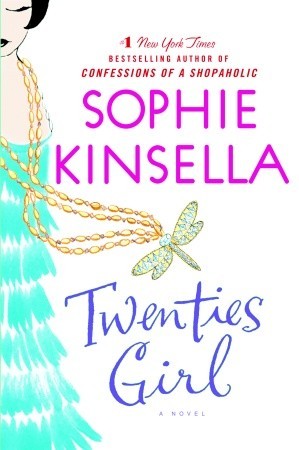
Twenties Girl PDF - Sophie Kinsella
Sophie Kinsella • romantic novels • 417 Pages
(0)
Quate
Review
Save
Share
Book Description
Twenties Girl by Sophie Kinsella is a charming and spirited contemporary novel that blends romantic comedy, women’s fiction, family mystery, and a light supernatural twist into one irresistibly readable story. Known for her warm humor, sharp dialogue, and gift for creating lovable heroines in chaotic situations, Sophie Kinsella brings readers a novel that feels playful on the surface yet surprisingly touching at its heart. This is a story about grief, love, friendship, self-discovery, and the unexpected ways the past can interrupt the present when someone still has unfinished business.
At the center of the novel is Lara Lington, a modern twenty-something woman trying to hold her life together while everything around her seems to be falling apart. Her career is uncertain, her personal life is messy, and her heart is still bruised after a painful breakup. Then, at the funeral of her great-aunt Sadie, Lara encounters something she never imagined: the ghost of Sadie herself, not as the elderly woman the family barely knew, but as a bold, demanding, glamorous young flapper from the 1920s. Sadie refuses to be ignored, and she has one urgent request: Lara must help her find a missing dragonfly necklace that means everything to her.
A Sophie Kinsella Novel Full of Humor, Heart, and Sparkling Chaos
Readers looking for a funny Sophie Kinsella book will find plenty to enjoy in Twenties Girl. The novel has the lively comic energy that makes Kinsella’s fiction so appealing: awkward public scenes, rapid-fire conversations, emotional misunderstandings, and a heroine whose life becomes more complicated every time she tries to regain control. Lara’s reactions to being haunted are both hilarious and relatable, especially because Sadie is not a quiet or mysterious ghost. She is opinionated, impatient, stylish, dramatic, and determined to get what she wants.
The comedy comes not only from the supernatural premise but also from the clash between two very different young women from two very different eras. Lara is a twenty-first-century woman dealing with modern anxieties, career pressure, family expectations, and heartbreak. Sadie is a dazzling voice from the Jazz Age, full of confidence, mischief, and old-fashioned glamour. Their unlikely partnership gives the novel much of its sparkle, creating a fresh and entertaining contrast between contemporary life and the exuberant spirit of the 1920s.
Yet beneath the humor, Twenties Girl has genuine emotional depth. The story gradually becomes more than a ghostly treasure hunt. As Lara spends more time with Sadie, she begins to see her great-aunt not as a distant family obligation, but as a person who once had dreams, secrets, disappointments, and passionate memories of her own. Through this unusual friendship, the novel explores how easily older people can be reduced to a few family facts, and how much richness can be lost when their stories are forgotten.
A Modern Woman’s Journey Through Love, Loss, and Self-Discovery
One of the strongest elements of Twenties Girl by Sophie Kinsella is Lara’s personal journey. At the beginning of the novel, she is stuck in a difficult emotional place. Her business is struggling, her confidence is fragile, and she is still attached to an ex-boyfriend who may not deserve the space he occupies in her mind. Lara is imaginative, impulsive, romantic, and sometimes painfully unsure of herself, which makes her an engaging heroine for readers who enjoy character-driven romantic comedy.
Sadie’s arrival disrupts Lara’s life in the most inconvenient way possible, but it also gives her a strange new direction. The search for the necklace pulls Lara out of her own worries and forces her to look beyond her immediate heartbreak. What begins as an unwanted mission slowly becomes a path toward clarity, courage, and a fuller understanding of love. The novel gently asks whether holding on is always romantic, whether moving forward can be an act of strength, and whether the stories we inherit from family can change how we understand ourselves.
For readers who enjoy books about self-discovery, starting over, and finding confidence after heartbreak, this novel offers a satisfying emotional arc without becoming heavy or overly sentimental. Kinsella keeps the tone bright and accessible, but she also allows Lara’s growth to feel meaningful. The humor never cancels out the heart; instead, it makes the emotional moments feel warmer and more human.
The Glamour of the 1920s Meets Contemporary Romantic Comedy
The title Twenties Girl works beautifully because it points in two directions at once. Lara is a woman in her twenties navigating modern life, while Sadie represents the dazzling world of the 1920s, with its flapper style, dancing, glamour, romance, and rebellion. This dual meaning gives the novel a distinctive atmosphere, making it appealing to readers searching for 1920s-inspired fiction, light ghost stories, or romantic comedy novels with a vintage twist.
Sadie’s presence brings energy and color to the story. She is fascinated, irritated, and amused by the modern world, while Lara is gradually drawn into Sadie’s memories and values. The result is a lively mixture of past and present, where fashion, music, family secrets, and romance all play a role. Kinsella uses the 1920s not as a dense historical setting, but as a sparkling emotional contrast to Lara’s contemporary problems. The past feels close, vivid, and personal, especially as Lara begins to understand that Sadie’s missing necklace is connected to something deeper than a piece of jewelry.
This blend of eras gives Twenties Girl a unique place among Sophie Kinsella’s standalone novels. It has the familiar warmth and wit of her best-loved romantic comedies, but the ghost-story element adds mystery and emotional resonance. Readers who enjoy feel-good fiction with a touch of the supernatural will appreciate how the novel keeps the paranormal aspect light, funny, and character-focused rather than dark or frightening.
An Unlikely Friendship at the Heart of the Story
Although Twenties Girl includes romance, comedy, and mystery, its emotional center is the relationship between Lara and Sadie. Their bond begins with frustration and disbelief, but it gradually develops into one of the novel’s most rewarding elements. Sadie pushes Lara into situations she would never choose on her own, while Lara slowly becomes more invested in Sadie’s story and more protective of her memory. They argue, scheme, embarrass each other, and challenge each other, but their connection becomes increasingly tender.
This makes the novel especially appealing to readers who enjoy friendship stories between women, intergenerational themes, and books that explore how one person can change another’s life in unexpected ways. Lara and Sadie may come from different centuries, but they share longing, pride, vulnerability, and a desire to be truly seen. Through their relationship, Kinsella creates a story about the importance of listening to the lives that came before ours and recognizing the humanity behind family history.
The novel also offers a thoughtful reminder that youth, beauty, ambition, and heartbreak are not limited to one generation. Sadie may appear as a young flapper, but her story forces Lara to think differently about age, memory, and the way families preserve or neglect the past. This gives the book a surprisingly poignant layer and makes it more than a simple romantic comedy.
Who Should Read Twenties Girl?
Twenties Girl by Sophie Kinsella is an excellent choice for readers who love lighthearted women’s fiction, contemporary romance, romantic comedy, chick lit, humorous fiction, and uplifting novels with emotional depth. It is especially well suited to fans of books that combine laughter with tenderness, offering an entertaining plot while still exploring meaningful themes of love, family, identity, and letting go.
Fans of Sophie Kinsella’s other novels will recognize her signature style: a relatable heroine, sparkling comic timing, embarrassing situations, romantic complications, and a story that moves quickly while remaining emotionally satisfying. Readers new to Kinsella may find Twenties Girl a wonderful introduction to her standalone fiction because it captures her warmth and humor while adding an inventive ghostly premise.
This book is also a strong choice for readers who want a novel that feels escapist without being empty. The story is easy to enjoy, but it also leaves room for reflection on family secrets, old love stories, missed chances, and the importance of living boldly. It is a novel for anyone who has ever felt stuck, underestimated, heartbroken, or unsure of the next step, and who enjoys seeing a heroine stumble her way toward strength with humor and heart.
A Feel-Good Novel About the Past, the Present, and Learning to Live Fully
At its heart, Twenties Girl is a novel about connection: between generations, between past and present, between romance and self-respect, and between the person we think we are and the person we might become. Sophie Kinsella turns an unusual ghost-story premise into a warm, funny, and emotionally generous reading experience. The search for Sadie’s necklace gives the plot momentum, but the real treasure of the novel lies in the growing friendship between Lara and Sadie and in the way their shared adventure changes both of their stories.
With its blend of humor, romance, family mystery, 1920s glamour, and heartfelt self-discovery, Twenties Girl by Sophie Kinsella is a delightful and memorable read for anyone who enjoys contemporary fiction with personality and charm. It is witty enough to make readers laugh, tender enough to stay with them, and imaginative enough to stand out among modern romantic comedies. For readers searching for a feel-good book with emotional warmth and a sparkling supernatural twist, Twenties Girl offers a lively, touching, and thoroughly enjoyable escape.
Sophie Kinsella
Sophie Kinsella was the internationally bestselling pen name of British author Madeleine Wickham, a writer whose warm comic voice helped define contemporary romantic comedy fiction for a global readership. Best known for the Shopaholic series and its unforgettable heroine Becky Bloomwood, Kinsella built a literary world in which everyday anxieties about money, work, love, family, social image, and self-worth became the raw material for bright, fast-moving, emotionally generous novels. Becky Bloomwood, a financial journalist who is wonderfully bad at managing her own finances, remains one of modern commercial fiction’s most recognizable comic heroines: impulsive, imaginative, flawed, lovable, and resilient. Before adopting the name Sophie Kinsella, the author published fiction as Madeleine Wickham, including The Tennis Party, A Desirable Residence, Swimming Pool Sunday, The Gatecrasher, The Wedding Girl, Cocktails for Three, and Sleeping Arrangements. Those earlier novels often used ensemble casts and a slightly sharper social tone, while the Kinsella books became known for first-person immediacy, quick wit, romantic mishaps, and heroines who stumble into chaos while still searching honestly for happiness. Her first Shopaholic novel, The Secret Dreamworld of a Shopaholic, also known in some markets as Confessions of a Shopaholic, introduced the rhythm that would make her famous: comedy driven by embarrassment, letters, secrets, debt, denial, and the hopeful belief that life can always be repaired. The series grew into ten novels and became a major brand in women’s commercial fiction, with the early books adapted into the 2009 film Confessions of a Shopaholic, starring Isla Fisher as Becky. Beyond Shopaholic, Kinsella wrote many popular standalone novels, including Can You Keep a Secret?, The Undomestic Goddess, Remember Me?, Twenties Girl, I’ve Got Your Number, Wedding Night, My Not So Perfect Life, Surprise Me, I Owe You One, The Party Crasher, and The Burnout. She also wrote the young adult novel Finding Audrey, a sensitive and humorous story about social anxiety and recovery, and the children’s series Mummy Fairy and Me, showing her ability to adapt her playful imagination for younger readers. Kinsella’s fiction is often described as light, but its lasting appeal comes from something sturdier than lightness: a deep understanding of embarrassment, aspiration, insecurity, and the small private dramas that shape ordinary lives. Her books offer pace, charm, romance, and laughter, yet they also explore the pressure to appear successful, the fear of failure, the bonds between friends and sisters, the absurdity of consumer culture, and the complicated courage required to be oneself. Her prose is accessible without being careless, comic without being cruel, and optimistic without denying difficulty. In her later work, especially What Does It Feel Like?, written after her brain cancer diagnosis, Kinsella brought a more reflective tenderness to themes of illness, motherhood, memory, fear, and love, while retaining the humanity and hope that readers associated with her name. Sophie Kinsella died in 2025, leaving behind more than thirty books for adults, teenagers, and children, along with a devoted international readership. Her legacy lies in making popular fiction feel personal, intelligent, funny, and emotionally restorative, and in creating heroines whose imperfections made readers feel less alone.
Earn Rewards While Reading!
Every 10 pages you read and spent 30 seconds on every page, earns you 5 reward points! Keep reading to unlock achievements and exclusive benefits.
Read
Rate Now
5 Stars
4 Stars
3 Stars
2 Stars
1 Stars
Twenties Girl Quotes
Top Rated
Latest
Quate
Be the first to leave a quote and earn 10 points
instead of 3
'%20/%3e%3c/svg%3e "Confessions of a Shopaholic")
Comments
Be the first to leave a comment and earn 5 points
instead of 3