

The source of the book
This book is published for the public benefit under a Creative Commons license, or with the permission of the author or publisher. If you have any objections to its publication, please contact us.
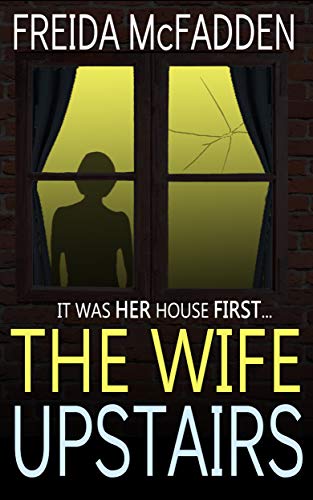
The Wife Upstairs PDF - Freida McFadden
Freida McFadden • Drama novels • 382 Pages
(0)
Author
Freida McFaddenCategory
literatureSection
Number Of Downloads
1
Number Of Reads
81
File Size
1.55 MB
Views
108
Quate
Review
Save
Share
Book Description
The Wife Upstairs by Freida McFadden is a tense and addictive psychological thriller built around a beautiful suburban home, a silent woman trapped upstairs, and a caregiver who slowly realizes that the job she accepted may be hiding something far more dangerous than she expected. Freida McFadden is widely known for bestselling psychological thrillers and medical suspense fiction, and this novel reflects many of the qualities readers associate with her work: fast pacing, domestic tension, unsettling secrets, and carefully timed twists that keep the reader questioning every character’s motives. The book is listed by the author as a standalone psychological thriller, with official details identifying it as a suspense and domestic thriller title.
At the center of the story is Victoria Barnett, a woman whose life once seemed perfectly arranged. She had a successful career as a nurse practitioner, a handsome husband, a comfortable suburban home, and plans for a future that appeared bright and stable. Then a terrible accident changes everything. Victoria becomes physically dependent on others and is kept on the upper floor of the house, unable to live the life she once knew. Into this disturbing household comes Sylvia Robinson, hired as Victoria’s caregiver by Victoria’s husband, Adam. Sylvia moves into the home, begins caring for Victoria, and gradually forms a connection with the woman upstairs, only to discover that Victoria may be trying to communicate something urgent.
A Dark Domestic Thriller Full of Secrets
The strength of The Wife Upstairs lies in the way Freida McFadden turns a private home into a place of suspense. The house is not just a setting; it becomes a closed world of silence, dependence, hidden history, and emotional danger. Sylvia’s role seems simple at first: she is there to feed, assist, and care for Victoria. Yet the more time she spends inside the Barnett home, the more she senses that the surface story does not explain everything. Victoria is vulnerable, but she is not necessarily powerless. Adam appears devoted, but appearances in a Freida McFadden thriller are rarely safe to trust. The result is a story that keeps building unease through small details, shifting impressions, and the fear that someone in the house knows far more than they are willing to say.
This novel is especially appealing for readers who enjoy domestic suspense, caregiver thrillers, marriage secrets, and psychological mysteries in which the danger comes from intimacy rather than from an outside threat. Instead of relying on large-scale action, the story draws tension from confined spaces, private conversations, unspoken messages, and the question of who controls the truth. The upstairs room becomes a symbol of everything hidden: disability, guilt, fear, dependency, and the possibility that a woman who cannot speak may still hold the key to the entire mystery.
Freida McFadden’s Fast and Addictive Storytelling Style
Freida McFadden’s writing style is one of the major reasons The Wife Upstairs works so well for thriller readers. Her prose is direct, accessible, and sharply focused on momentum. The chapters move quickly, the suspense escalates steadily, and the reader is encouraged to keep asking what really happened before Sylvia entered the house. Rather than slowing the story with excessive description, McFadden uses clear scenes, emotional tension, and carefully placed revelations to create a page-turning reading experience.
The novel also shows McFadden’s skill at making ordinary roles feel morally complicated. Sylvia is not simply an employee, Victoria is not simply a patient, and Adam is not simply a concerned husband. Each character occupies a position that can be read in more than one way, which makes the book especially effective as a twisty psychological thriller. The reader is invited to judge, doubt, sympathize, and then reconsider. This constant movement between trust and suspicion gives the novel its emotional energy and makes the mystery feel personal as well as suspenseful.
Themes of Silence, Control, and Unreliable Appearances
One of the most compelling themes in The Wife Upstairs is silence. Victoria’s inability to express herself freely creates a haunting emotional situation: what happens when someone knows the truth but cannot easily tell it? This premise gives the novel a powerful sense of frustration and urgency. Sylvia can see that Victoria may be trying to communicate, but understanding what she means becomes a dangerous challenge. In a story where words are limited, gestures, expressions, routines, and hidden objects all become meaningful.
The book also explores control within relationships. The home that once represented success and comfort becomes a place where power is unevenly distributed. Adam controls access, Sylvia controls care, and Victoria’s dependence makes every interaction feel charged with risk. The novel asks the reader to consider how easily a polished life can conceal fear, how quickly trust can become manipulation, and how difficult it can be to recognize the truth when every person has a reason to hide something.
Why Readers of Psychological Suspense Will Enjoy This Book
The Wife Upstairs is a strong choice for readers looking for a suspenseful, fast-moving thriller with domestic tension and a mystery that deepens with every chapter. It offers the kind of setup that fans of psychological thrillers often seek: a vulnerable woman, a secretive husband, a caregiver caught in the middle, and a house where the past refuses to stay buried. The story is easy to enter, but its questions become increasingly difficult to ignore. What really happened to Victoria? Why does the atmosphere inside the house feel so controlled? What does Sylvia not know? And how dangerous is the truth if it finally comes out?
Readers who enjoy Freida McFadden’s other books will recognize her signature blend of short-chapter suspense, morally uncertain characters, and dramatic reversals. New readers will find The Wife Upstairs an accessible introduction to her style because it contains many of the elements that define her popularity: a gripping premise, psychological pressure, secrets inside a seemingly respectable home, and a plot designed to keep the reader alert until the final reveal.
A Suspenseful Novel About the Truth Hidden Upstairs
The Wife Upstairs by Freida McFadden is more than a mystery about an accident; it is a psychological thriller about the stories people tell, the truths they conceal, and the danger of trusting the wrong person. With its isolated household, tense caregiver relationship, silent victim, and atmosphere of growing suspicion, the novel delivers a reading experience that is dark, engaging, and full of uncertainty. It is ideal for readers who want a domestic psychological thriller that is quick to read, emotionally tense, and driven by secrets that slowly reshape everything the reader thinks they understand.
Freida McFadden
Freida McFadden is an American author best known for psychological thrillers, domestic suspense, mystery fiction, and fast-paced novels built around secrets, deception, and startling twists. She writes under the name Freida McFadden, while her real name, Sara Cohen, became public after years of reader curiosity about the identity behind the bestselling pen name. Her background is unusually distinctive because she is not only a novelist but also a physician who specializes in brain injury and brain disorders, a professional experience that gives many of her stories a sharp awareness of fear, memory, perception, and the fragile line between trust and suspicion. Her official biography and publisher profiles describe her as a number one bestselling author whose books have appeared on major bestseller lists, won the International Thriller Writers Award for Best Paperback Original and the Goodreads Choice Award for Best Thriller, and have been translated into more than forty languages.
What makes Freida McFadden especially recognizable is her ability to turn ordinary places into sources of dread. Her novels often begin with situations that feel familiar: a new job, a marriage, a locked room, a suburban home, a patient, a colleague, a neighbor, or a person trying to start over. From that accessible beginning, she gradually reveals layers of manipulation, hidden motives, buried trauma, and moral uncertainty. This approach has made her a favorite among readers who enjoy psychological suspense, twisty thrillers, domestic secrets, unreliable narrators, and stories where every chapter raises a new question. Her books are not usually slow literary mysteries; they are designed to pull the reader forward, making each page feel connected to a larger secret waiting to be exposed.
Among her most widely known works are The Housemaid, The Housemaid’s Secret, The Housemaid Is Watching, Never Lie, The Locked Door, The Inmate, Ward D, The Coworker, The Teacher, The Boyfriend, The Tenant, and The Intruder. The Housemaid became a defining title in her career because it introduced many readers to her signature blend of claustrophobic setting, social tension, domestic unease, and dramatic reversal. The success of that novel helped establish her as a major name in contemporary commercial thriller fiction, especially among readers who want accessible storytelling, short chapters, fast escalation, and endings that force them to reconsider what they believed about the characters.
McFadden’s style is direct, energetic, and intensely readable. She tends to favor clear sentences, quick scenes, and narrative momentum over dense description. This gives her books a strong page-turning quality and makes them especially appealing to readers who want suspense that begins quickly and keeps moving. At the same time, her stories often explore deeper anxieties: the fear of not being believed, the danger of trusting the wrong person, the pressure of secrets inside families, the social masks people wear, and the psychological consequences of being trapped in a situation with no obvious escape. Her medical background adds another layer to this tension, particularly in books involving hospitals, memory, mental instability, or the unsettling uncertainty of whether a character can trust their own mind.
A key part of her appeal is her understanding of reader expectation. Freida McFadden knows that fans of psychological thrillers want surprise, but they also want emotional stakes. Her plots often work because the suspense is tied to recognizable human fears: losing a home, losing a child, being framed, being watched, being lied to, or discovering that the person closest to you is not who they appeared to be. She writes stories that can be enjoyed for entertainment, but they also tap into the discomfort of modern life, where safety, identity, and truth can all feel unstable. This balance between entertainment and unease has helped her books spread widely through book clubs, online recommendations, audiobook platforms, and reader communities.
In the larger landscape of contemporary thrillers, Freida McFadden stands out as an author who combines professional discipline, medical insight, and a precise instinct for suspense. Her novels are popular because they are easy to enter, difficult to put down, and structured around the pleasure of discovery. She gives readers the feeling that every detail might matter, every character might be hiding something, and every calm scene might be preparing the next shock. For anyone looking for modern psychological thrillers with domestic tension, fast pacing, readable prose, and memorable twists, Freida McFadden has become one of the most important and widely read names in the genre.
Earn Rewards While Reading!
Every 10 pages you read and spent 30 seconds on every page, earns you 5 reward points! Keep reading to unlock achievements and exclusive benefits.
Read
Rate Now
5 Stars
4 Stars
3 Stars
2 Stars
1 Stars
The Wife Upstairs Quotes
Top Rated
Latest
Quate
Be the first to leave a quote and earn 10 points
instead of 3
'%20/%3e%3c/svg%3e "The Housemaid")
Comments
Be the first to leave a comment and earn 5 points
instead of 3