

The source of the book
This book is published for the public benefit under a Creative Commons license, or with the permission of the author or publisher. If you have any objections to its publication, please contact us.
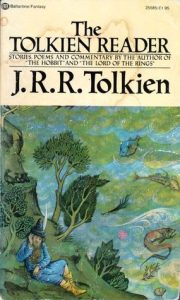
The Tolkien Reader PDF - J. R. R. Tolkien
J. R. R. Tolkien • science fiction novels • 258 Pages
(0)
Quate
Review
Save
Share
Book Description
The Tolkien Reader by J.R.R. Tolkien
The Tolkien Reader is an essential collection for anyone interested in the imaginative world and literary craftsmanship of J.R.R. Tolkien, one of the most influential fantasy authors of the twentieth century. Best known for creating The Hobbit and The Lord of the Rings, Tolkien brought together in this volume several shorter works that reveal the depth of his mythology, linguistic creativity, humor, and philosophical imagination. This collection offers readers a broader understanding of Tolkien’s literary vision beyond Middle-earth while still preserving the magical atmosphere and timeless storytelling style that made his works legendary across generations.
Originally assembled to introduce readers to different aspects of Tolkien’s writing, The Tolkien Reader combines fantasy fiction, poetic storytelling, mythic themes, and reflective essays into one carefully curated volume. The book includes celebrated pieces such as The Homecoming of Beorhtnoth Beorhthelm’s Son, Tree and Leaf, Farmer Giles of Ham, and The Adventures of Tom Bombadil. Together, these texts demonstrate Tolkien’s remarkable ability to move between epic mythology, scholarly analysis, folklore-inspired comedy, and lyrical poetry while maintaining a distinctive voice rooted in ancient traditions and deep human insight.
One of the most important sections of the collection is Tree and Leaf, which contains Tolkien’s famous essay “On Fairy-Stories.” In this influential literary work, Tolkien explains his philosophy of fantasy literature, discussing concepts such as myth-making, imagination, escape, and the emotional power of storytelling. Readers interested in fantasy writing, literary criticism, mythology, or creative world-building often consider this essay essential reading because it reveals the intellectual foundations behind Tolkien’s fiction. The essay continues to influence modern fantasy authors, scholars, and readers who seek to understand why fantasy literature resonates so deeply across cultures and generations.
The fictional works included in The Tolkien Reader showcase different sides of Tolkien’s creativity. Farmer Giles of Ham offers a humorous medieval-style adventure filled with dragons, kings, and rural wit, while The Adventures of Tom Bombadil presents poetry connected to the mysterious character known from The Lord of the Rings. These pieces reveal Tolkien’s love for language, folklore, music, and oral storytelling traditions. Even readers already familiar with Middle-earth will discover new layers of imagination and literary experimentation within these pages.
Another remarkable aspect of this collection is its exploration of heroism, morality, memory, and the relationship between humanity and myth. Tolkien’s writing often reflects themes of courage, loss, loyalty, humility, and resistance against corruption. Unlike many modern fantasy works focused primarily on action, Tolkien’s stories emphasize emotional depth, historical atmosphere, and spiritual reflection. His narratives are shaped by ancient epics, Norse mythology, Anglo-Saxon literature, and medieval legends, yet they remain accessible and emotionally meaningful to contemporary readers.
The language throughout The Tolkien Reader is rich, elegant, and highly atmospheric. Tolkien’s academic background as a philologist and professor deeply influenced his writing style, giving his prose a sense of authenticity and timelessness. Readers who appreciate classic fantasy literature, mythological storytelling, literary fantasy, or beautifully crafted prose will find this collection especially rewarding. At the same time, the variety of works included makes the book approachable for both longtime Tolkien enthusiasts and newcomers seeking an introduction to his broader literary world.
For fantasy readers, literature students, mythology enthusiasts, and collectors of classic fiction, The Tolkien Reader serves as both entertainment and intellectual exploration. It provides valuable insight into Tolkien’s creative philosophy while also delivering memorable stories filled with imagination and charm. Many readers consider the collection an important companion to The Hobbit and The Lord of the Rings because it deepens appreciation for Tolkien’s themes, influences, and artistic legacy.
The enduring popularity of J.R.R. Tolkien continues to shape modern fantasy literature, gaming culture, cinematic storytelling, and myth-inspired fiction around the world. The Tolkien Reader stands as an important gateway into the mind of the author, revealing not only the storyteller behind Middle-earth but also the scholar, poet, and thinker whose ideas transformed fantasy into a respected literary genre. For readers seeking classic fantasy literature with depth, imagination, and lasting emotional resonance, this collection remains a timeless and rewarding experience.
J. R. R. Tolkien
J. R. R. Tolkien is widely regarded as one of the most influential authors of the twentieth century and the foundational figure of modern high fantasy literature. Best known for his masterpieces The Hobbit and The Lord of the Rings, Tolkien was not only a novelist but also a distinguished philologist and professor at the University of Oxford. His academic expertise in ancient languages, medieval literature, and linguistic structures profoundly shaped his creative work, giving his fictional world of Middle-earth an unprecedented depth and realism.
Born in 1892 in Bloemfontein, South Africa, Tolkien moved to England after the death of his father and was raised in the English countryside. From an early age, he developed a fascination with language, mythology, and storytelling. His academic career at Oxford focused on Old English literature, particularly texts such as Beowulf, which he both studied and helped reinterpret for modern scholarship.
Tolkien’s experience in World War I had a lasting impact on his worldview. The themes of loss, camaraderie, and the struggle between good and evil that appear throughout his writings are often connected to his wartime experiences. After the war, he began developing stories that would eventually become The Hobbit, published in 1937. Its success led to the creation of his epic legendarium, The Lord of the Rings, published in three volumes between 1954 and 1955.
What distinguishes Tolkien’s work is his meticulous world-building. He created not only stories but entire civilizations, complete with histories, genealogies, languages, and mythologies. His constructed languages, such as Quenya and Sindarin, remain among the most sophisticated fictional languages ever created.
Tolkien passed away in 1973, but his legacy continues to shape literature, film, and popular culture. His works have inspired countless authors and remain central to the fantasy genre.
Earn Rewards While Reading!
Every 10 pages you read and spent 30 seconds on every page, earns you 5 reward points! Keep reading to unlock achievements and exclusive benefits.
Read
Rate Now
5 Stars
4 Stars
3 Stars
2 Stars
1 Stars
The Tolkien Reader Quotes
Top Rated
Latest
Quate
Be the first to leave a quote and earn 10 points
instead of 3
Other books by J. R. R. Tolkien
Other books like The Tolkien Reader
'%20/%3e%3c/svg%3e "Imprisoned with the Pharaohs")
3019
English
Comments
Be the first to leave a comment and earn 5 points
instead of 3