

The source of the book
This book is published for the public benefit under a Creative Commons license, or with the permission of the author or publisher. If you have any objections to its publication, please contact us.
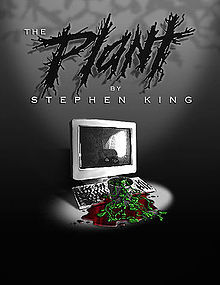
The Plant PDF - Stephen King
Stephen King • Horror novels • 259 Pages
(0)
Quate
Review
Save
Share
Book Description
Stephen King’s The Plant is an unfinished horror serial by American author Stephen King. It was first privately published by Philtrum Press in three installments in 1982, 1983, and 1985, then revived in 2000 as an e-book serial distributed through King’s official website. The official Stephen King website describes The Plant as a six-installment e-book project released on an honor-system payment model, and notes that the novel has not yet been completed.
The Plant occupies a distinctive place in Stephen King’s bibliography because it is both a work of fiction and a publishing experiment. Before online serial fiction became common, King used the internet to release the story directly to readers, asking them to pay for each installment. The project attracted attention not only because of King’s fame, but also because it tested whether readers would financially support a digital book without the usual bookstore or publisher framework. Earlier versions had circulated privately as limited chapbooks, while the 2000 release made the story available to a much wider audience.
The plot of The Plant is told in an epistolary style, using letters, memos, office notes, and correspondence rather than a conventional narrative voice. This format gives the book a documentary feeling, as though the reader is piecing together a strange case file. The story begins in the world of commercial publishing, a setting King uses with dark humor and sharp familiarity. At the center is a paperback publishing house whose staff must deal with difficult manuscripts, odd writers, and the everyday pressures of the book business.
The trouble begins when an editor receives a manuscript from a disturbed and persistent writer. The submission appears bizarre, but it includes unsettling material that makes the editor uneasy. Instead of simply rejecting the manuscript and forgetting about it, the editor responds in a way that angers the writer. Soon afterward, a mysterious plant arrives at the office. At first, the plant seems like an odd gift or a threatening joke. Gradually, however, it becomes clear that it is something far more dangerous.
As the plant grows, its influence spreads through the publishing house. The office environment becomes increasingly strange, and ordinary professional rivalries and ambitions begin to take on a sinister edge. The plant appears to reward some people, punish others, and manipulate events around it. What begins as an unusual workplace disturbance develops into a supernatural crisis. King blends horror with satire, turning the publishing industry itself into a setting where greed, fear, vanity, and desperation can be fed by something monstrous.
One of the most memorable qualities of The Plant is its tone. It is frightening, but it is also playful and self-aware. King uses the structure of memos and letters to build suspense while also mocking corporate language and office politics. The result is a story that feels both supernatural and bureaucratic: terror arrives not in a haunted house or isolated town, but through paperwork, editorial decisions, and professional correspondence.
Because The Plant remains unfinished, its plot does not reach a final resolution. The six released installments develop the premise, characters, and central menace, but they leave the larger story incomplete. King’s official website states that the project may be completed in the future if inspiration returns, though the publication format could differ. (Stephen King)
For readers interested in Stephen King’s career, The Plant is valuable for more than its story. It shows King experimenting with form, distribution, and reader participation at an early stage of mainstream digital publishing. As a horror serial, it offers a strange and entertaining tale about a publishing office invaded by a growing evil. As a literary artifact, it captures a moment when one of the world’s best-known authors tested the possibilities and limits of internet-based fiction.
Stephen King
Stephen King is one of the most influential, widely read, and culturally recognizable authors in modern popular literature, celebrated above all for his mastery of horror while also making major contributions to suspense, crime fiction, fantasy, science fiction, psychological drama, and literary storytelling. Born in Portland, Maine, he developed a fictional world deeply connected to small towns, working families, childhood fears, buried secrets, and the unsettling possibility that ordinary life can suddenly open into terror. His work is often associated with supernatural forces, haunted places, violent outsiders, and monstrous presences, yet his lasting power comes from a deeper understanding of human weakness, grief, addiction, memory, loyalty, cruelty, and moral choice. King does not simply frighten readers; he invites them into fully imagined communities where fear grows naturally from character, atmosphere, and emotional truth.
Stephen King’s breakthrough came with Carrie, a novel that transformed the pain of adolescence, social rejection, religious fanaticism, and uncontrolled power into a compact and unforgettable story. The success of that book allowed him to become a full-time writer, and it was followed by a remarkable series of major works including Salem’s Lot, The Shining, The Stand, The Dead Zone, Cujo, Pet Sematary, It, Misery, The Green Mile, Bag of Bones, Under the Dome, Doctor Sleep, Billy Summers, Fairy Tale, and 11/22/63. His long-running sequence The Dark Tower occupies a special place in his career because it connects western imagery, epic fantasy, horror, metafiction, and myth into a vast narrative about destiny, sacrifice, obsession, and storytelling itself. King also wrote several works under the name Richard Bachman, a pseudonym that allowed him to explore darker social and psychological material while testing whether a story could succeed without the power of his famous name attached to it.
A defining quality of Stephen King’s fiction is his ability to build believable characters before placing them under extreme pressure. Children, writers, teachers, nurses, prisoners, police officers, parents, and lonely outsiders often stand at the center of his stories, and their emotional struggles are as important as the supernatural events around them. His prose is direct, energetic, and accessible, but it is also rich in cultural observation, humor, rhythm, and suspense. He has a particular gift for making locations feel alive: Derry, Castle Rock, Jerusalem’s Lot, and other fictional places operate almost like recurring characters, carrying histories of violence, memory, and collective fear. Through these settings, King has created an interconnected literary landscape that rewards both casual readers and devoted fans.
Stephen King’s influence extends far beyond the printed page. Many of his works have been adapted into major films, television series, miniseries, and streaming productions, helping shape the global visual language of horror and suspense. Adaptations such as The Shawshank Redemption, Stand by Me, Misery, The Green Mile, Carrie, The Shining, and It have made his stories familiar to audiences across generations. His nonfiction book On Writing is also highly respected because it combines memoir, practical advice, and a clear philosophy of craft, emphasizing discipline, honesty, revision, and the importance of reading. King has received major honors for his contribution to American letters and the arts, including prestigious lifetime and national awards. His enduring reputation rests on a rare combination of productivity, narrative confidence, emotional directness, and imaginative range. For readers searching for an author who can combine fear with humanity, entertainment with insight, and popular appeal with lasting literary impact, Stephen King remains one of the essential names in contemporary fiction.
Earn Rewards While Reading!
Every 10 pages you read and spent 30 seconds on every page, earns you 5 reward points! Keep reading to unlock achievements and exclusive benefits.
Read
Rate Now
5 Stars
4 Stars
3 Stars
2 Stars
1 Stars
The Plant Quotes
Top Rated
Latest
Quate
Be the first to leave a quote and earn 10 points
instead of 3
'%20/%3e%3c/svg%3e "Carrie")
Comments
Be the first to leave a comment and earn 5 points
instead of 3