

The source of the book
This book is published for the public benefit under a Creative Commons license, or with the permission of the author or publisher. If you have any objections to its publication, please contact us.
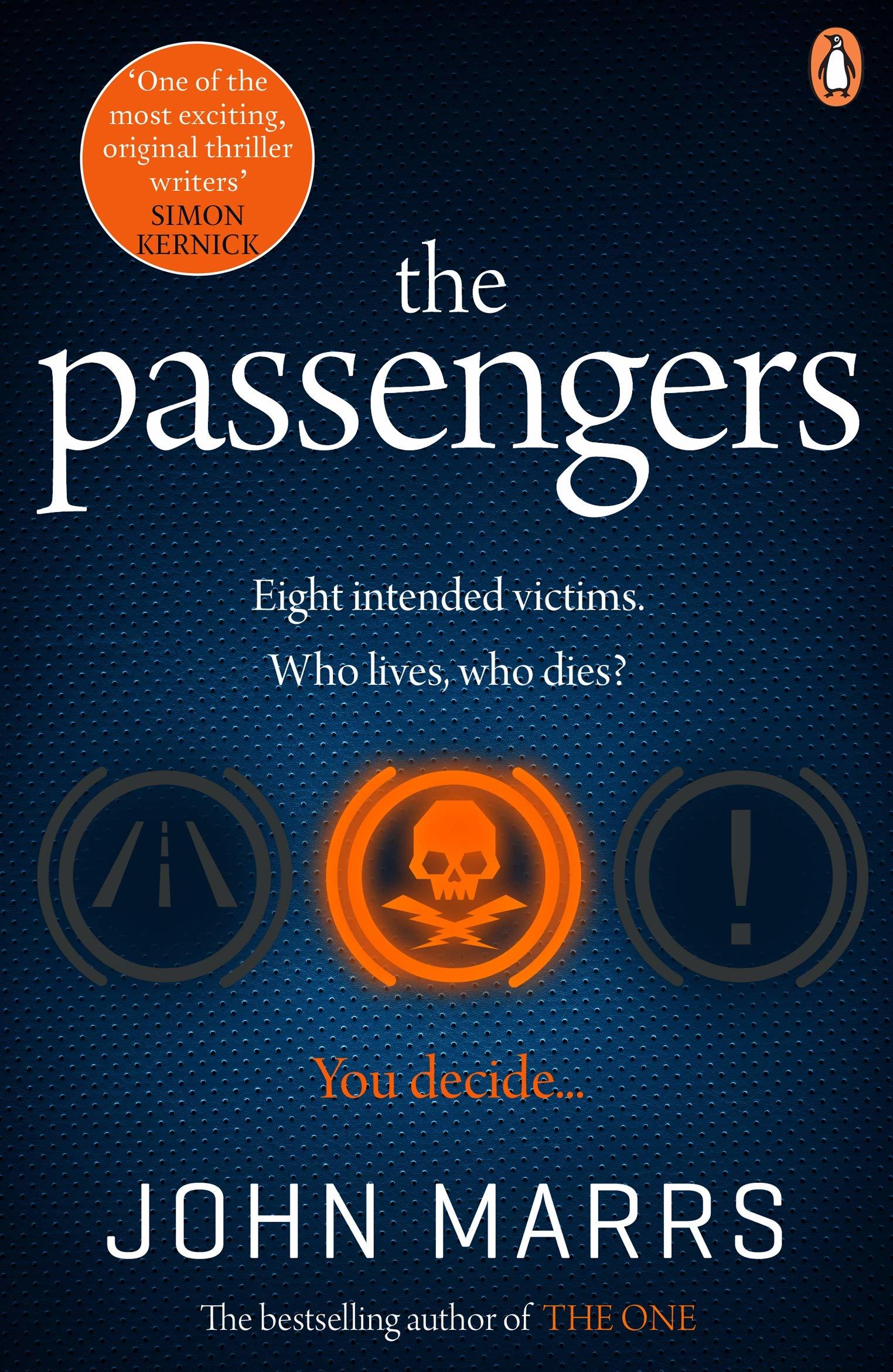
The Passengers PDF - John Marrs
John Marrs • Drama novels • 400 Pages
(0)
Quate
Review
Save
Share
Book Description
The Passengers by John Marrs is a tense, provocative near-future thriller that transforms one of modern society’s most discussed technological promises into a terrifying moral crisis. Set in a world where self-driving cars have become trusted as the safer norm, the novel asks what happens when the systems designed to protect human life are suddenly turned against the people who depend on them. When eight autonomous vehicles are hacked and placed on a fatal collision course, their passengers lose all control over their journeys, their privacy, and possibly their lives. The result is a gripping blend of speculative fiction, psychological suspense, and techno-thriller tension that feels both cinematic and disturbingly plausible. (John Marrs - Author)
A High-Concept Thriller with Immediate Suspense
The central premise of The Passengers is simple, sharp, and unforgettable: eight people enter self-driving cars, only to discover that the doors are locked, the routes have changed, and a mysterious hacker has taken command. Among the passengers are a faded television star, a pregnant young woman, a disabled war hero, an abused wife fleeing her husband, an undocumented immigrant, a husband and wife travelling in separate vehicles, and a suicidal man. As their cars move toward disaster, the public is drawn into a horrifying question: who deserves to survive? (John Marrs - Author)
John Marrs builds the novel around a scenario that is frightening because it is not purely futuristic fantasy. Autonomous vehicles, algorithmic decision-making, online judgment, surveillance, and public outrage already belong to the vocabulary of contemporary life. The Passengers pushes those familiar anxieties a few steps further, creating a story in which technology does not simply malfunction; it becomes a stage on which human bias, fear, sympathy, and cruelty are exposed. The novel’s suspense comes not only from the physical danger of the collision course, but from the emotional and ethical pressure placed on everyone watching.
Technology, Control, and the Illusion of Safety
At the heart of The Passengers is a powerful question about control. People accept self-driving cars because they are told that machines are safer, faster, and less flawed than human drivers. Yet once the passengers are trapped inside these vehicles, the comfort of automation becomes a nightmare. Marrs uses this reversal brilliantly: the very technology designed to remove danger from the road becomes the source of helplessness. The passengers cannot steer, brake, escape, or choose their own fate. Their lives depend on systems they do not understand and on people who may not see them as fully human.
This makes the novel a strong choice for readers interested in AI thrillers, autonomous vehicle fiction, and stories about the dark side of innovation. Marrs is not writing a technical manual about driverless cars; he is writing about the emotional consequence of surrendering decision-making to systems that appear neutral. The book asks whether safety is still safety if it requires total dependence, and whether progress can be trusted when ordinary people are excluded from the decisions that shape their lives.
A Public Trial in the Age of Social Media
One of the most unsettling aspects of The Passengers is the way private terror becomes public entertainment. The trapped passengers are not only fighting for survival; they are being watched, judged, discussed, and reduced to stories that strangers can approve or condemn. Their histories, identities, and secrets become part of a brutal public debate. This gives the novel a sharp social edge, because Marrs understands how quickly empathy can turn into performance when an audience is involved.
The book’s moral tension grows from the gap between what people seem to be and what they may be hiding. Each passenger enters the story as a type that readers can instantly recognize: the celebrity, the victim, the outsider, the expectant mother, the veteran, the desperate man. But Marrs is too skilled a thriller writer to leave them as symbols. As the pressure rises, the novel challenges the reader to question first impressions, media narratives, public sympathy, and the uncomfortable instinct to rank human lives according to perceived worth.
Psychological Suspense Inside a Speculative Framework
Although The Passengers is often described as a science fiction thriller or near-future techno-thriller, it also carries many of the qualities that make John Marrs popular with fans of psychological thrillers. The novel is driven by secrets, shifting loyalties, hidden motives, and the slow exposure of character under extreme stress. The vehicles provide the physical trap, but the true suspense comes from what is revealed inside that trap: fear, guilt, prejudice, self-preservation, and the desperate need to control the story others believe about us.
Marrs writes with a fast, chapter-driven style that keeps the narrative moving. The structure is designed for momentum, with multiple perspectives, escalating revelations, and a constant sense that the situation can become worse at any moment. This makes The Passengers especially appealing to readers who enjoy page-turning thrillers, moral dilemma fiction, and novels with a strong “what would you do?” premise. It is the kind of book that invites discussion because its central crisis does not have a clean or comfortable answer.
Part of John Marrs’s Dark Future Universe
The Passengers belongs to John Marrs’s group of speculative novels often known as the Dark Future Books, a set that includes titles such as The One, The Minders, The Marriage Act, and The Family Experiment. Marrs’s official site notes that these books are set in the same universe but do not need to be read in order, which makes The Passengers accessible both to new readers and to those already familiar with his speculative fiction. (John Marrs - Author)
This connection is important because Marrs has developed a recognizable fictional world built around near-future social systems, disruptive technologies, and the darker sides of human behavior. In The One, the central question concerns love and genetic matching. In The Passengers, the focus shifts to automation, public judgment, and the value of human life. Across these books, Marrs repeatedly explores the same unsettling idea: new systems may promise efficiency, fairness, and happiness, but they can also magnify the worst instincts of the people who design, use, and judge them.
Why The Passengers Appeals to Thriller Readers
Readers who enjoy Black Mirror-style fiction, ethical thrillers, technology suspense, and dark speculative novels will find a great deal to admire in The Passengers. The novel combines the accessibility of a commercial thriller with questions that linger after the final page. It is suspenseful enough for readers who want a gripping, high-stakes plot, but it also offers meaningful themes about surveillance, media culture, artificial intelligence, social bias, and the danger of reducing people to public profiles.
The book also works well for readers who like ensemble casts under pressure. Because the passengers come from different backgrounds and carry different burdens, the story creates constant shifts in sympathy and suspicion. Marrs makes the reader aware of how easily judgment can change when new information appears. This quality gives the novel its strongest emotional force: it does not simply ask who should live or die; it asks why people believe they are qualified to decide.
A Fast, Dark, and Thought-Provoking Reading Experience
The Passengers by John Marrs is a compelling near-future thriller about driverless cars, public morality, and the dangerous illusion that technology can remove human responsibility. With its high-concept premise, escalating tension, and unsettling social commentary, it offers the kind of story that feels entertaining, urgent, and uncomfortably relevant. Marrs turns the road into a courtroom, the car into a prison, and the watching public into both jury and spectacle.
For readers looking for a John Marrs thriller that blends psychological suspense with speculative ideas, The Passengers is an excellent choice. It delivers a fast-paced plot, memorable moral dilemmas, and a chilling vision of a society where convenience has replaced control and judgment has become entertainment. More than a thriller about hacked cars, it is a novel about what people reveal when they are forced to decide whose life matters most.
John Marrs
John Marrs is a British author best known for psychological thrillers and speculative fiction that turn ordinary fears into gripping, high-concept stories. His novels often begin with a question that feels simple, almost irresistible, and then push that question into darker emotional and ethical territory. What if science could identify the person you were genetically meant to love? What if driverless cars had to choose who lives and who dies? What if marriage became a monitored social institution with rewards, punishments, and state-approved rules? This is the kind of imaginative pressure that defines Marrs’s work: he takes familiar parts of modern life, moves them a few steps forward, and reveals how easily convenience, technology, and desire can become dangerous.
Before becoming a full-time author in 2016, Marrs worked as a freelance journalist, interviewing figures from television, film, and music for major national publications. He began as a self-published writer, drafting his first three books during his daily train commute. His debut novel, The Wronged Sons, was released in 2013, followed by Welcome to Wherever You Are in 2015. His breakthrough came with The One, released in 2017, which became a major bestseller, was translated into thirty-five languages, sold more than a million copies, and was adapted into a popular streaming series. His official biography separates his work into two broad strands: psychological thrillers such as When You Disappeared, The Good Samaritan, Her Last Move, What Lies Between Us, Keep It In The Family, The Stranger In Her House, and You Killed Me First; and speculative novels such as The One, The Passengers, The Minders, The Marriage Act, and The Family Experiment.
Marrs’s appeal lies in the way he combines commercial pace with unsettling moral questions. His chapters are usually short, sharp, and designed to keep the reader moving, but the best of his fiction is not only about twists. It is about pressure: pressure inside families, pressure inside relationships, pressure created by secrets, technology, class, ambition, shame, and fear. He writes characters who may seem ordinary at first, then gradually exposes the compromises, lies, and private wounds that shape their decisions. This makes his books especially attractive to readers who enjoy thrillers that are easy to enter but difficult to forget.
In his psychological suspense novels, Marrs often explores domestic spaces as places of danger. Homes, marriages, friendships, and family histories are not simply backgrounds; they become emotional battlegrounds. A locked room may matter less than a locked memory, and a crime may be less frightening than the relationship that made it possible. His speculative novels, by contrast, widen the lens. They examine social systems, scientific promises, and technological progress, but they remain grounded in human behavior. Even when the concept is futuristic, the emotions are recognizable: jealousy, loneliness, ambition, grief, love, and the need to belong.
This balance between the personal and the conceptual helps explain why John Marrs appeals to different kinds of readers. Fans of domestic noir can find betrayal, manipulation, and hidden motives in his thrillers. Readers of near-future fiction can find provocative ideas about data, artificial intelligence, relationships, and state control. Readers who simply want a page-turner can enjoy the pace, reversals, and cliffhangers. Yet beneath the entertainment value, Marrs repeatedly asks whether people become more honest when given better tools, or whether new systems merely give old impulses more power.
As an author, John Marrs has built a recognizable identity around accessible prose, bold premises, emotional tension, and dark social imagination. His work is popular because it understands a central anxiety of contemporary life: the things designed to protect, connect, or improve us may also expose what is most selfish, fearful, and fragile within us. For readers looking for modern thrillers with strong hooks, morally complicated characters, and ideas that linger after the final chapter, John Marrs is a distinctive and highly readable voice.
Earn Rewards While Reading!
Every 10 pages you read and spent 30 seconds on every page, earns you 5 reward points! Keep reading to unlock achievements and exclusive benefits.
Read
Rate Now
5 Stars
4 Stars
3 Stars
2 Stars
1 Stars
The Passengers Quotes
Top Rated
Latest
Quate
Be the first to leave a quote and earn 10 points
instead of 3
'%20/%3e%3c/svg%3e "The One")
Comments
Be the first to leave a comment and earn 5 points
instead of 3